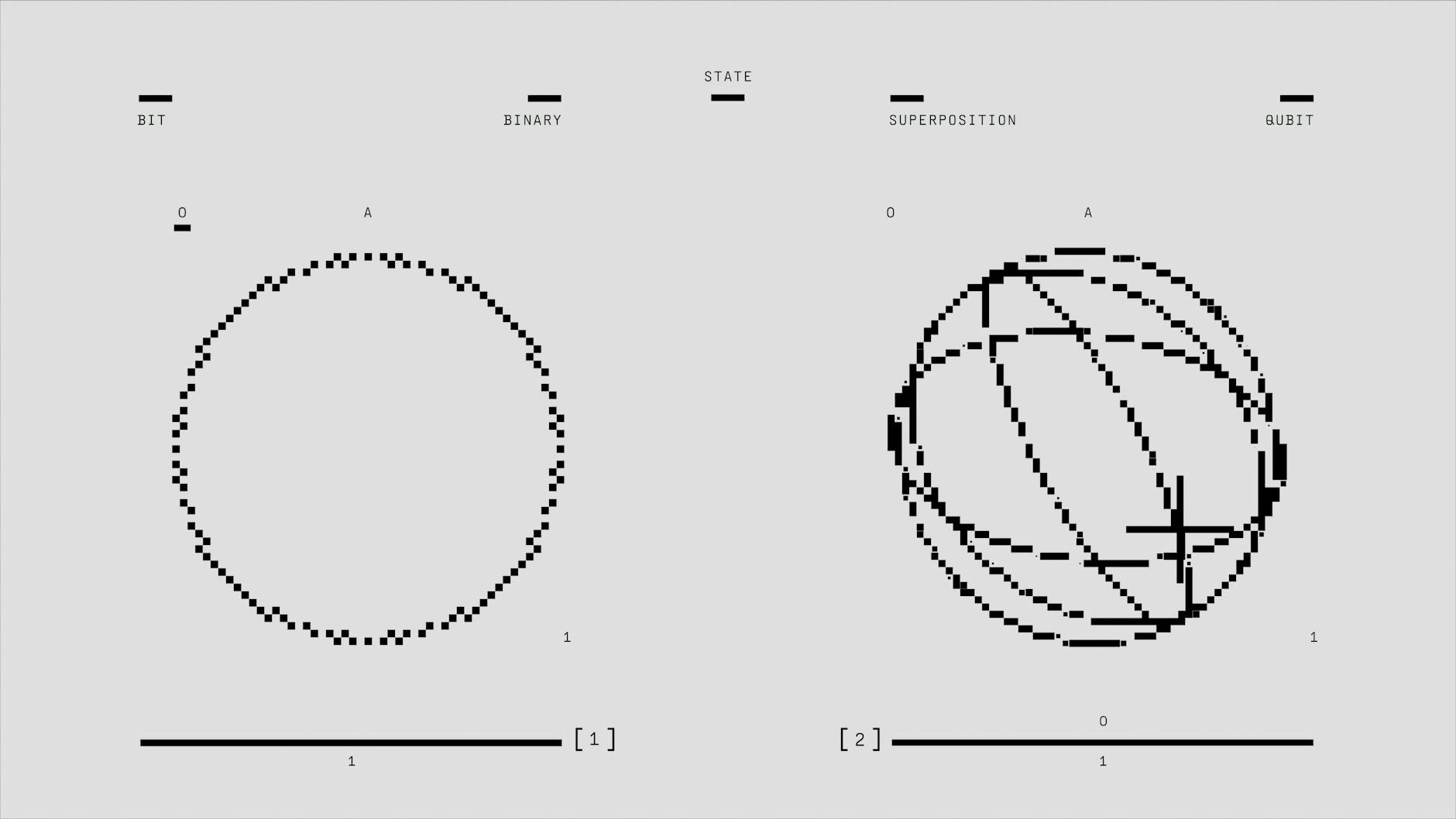
An international team of physicists has discovered that quantum systems can exhibit memory and memorylessness at the same time, depending on how the system is observed.
The study, involving researchers from the University of Turku, the University of Milan, and Nicolaus Copernicus University, shows that the presence of memory in a quantum process is not a fixed property.
In classical physics, a system is considered memoryless if its future behavior depends solely on its current state. However, the researchers found that quantum mechanics complicates this simple definition.
Dual perspectives on quantum memory
The team analyzed the system using two different frameworks: the Schrödinger approach, which tracks evolving quantum states, and the Heisenberg approach, which focuses on measurable properties known as observables.
While both methods yield the same experimental results, they do not provide the same description of memory. Some memory effects are visible only when analyzing states, while others appear only when focusing on observables.
"Our work shows that memory is not a single concept but can manifest in different ways depending on how the evolution of a system is described," said Federico Settimo, a doctoral researcher at the University of Turku.
This duality means a quantum system can appear to have lost its history in one description while still retaining it in another. The findings, published in PRX Quantum, suggest that researchers cannot rely on quantum states alone to understand a system's history.
Understanding these hidden memory effects is vital for the development of quantum computing and communication. External environments often introduce noise that can disrupt quantum operations.
"Knowing how memory can be witnessed is essential for developing strategies to mitigate noise or exploit environmental effects in realistic quantum devices," said Professor Jyrki Piilo of the University of Turku.