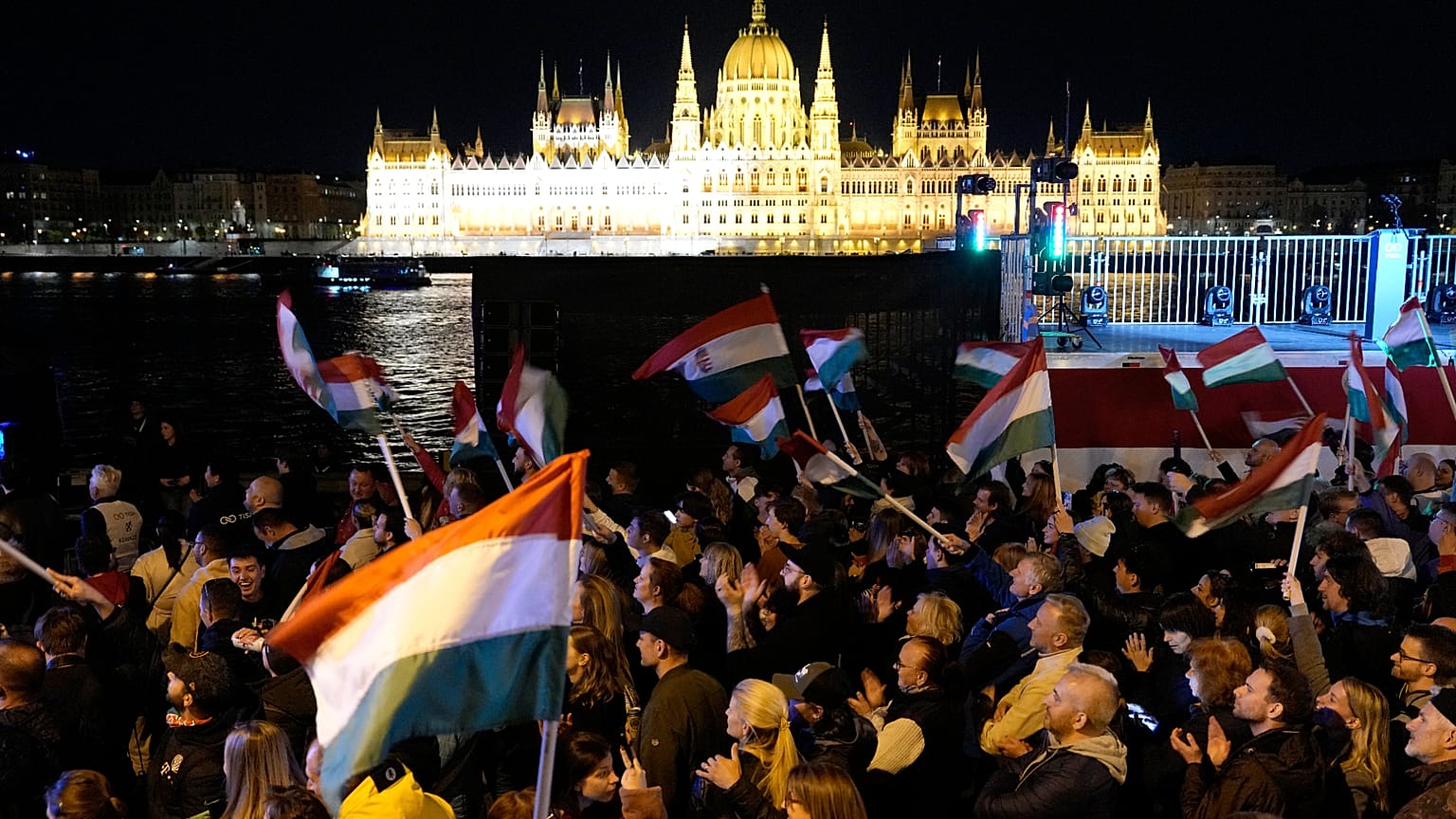
Budapest transformed into a celebration zone early Monday morning as supporters of the opposition Tisza party took to the streets to mark the end of Prime Minister Viktor Orban’s 16-year tenure. Dancing, honking cars, and flag-waving crowds filled the capital following Sunday’s vote, which saw a record-breaking 80% turnout based on preliminary data.
For many of the voters celebrating in the streets, the election represented a clear mandate to restore democracy and realign Hungary with Europe. Supporters view the result as a reversal of the democratic erosion that has characterized the government since 2010. Beyond domestic policy, the election outcome is expected to fundamentally alter Hungary's international stance; Montel News reported that the victory of the Tisza party represents a significant blow to Orban’s long-standing energy policies, which have been characterized by close ties to Russia.
The Press Reacts
Hungarian media outlets are framing the election as a defining moment in the nation's history. The left-leaning paper Nepszava characterized the result as a “brutal defeat” for Orban’s Fidesz party, while the weekly publication HGV described the election simply as “historic.”
Even media outlets typically aligned with the outgoing administration acknowledged the shift in public sentiment. The tabloid Blikk, which has historically maintained a pro-Orban stance, featured the headline “Love has triumphed.” The paper used the phrase to quote young Hungarians gathering to celebrate on the city’s iconic Chain Bridge.
Other outlets focused on the finality of the vote. While the free newspaper Metropol chose to quote Orban on its front page, the opposition-leaning website 444 opted for a more minimalist approach to the news. The shift in power has prompted widespread public demonstrations of relief and excitement across Budapest, signaling a profound change in the country's political trajectory.