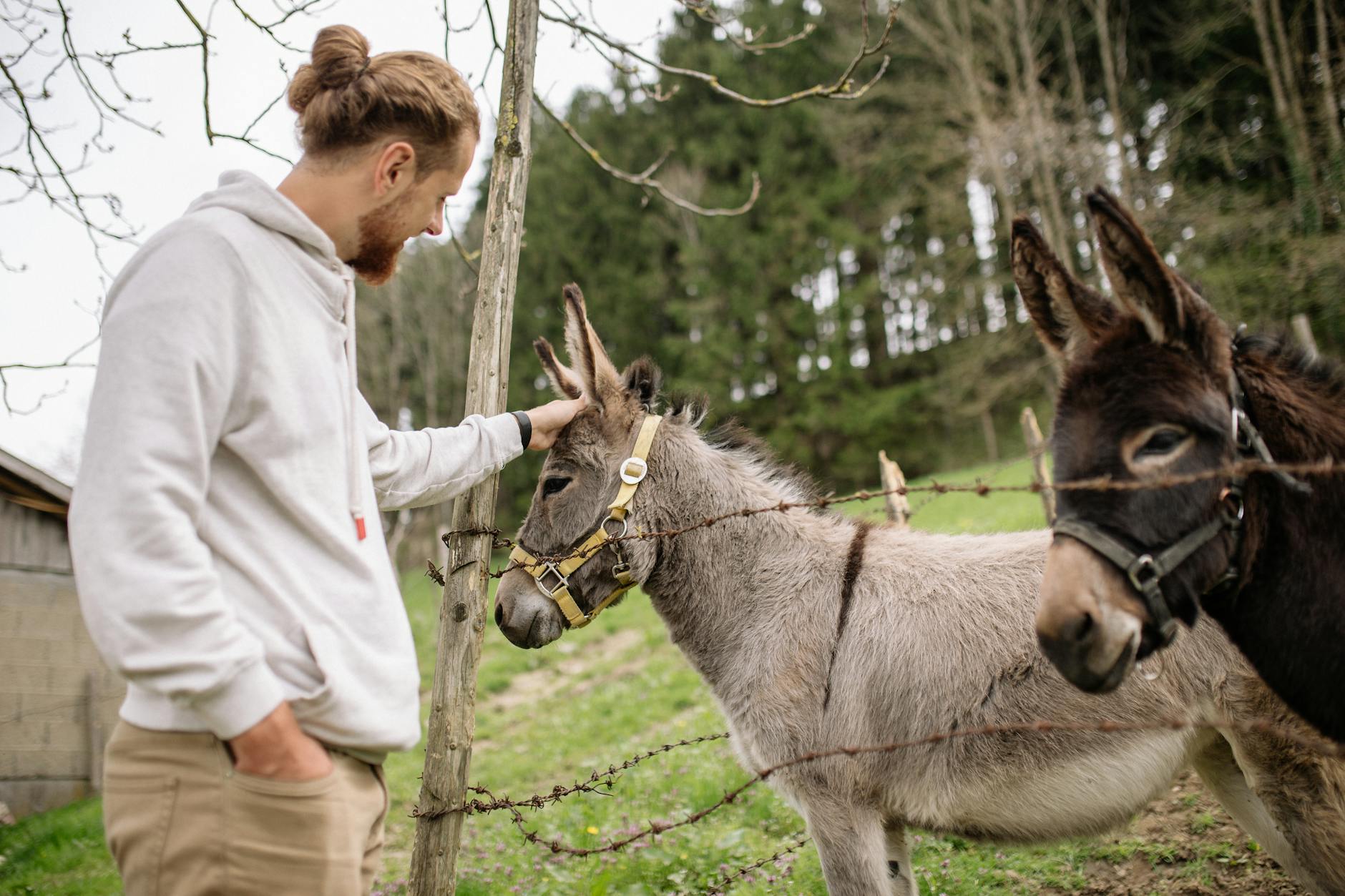
Patients at the Ville-Evrard psychiatric hospital in Neuilly-sur-Marne are participating in a specialized therapeutic program that utilizes donkeys to assist in clinical recovery. The initiative, which operates out of a 19th-century farm complex located on the hospital grounds, allows patients to engage in daily care routines including grooming, cleaning hooves, and walking the animals through the surrounding woods.
The program, which is funded by the French public health system, was established in 2016 by Ermelinda and François Hadey. Ermelinda, a nurse specializing in psychiatry, selected donkeys for the initiative due to their calm, social temperaments, which she identified as ideal for therapeutic interaction. Many of the animals involved, including Nono, Pitou, Oscar, Manolo, and Malraux, were rescued from situations of neglect before being trained for their roles by François Hadey.
Audrey Seffar, a nurse at the hospital’s animal therapy unit, serves as a primary facilitator for the sessions. Seffar notes that the animals act as mediators for patients struggling with trauma or severe social isolation, helping them bridge the gap between clinical treatment and real-world social engagement. According to staff, the program is a core component of the hospital's strategy to improve patient self-esteem, communication skills, and emotional regulation.
Patients report significant benefits from the interaction. Nathalie, a 60-year-old patient, described the experience as "animal medicine," noting that the sessions provide a level of relief comparable to pharmaceutical interventions. "It brings relief. You stop thinking about everything else," she stated. Seffar highlighted Nathalie’s progress, noting that while she initially struggled to engage with the environment, she eventually gained the confidence to walk alongside the animals.
Another participant, 52-year-old Jérôme, emphasized the program's role in breaking the monotony of long-term clinical care. "Talking with people, taking part in activities I wouldn’t normally do, it helps me in my daily life," Jérôme said. He added that the program serves as a vital tool in mitigating the loneliness often associated with psychiatric hospitalization. As the hospital continues to integrate these sessions into its standard care, the program remains a notable example of animal-assisted therapy within the French public health landscape.