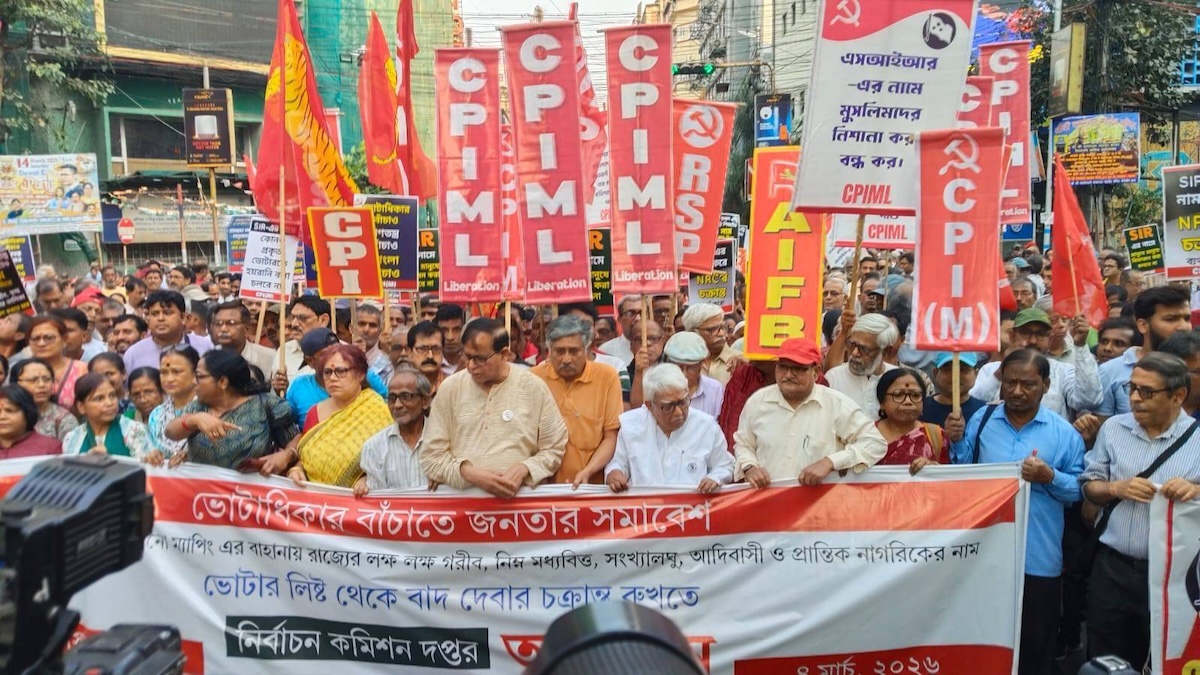
West Bengal is facing a political crisis as nine million voters—roughly 12% of the state's 76 million electorate—have been removed from the rolls ahead of this month's state elections. The mass exclusion follows a Special Intensive Revision (SIR) exercise conducted by the Election Commission of India.
While officials claim the revision aims to create a "pure electoral roll" by removing deceased or duplicate entries, the process has sparked intense friction. More than six million names were removed for being absentee or deceased, but the status of another 2.7 million voters remains unresolved. These individuals must now wait for adjudication by tribunals, a process unlikely to conclude before voting begins on April 23.
Muhammad Daud Ali, a 65-year-old former army technician, discovered his name and those of three of his children had been struck from the list despite their possession of valid passports and service records. "I am dumbstruck. I feel deeply hurt and insulted," Ali said. "How can they conduct the elections without solving our disputes?"
A disputed process
Political tension has surged as the ruling Trinamool Congress (TMC) accuses the Election Commission of disenfranchising voters to benefit the Bharatiya Janata Party (BJP). Data suggests that 34% of the removed voters are Muslim, despite Muslims making up roughly 27% of the state's population. Opposition leaders, including Prime Minister Narendra Modi, have previously framed the roll cleanup as a necessary measure to identify illegal migrants, a narrative the TMC rejects as a targeted attack on minorities.
Federal minister and BJP leader Sukanta Majumdar defended the purge as a constitutional necessity. "The constitution says only Indian citizens can choose prime ministers and chief ministers. Therefore, purging non-citizens was important," Majumdar said. He shifted blame to the state government, claiming it stalled the process by challenging the commission in the Supreme Court.
Critics argue the scale of the exclusion is unprecedented. Political scientist Sibaji Pratim Basu described the situation as an "absurd proposition" that threatens democratic norms. "There is no example of an election happening in India with voters' rights remaining suspended," Basu said.
Although the Supreme Court allowed the Election Commission to proceed with the elections, the legal uncertainty surrounding the 2.7 million voters persists. The impact of the revisions is geographically uneven, with high exclusion rates reported in both the state capital of Kolkata and border districts, as well as in inland areas like Paschim Bardhaman, where the majority of those removed are Hindu.