Escalation in the Gulf
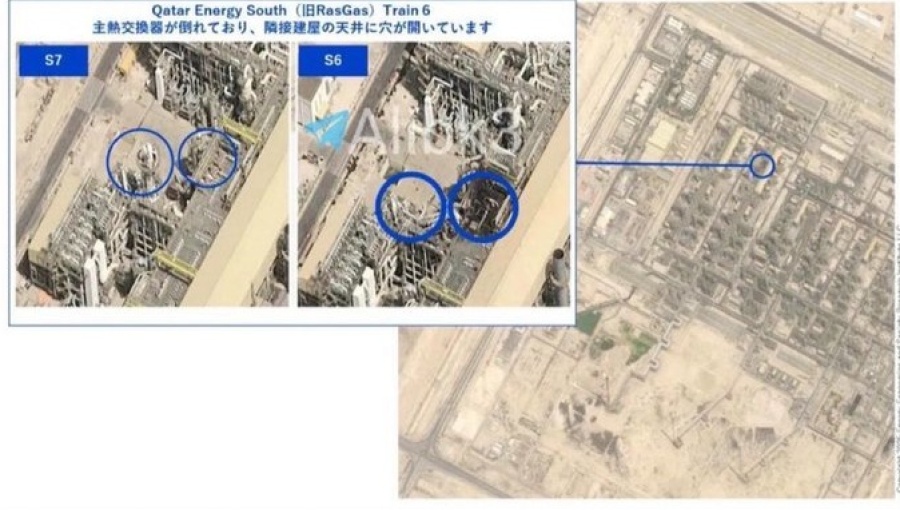
On Wednesday, March 18, 2026, the Qatari state-owned energy giant QatarEnergy confirmed that its Ras Laffan liquefied natural gas (LNG) complex—located 80 kilometers north of Doha—sustained "considerable damage" following a missile attack attributed to Iranian forces. The strike, which triggered large-scale fires at the facility, marks a significant escalation in the ongoing tensions across the Middle East.
According to official statements from the Qatari Ministry of Defense, Iranian forces launched five ballistic missiles aimed at the facility. While Qatari air defense systems successfully intercepted four of the projectiles, a single missile successfully breached the perimeter, striking the industrial city and forcing an immediate emergency response to contain the resulting inferno. QatarEnergy reported that all personnel were successfully evacuated and accounted for, with no casualties reported thus far.
Diplomatic Backlash and Sovereignty Concerns
The Qatari Ministry of Foreign Affairs issued a stern condemnation of the assault, labeling it a "flagrant violation" of the nation’s sovereignty and a direct threat to regional stability. In a formal statement, the government emphasized that the attack constitutes an "irresponsible approach" that undermines international peace. Asserting its right to self-defense under Article 51 of the United Nations Charter, Doha has signaled that it reserves the right to respond to the aggression.
A Coordinated Regional Campaign
The attack on Ras Laffan appears to be part of a broader, coordinated campaign by Iran’s Islamic Revolutionary Guard Corps (IRGC). Prior to the strikes, the IRGC had publicly threatened to target five major energy installations across Qatar, Saudi Arabia, and the United Arab Emirates, declaring them "legitimate targets" in response to alleged offensive actions against the South Pars gas field.
Beyond the damage in Qatar, neighboring Saudi Arabia reported a series of defensive successes. The Saudi Ministry of Defense confirmed that its forces intercepted multiple drones and ballistic missiles targeting energy infrastructure in the Kingdom’s Eastern Province. These defensive operations, which included the destruction of several unmanned aerial vehicles attempting to approach gas facilities, underscore the high state of alert across the Gulf’s energy sector.
Potential Impact on Global Energy Markets
The targeted facilities, which include the Samref refinery in Saudi Arabia, the Al Hosn gas field in the UAE, and the Mesaieed petrochemical complex in Qatar, represent the backbone of the global energy supply chain. By explicitly naming these locations as targets, the IRGC has introduced a new level of volatility to the energy markets. As regional powers weigh their next moves, the international community remains on high alert, fearing that the direct targeting of critical infrastructure could lead to a prolonged period of instability and economic disruption in the Gulf region.