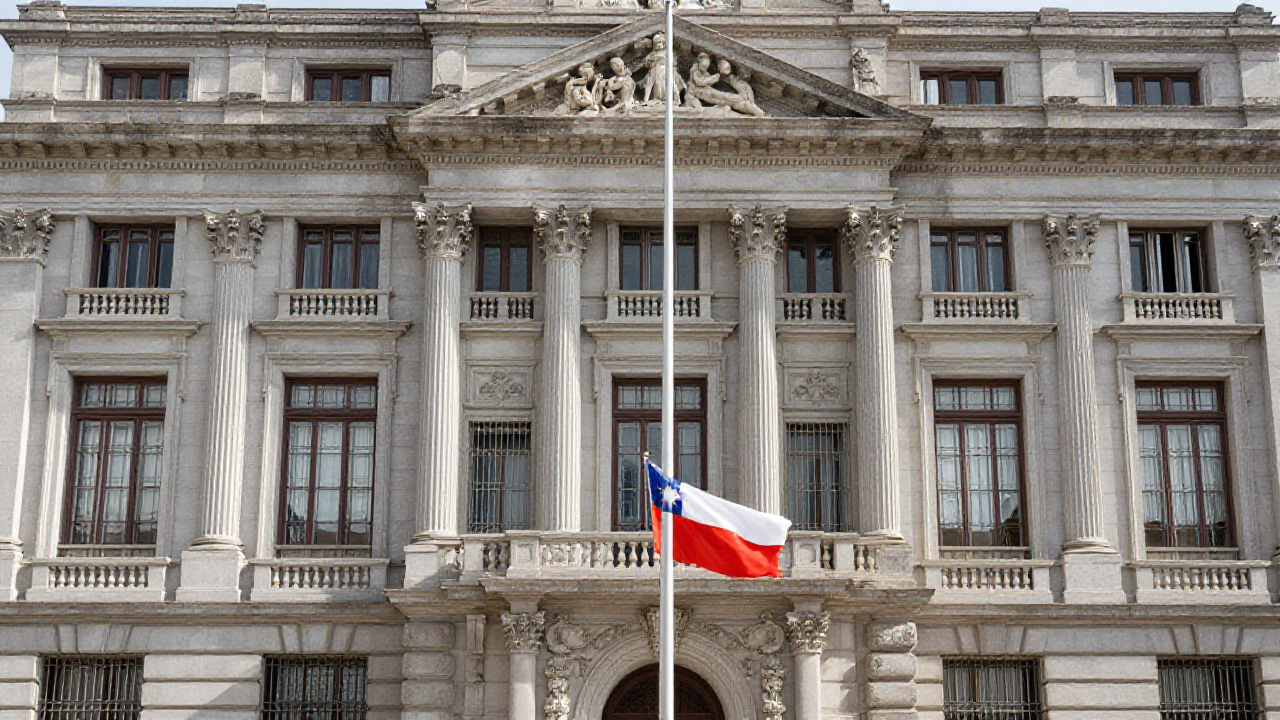
The Supreme Court of Chile rejected a habeas corpus petition filed by the defense of former minister Ángela Vivanco on Wednesday, ensuring she remains in pretrial detention. The ruling maintains the restrictive measure imposed during an investigation into a Belarusian influence network, for which Vivanco is formally charged with bribery and money laundering. This decision concludes the final legal avenue for her immediate release from custody.
Judicial Review of Detention Grounds
The Second Chamber of the Supreme Court, comprising five ministers and one interim lawyer, determined that the previous rulings by the Court of Appeals were legally sound. The court stated that the decision to maintain detention did not suffer from a lack of justification and was based on strictly legal reasoning. This follows an initial order by the 7th Guarantee Court of Santiago on January 30, which was subsequently confirmed on February 9.
"The determination of the Court of Appeals in no case suffered from a lack of foundation, which is endorsed by a simple reading of its content," the Supreme Court resolution stated.
Health Concerns and Legal Incongruities
The court specifically addressed claims regarding Vivanco's medical condition, concluding that her health does not preclude her from remaining in prison. While the court acknowledged the medical evidence, it found no incompatibility between her health status and the current restrictive regime. However, the judges left the door open for future reviews should her medical condition deteriorate substantially.
Additionally, the defense argued that there was an incongruity between the original complaint and the factual basis of the formal investigation. The Supreme Court dismissed this claim, asserting that the factual substrate used for the formalization aligned with the primary allegations. The court further noted that the charge of money laundering provided sufficient justification for detention, a point the defense reportedly did not contest.
Implications for Chilean Governance
This case represents a significant moment in Chile's ongoing efforts to combat high-level political corruption and foreign interference. The prosecution of a former minister under charges of money laundering and bribery signals a tightening of judicial scrutiny over the intersection of government officials and international interests. It mirrors a broader regional trend in Latin America where judicial bodies are increasingly targeting former executive members.
Legal observers will now watch for the progression of the trial and the presentation of evidence regarding the Belarusian network's operations. The focus will likely shift toward whether the prosecution can prove the flow of illicit funds and the specific nature of the bribes. Future hearings will determine if Vivanco's detention is maintained until a final verdict is reached.