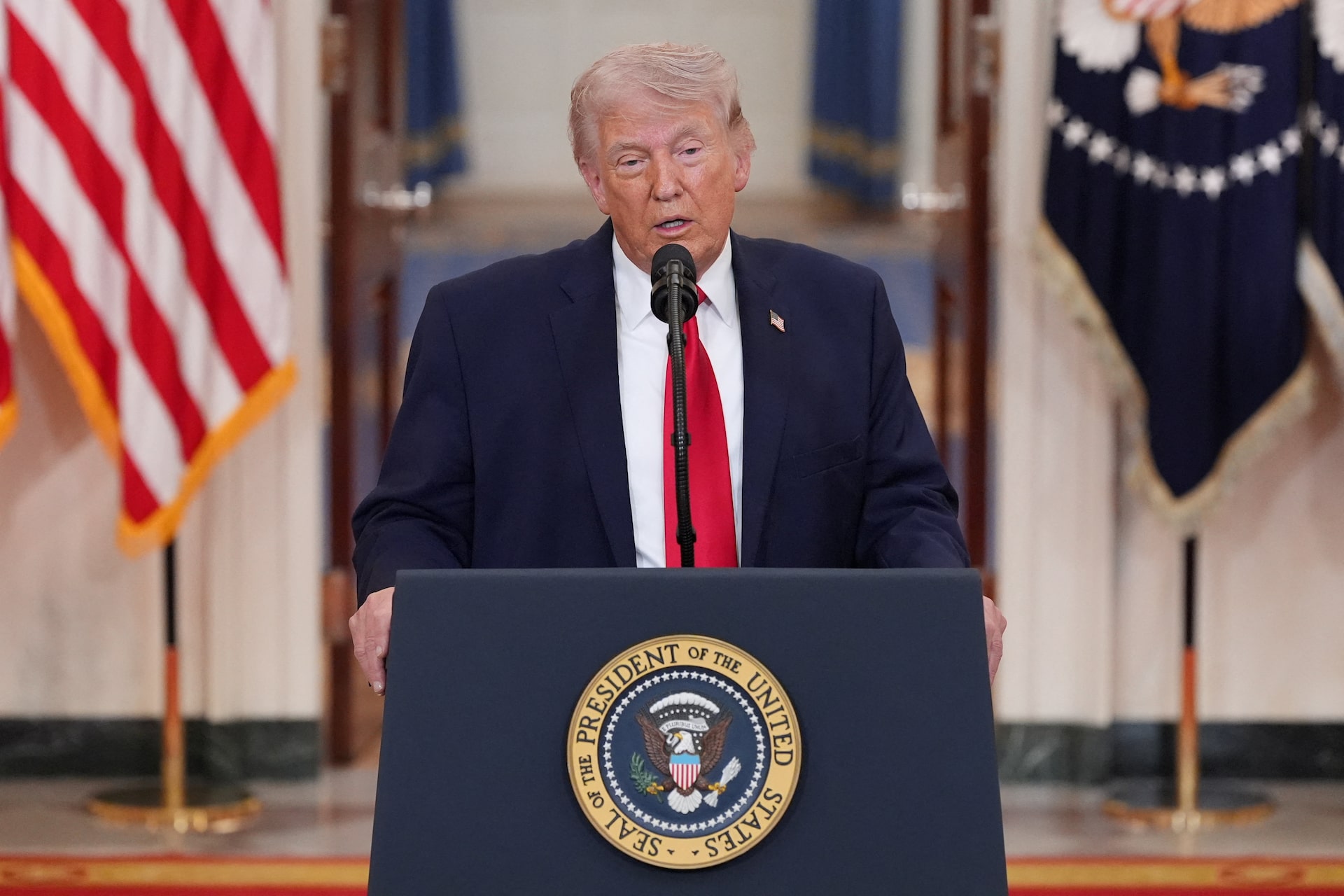
President Donald Trump has issued an ultimatum to Iran, demanding the opening of the Strait of Hormuz by Tuesday or face a retaliatory strike targeting the country’s power plants and bridges. In a social media post, Trump threatened that Tuesday would be "Power Plant Day, and Bridge Day," telling Iranian officials to "open the f---in' Strait" or face "hell," according to the BBC.
This latest deadline follows a series of shifting timelines. According to Expansion.mx, Trump initially threatened to "annihilate" Iran’s power plants on March 21 if the strait was not opened within 48 hours. However, two days later, he announced that Washington was engaged in "very good and productive" talks with Iranian authorities, leading him to postpone any potential strikes by five days. He subsequently extended the deadline again, setting the final expiration for midnight on Tuesday, while recently warning that if the strait remains closed, Iran will "lose every power plant and every other facility they have in the country." Experts have warned that targeting civil energy infrastructure could constitute a war crime, according to Expansion.mx.
Iranian officials have dismissed the threats, labeling the U.S. president’s remarks as "helpless, nervous and stupid" and vowing to respond "in kind" to any attacks on their infrastructure. Trump told ABC that he expects the conflict to end in days rather than weeks, but warned that if a deal is not reached, he would launch a large-scale air campaign with "very few" limits.
Adding a new dimension to the conflict, Trump revealed to Fox News that the U.S. had previously sent "many" weapons to anti-government protesters in Iran via Kurdish groups in the region, according to Expansion.mx. However, this claim contradicts statements from late March by Qubad Talabani, deputy prime minister of the Iraqi Kurdistan region, who told AFP that there had been "absolutely no" attempt by any branch of the U.S. government to arm Iranian opposition groups in Kurdistan.
The standoff over the strategic waterway comes as the broader regional conflict, which escalated on February 28 when the U.S. and Israel launched a war on Iran, continues to destabilize the Middle East. Global supply chains have faced significant disruptions, leading to skyrocketing oil prices and warnings from the United Nations regarding international food security.
In Gaza, humanitarian conditions have deteriorated further since the expansion of the regional war. Despite an October ceasefire agreement, the Rafah border crossing remains closed, and deliveries of essential aid—including food and fuel—have been heavily restricted. According to Al Jazeera, more than 705 Palestinians have been killed since the ceasefire took effect, bringing the total death toll since October 2023 to over 72,000, with at least 172,000 injured.
Meanwhile, the military situation has grown more complex following the successful rescue of a second crew member from a U.S. F-15 fighter jet downed over Iran, the BBC reported. While Trump touted the rescue as proof of "overwhelming air dominance," the loss of aircraft and the presence of Iranian man-portable air defense systems have led some Washington sources to speculate that the President may be reconsidering potential ground operations to seize Iranian oil terminals or nuclear sites, despite his recent rhetoric.
Hamas rejects disarmament terms
Meanwhile, the armed wing of Hamas has formally rejected calls to relinquish its weapons. Spokesperson Abu Obeida stated in a televised address on Sunday that discussing disarmament before Israel fully implements the first phase of the U.S.-brokered ceasefire amounts to an attempt to continue what he called the “genocide” against the Palestinian people.
“What the enemy is trying to push through today against the Palestinian resistance, via our brotherly mediators, is extremely dangerous,” Obeida said. He further described the disarmament demands as “nothing but an overt attempt to continue the genocide against our people, something we will not accept under any circumstances.”
Obeida emphasized that the group would not engage in any discussions regarding their arsenal without guarantees of a complete Israeli withdrawal from the territory.