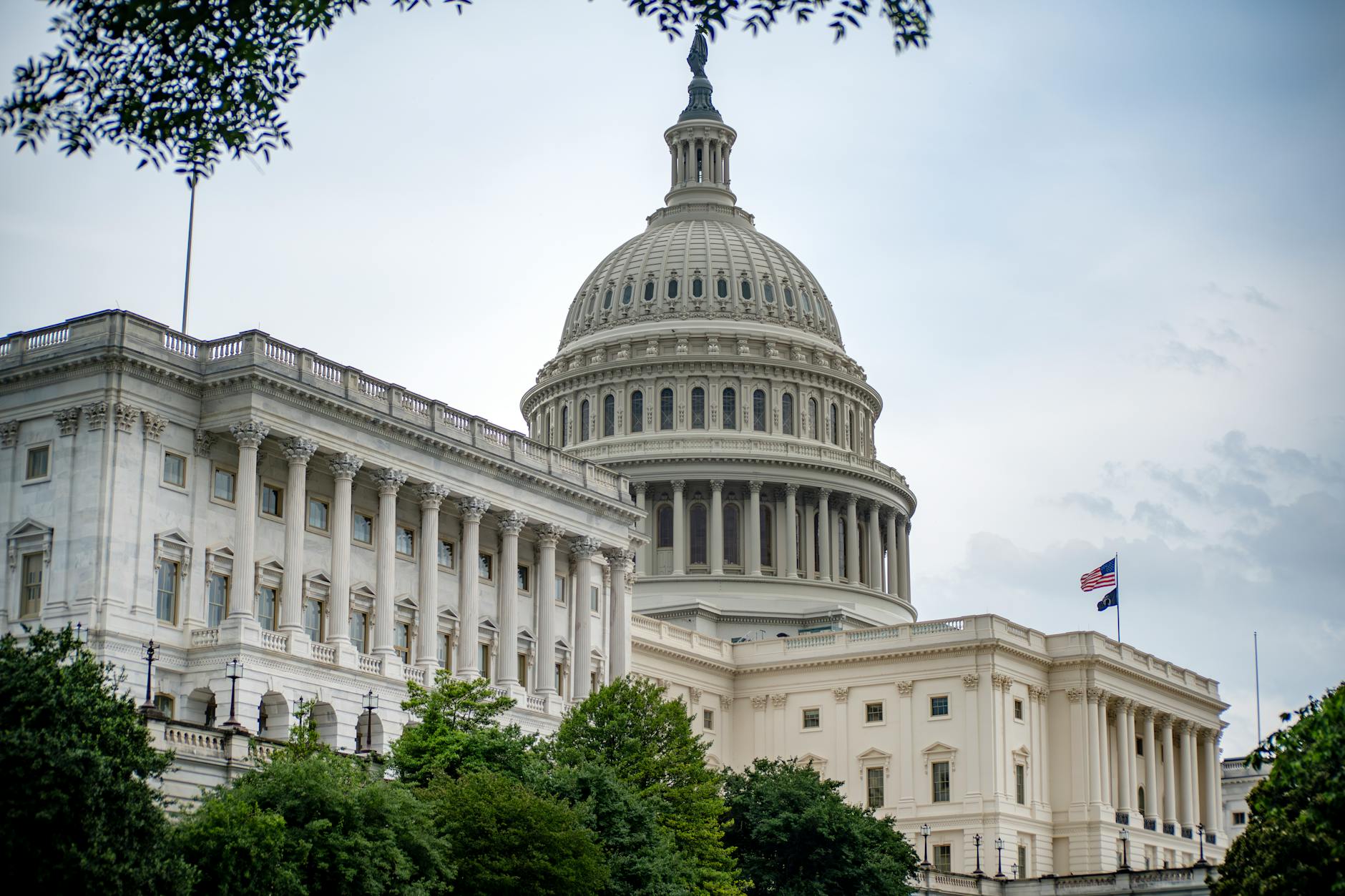
President Donald Trump informed top US lawmakers on Friday that hostilities between the United States and Iran have ended, following a ceasefire implemented in April. The announcement to House Speaker Mike Johnson and Senate President Pro Tempore Chuck Grassley comes as a critical 60-day deadline for congressional authorization of the conflict expired on Friday, according to France24.
Trump defended his decision not to seek new congressional approval for continued military action, arguing that past US commanders-in-chief frequently ignored the 1973 War Powers Resolution. Speaking on the matter, Trump told the BBC that many predecessors viewed the law's limits on presidential power as "totally unconstitutional."
"So many presidents, as an you know, have gone and exceeded it," Trump said, adding that the resolution is "never been used" and "never been adhered to."
While the 1973 law requires a president to terminate the use of armed forces 60 days after notifying Congress unless lawmakers vote to continue, Trump and Defense Secretary Pete Hegseth contend the deadline clock paused when the current ceasefire took effect. This has created a legal dispute over whether a truce counts toward the 60-day limit, the BBC reported.
Maritime blockade and economic warfare
As the administration maintains a blockade of Iranian ports, Trump has used blunt language to describe US naval activity near the Strait of Hormuz. According to Al Jazeera, Trump described US forces as being "like pirates" for seizing Iranian ships and cargo during the conflict.
The US has already seized at least three Iranian-flagged vessels, Al Jazeera reported. Washington has also issued warnings that any ships paying fees or tolls to Iran to transit the Strait of Hier could face US sanctions.
In response to the conflict, the US Department of State imposed new measures on entities involved in Iranian petroleum exports. This includes the China-based Qingdao Haiye Oil Terminal, which the State Department accused of importing millions of barrels of sanctioned crude and generating billions in revenue for Tehran. Beijing has rejected these sanctions, calling them unlawful "unilateral sanctions," Al Jazeera reported.
Diplomatic deadlock and domestic pressure
Despite the claim that hostilities have ended, a peace settlement remains elusive. Trump expressed frustration with a recent peace proposal delivered via a Pakistani mediator, telling the BBC that the Iranian demands include items "he can't agree to."
Trump cautioned against a premature end to the conflict, suggesting that a rushed peace could lead to tensions resurfacing "in three more years," according to Al Jazeera.
On the ground in Iran, the conflict continues to take a human toll. Local media reported that 14 soldiers were killed on Friday during operations to defuse unexploded ordnance in Iran's Zanjan province, Al Jazeera reported. Meanwhile, Supreme Leader Mojtaba Khamenei has urged the Iranian people to wage an "economic battle" against their enemies.
Domestic support for the administration's military strategy appears to be wavering. A new poll from Washington Post-ABC News-Ipsos shows that 61 percent of Americans believe Trump’s use of military force against Iran was a mistake, according to Al Jazeera.
While Trump's administration argues the war powers law is rarely followed, the BBC noted that several recent presidents did seek to comply with the 1973 resolution. This includes Ronald Reagan in 1983 for the deployment of Marines in Lebanon, and both George H.W. Bush and George W. Bush for their respective campaigns in the Gulf and Iraq.