Cuba is currently reeling from a massive power grid failure that left 10 million people in the dark last month. The island nation, already struggling under a six-decade U.S. economic blockade, received a limited supply of relief last week when a Russian oil tanker, the Anatoly Kolodkin, docked at Matanzas.
The vessel delivered 730,000 barrels of crude, an amount experts estimate will satisfy the country’s energy needs for just 10 days. A second Russian tanker, the Sea Horse, diverted its course toward Venezuela instead, further tightening the supply chain.
U.S. military vessels, including a destroyer, continue to enforce the blockade in the Caribbean. President Donald Trump recently signaled an aggressive stance toward the island, telling reporters he expects to have the “honour” of “taking” Cuba. “Whether I free it, take it — I think I can do anything I want with it,” Trump said.
Internal struggles and racial inequality
While the U.S. blockade remains a primary source of economic strain, internal observers point to systemic issues within Cuba as well. Sociologists Katrin Hansing and Bert Hoffmann found that structural inequalities in the country are increasingly falling along racial lines, mirroring pre-revolutionary divisions.
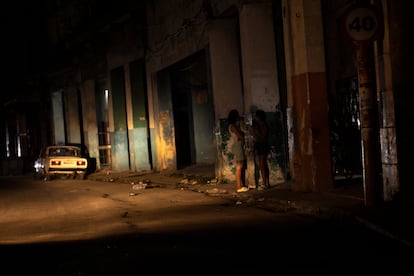
Remittances from abroad flow primarily to white Cuban households, while the expansion of private enterprise has largely benefited those with existing capital. In the streets, residents like those in Havana navigate informal economies to survive, often facing the dual pressure of international sanctions and government oversight.
The disconnect between the state’s discourse of equality and the reality on the ground drove massive protests in July 2021. Demonstrators in Santiago de Cuba and Havana chanted “patria y vida”—homeland and life—to challenge the government’s “patria o muerte” slogan. The state responded with mass arrests and long prison sentences for participants.
Anthropologist and researcher observers note that American analysis often fails to treat Cuba as a protagonist in its own history. By viewing the island solely as a geopolitical pawn, international observers frequently overlook the complex internal dynamics of race, class, and dissent that define modern Cuban life.