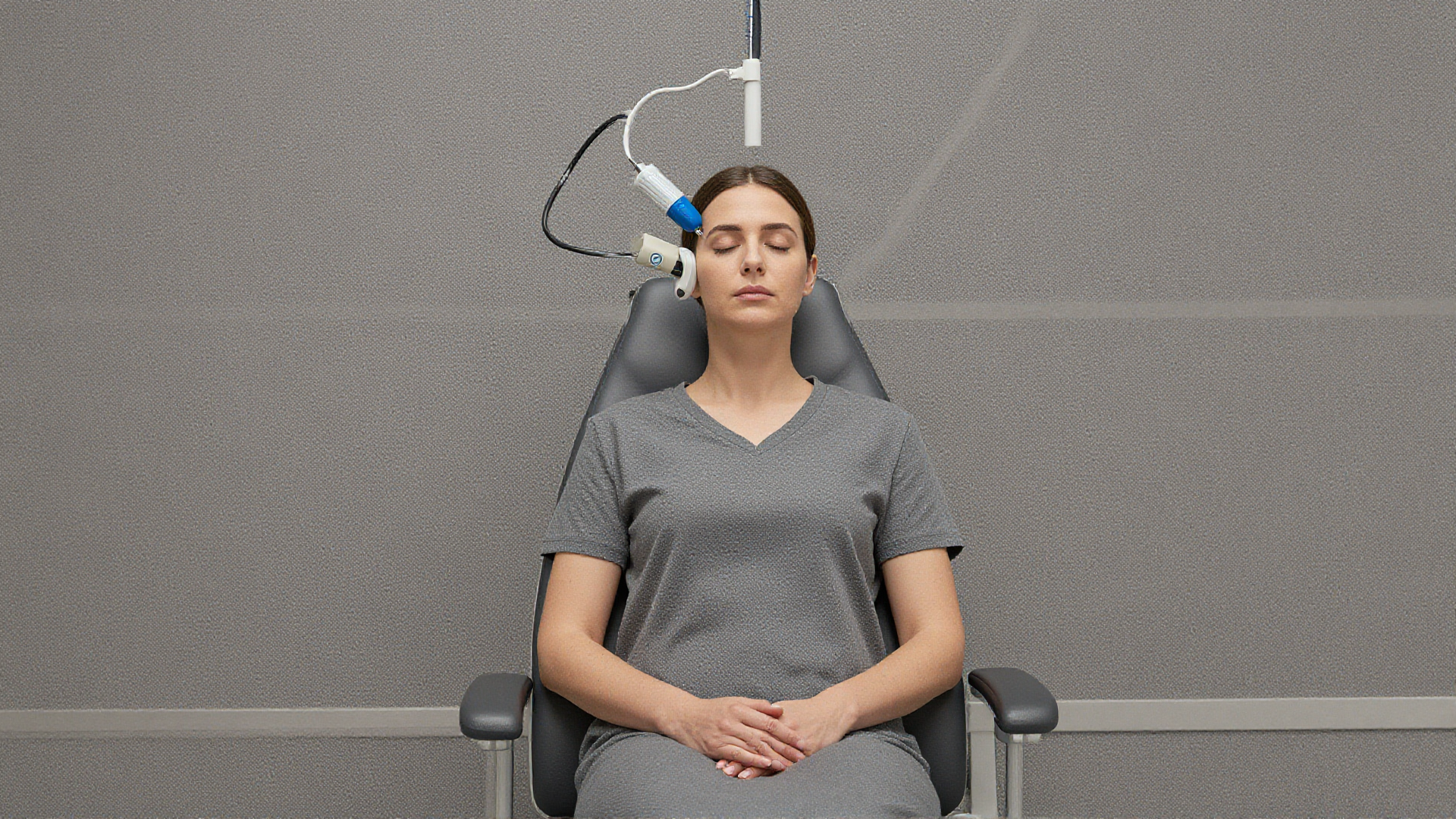
A major economic analysis led by researchers at the University of Nottingham confirms that Transcranial Magnetic Stimulation (TMS) is a cost-effective intervention for moderate to severe depression unresponsive to initial therapies, according to findings published in BMJ Mental Health.
The study compared TMS against usual care in specialist mental health services, finding that the treatment not only alleviates depressive symptoms but also eases pressures on informal carers and NHS resources.
Experts, including senior health economist Edward Cox, utilized a decision-analytic model integrating data from two clinical trials, BRIGhTMIND and The Specialist Mood Disorder trial. This modeling assessed the incremental cost-effectiveness ratio (ICER) for both repetitive TMS (rTMS) and intermittent theta-burst stimulation (iTBS).
From a health-service perspective, rTMS and iTBS yielded ICERs far below the established National Institute for Health and Care Excellence (NICE) threshold, registering at £12,093 and £12,959 per quality-adjusted life-year (QALY) gained, respectively. When factoring in broader societal benefits like reduced work absence, both TMS modalities proved cost-saving compared to standard treatment.
Despite TMS being approved by NICE in 2015 and originating in the UK, its availability remains limited to one in seven NHS Trusts, often due to prior uncertainty regarding its long-term economic value proposition.
Professor Richard Morriss noted that achieving cost-effectiveness hinges on implementing a streamlined, high-throughput model of care delivery to maximize patient volume through the necessary 20-session protocol.
These findings directly address historical objections regarding TMS implementation, providing necessary evidence for policymakers to rationalize and establish robust models for integrating this therapy into routine care for treatment-resistant depression.
Major depression remains a leading cause of global disability, and demonstrating the financial viability of advanced treatments like TMS is critical for expanding options beyond first and second-line antidepressant courses.