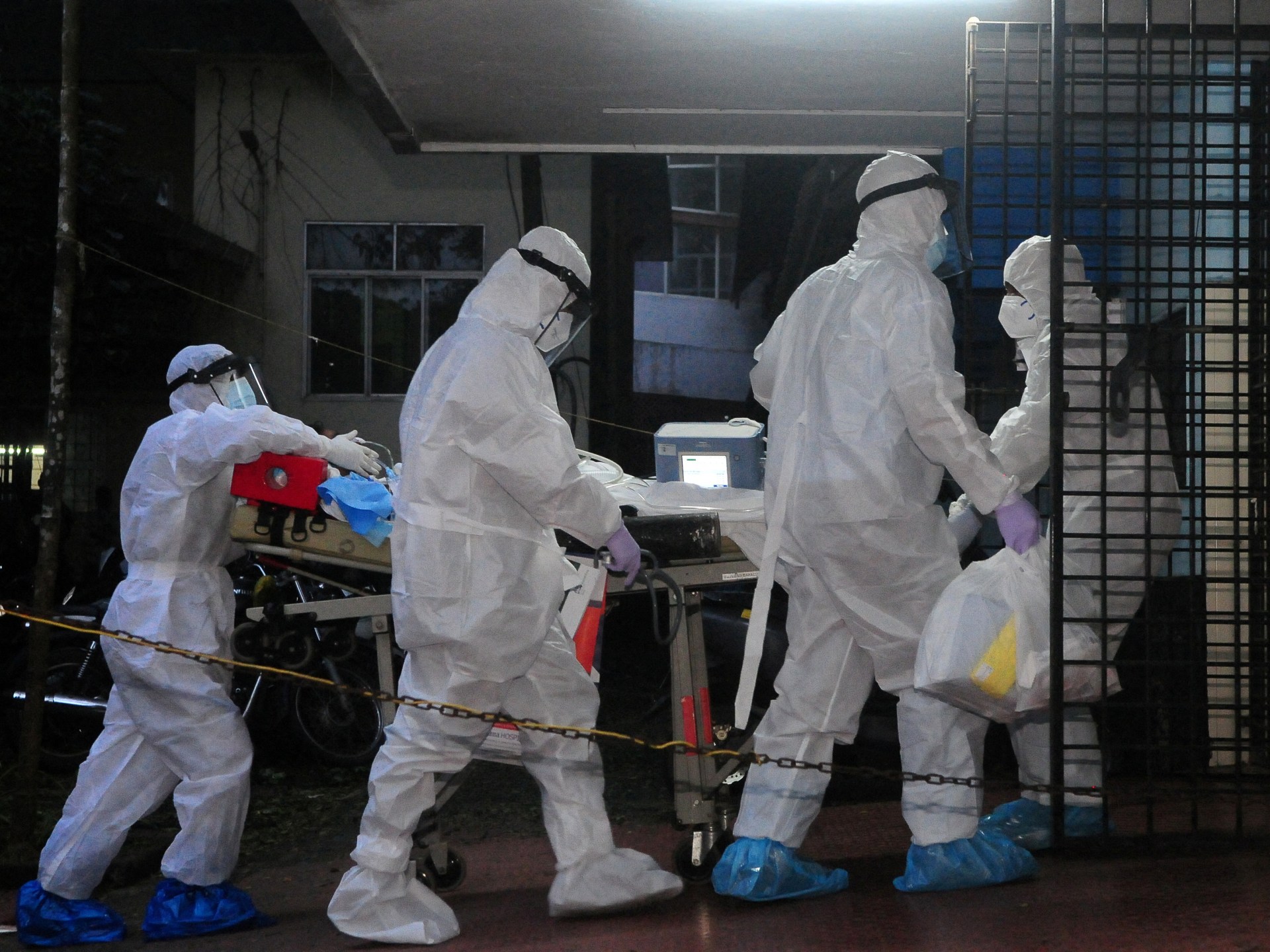
An outbreak of the Nipah virus (NiV) in India’s eastern state of West Bengal has prompted several Southeast Asian countries, including China, to reinforce health screening protocols at international airports. The Indian health ministry confirmed two cases since December 2025, though all 196 traced contacts have reportedly tested negative and remain asymptomatic. The situation is under constant monitoring, according to the ministry.
The Nipah virus is a zoonotic pathogen transmitted from fruit bats or through contaminated food, capable of causing severe neurological disease in humans. Dr. Kaja Abbas, an infectious disease epidemiologist, noted the case fatality rate ranges between 40% and 75% in infected individuals. However, Dr. Abbas also indicated that the basic reproduction number is typically below one, suggesting a low probability of a widespread pandemic via human-to-human transmission.
Neighboring nations, including Thailand, Indonesia, Nepal, and Malaysia, have implemented measures such as installing thermal scanners and requiring health declaration forms for arriving passengers. Social media chatter in China reflected public anxiety regarding potential imported cases coinciding with the high-volume Lunar New Year travel period, reported The South China Morning Post.
Historically, NiV outbreaks have recurred in South Asia, with previous cases in India linked to consumption of contaminated palm sap or, potentially, airborne transmission, though the exact trigger for the West Bengal event remains unclear. The two confirmed cases being healthcare workers suggests potential transmission within a hospital setting, according to expert analysis.
Currently, no approved vaccine or specific treatment exists for NiV infection, although clinical trials for a vaccine are underway in Bangladesh. Medical professionals have utilized antivirals like Ribavirin, and the state of Kerala successfully used Remdesivir during a 2023 outbreak, resulting in an improved case fatality rate.
The World Health Organization (WHO) guidelines stress preventative actions, including protecting date palm sap from bat contamination and ensuring thorough cooking of potentially exposed food products. In healthcare environments, strict adherence to contact, droplet, and sometimes airborne precautions is necessary to limit occupational exposure.
While the immediate economic disruption may be less severe than that caused by SARS-CoV-2, the incident underscores global vulnerability to zoonotic spillover events. The focus remains on containment through rigorous screening and public health education until effective countermeasures are widely available.