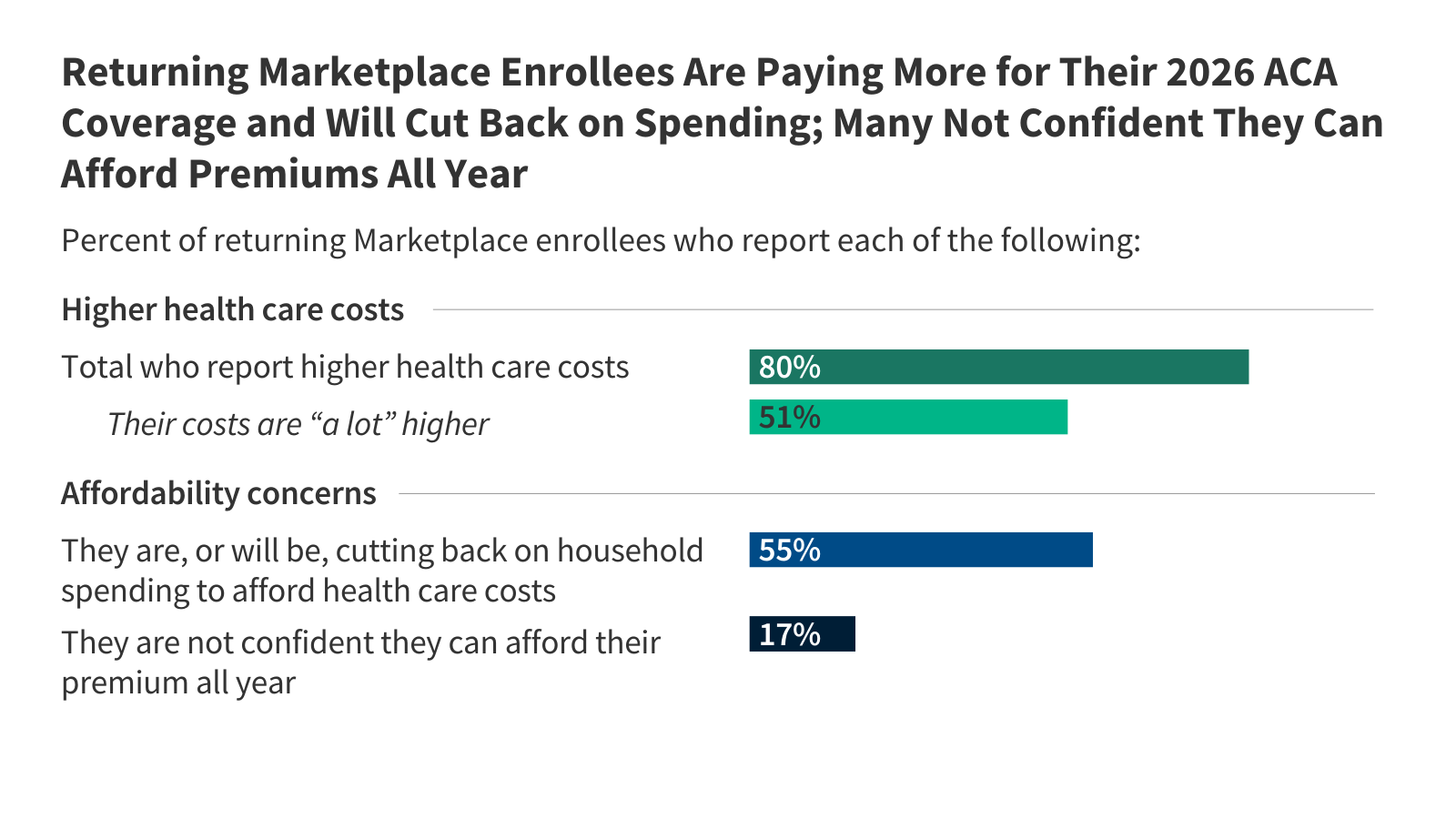
A new survey indicates eight in 10 Americans with Affordable Care Act coverage face higher costs, forcing many to reduce spending on food and transportation. The financial strain follows the expiration of enhanced tax credits, leaving millions of enrollees to navigate increased premiums without legislative relief. This data underscores the immediate economic impact of federal policy changes on household budgets across the United States.
The Health Care Financing Research nonprofit KFF conducted the poll between February and March of 2026 among 1,117 adults. According to the findings, approximately 55% of respondents plan to manage these costs by cutting spending on basic household needs. About half of the participants reported that costs are significantly higher than in the preceding year.
Priscilla Brown, a truck dispatcher from Orlando, Florida, reported rationing insulin to afford other necessities. She stated that insurance costs have become so high she sometimes skips medication or refuels her car with only half the required amount. Brown noted that her monthly premiums jumped from zero dollars last year to 17 dollars this year with a higher deductible.
The expiration of enhanced tax credits on Dec. 31 was a primary driver for these increased premiums. Democrats fought to maintain the subsidies during the previous year but faced opposition from Republican leadership. Momentum for a bipartisan compromise collapsed in January, leaving roughly 23 million enrollees without anticipated relief.
About seven in 10 enrollees remained on the marketplace insurance, yet three in 10 changed their specific plans within the system. Conversely, two in 10 switched to employer coverage or government programs like Medicare and Medicaid. One in 10 of last year’s enrollees dropped coverage entirely and are now uninsured.
Eric LeVasseur, a software developer in Seal Beach, California, decided against renewing his mid-tier silver-level plan. He stated that the cost was set to nearly triple to 1,200 dollars per month, which his budget could not absorb. LeVasseur joined the growing cohort of individuals purchasing less comprehensive insurance outside the ACA marketplace.
Respondents facing higher costs overwhelmingly blamed health insurance companies and Republican lawmakers for the price hikes. About seven in 10 returning enrollees placed significant blame on insurers, while slightly over half blamed President Donald Trump and pharmaceutical firms. James Mako, a political independent from Boca Raton, Florida, argued that Republican proposals were merely sales gimmicks.
These findings suggest that unresolved political fights continue to strain regular Americans even as federal lawmakers prioritize other issues. The anxiety regarding emergency care and hospitalization has become acute among those relying on marketplace coverage. About three-quarters of people reported being very or somewhat worried about paying for emergency medical services.
The survey utilized probability-based panels and followed up with respondents from a previous year to track changes in insurance behavior. The margin of sampling error for the full sample is plus or minus 3.8 percentage points. This data provides a snapshot of how policy shifts translate into immediate financial pressure on consumers.
As Congress remains deadlocked, enrollees face an uncertain financial landscape for the upcoming year. Observers will watch to see if legislative action restores subsidies or if further disenrollment occurs. The situation highlights the fragility of health care affordability in the current political environment.