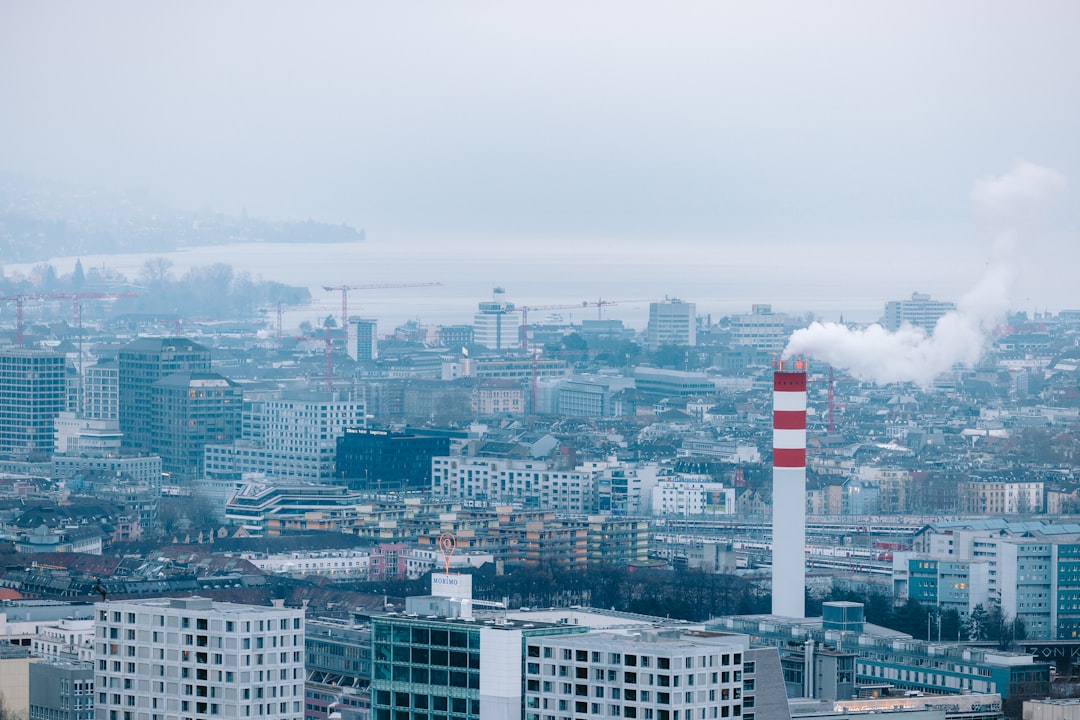
Air quality across Europe is showing signs of improvement, but current progress falls short of the European Union's 2030 goals, according to a report released Thursday by the European Environment Agency (EEA).
The annual report indicates that while many regions now meet EU standards for nitrogen dioxide (NO2) and fine particulate matter (PM2.5), pollution still exceeds legal limits at up to 20 percent of monitoring stations across 39 countries.
According to www.france24.com, the data covers the 27 EU member states along with 12 associated countries, including Switzerland, Norway, and Turkey.
While some pollutants are under control, the EEA highlighted significant failures regarding smaller particulate matter (PM10), ground-level ozone (O3), and benzo(a)pyrene (BaP).
"EU standards were mostly met in most regions across Europe for fine particulate matter (PM2.5) and for nitrogen dioxide (NO2)," the EEA stated in its report.
Challenges to meeting 2030 goals
The agency warned that the gap between current levels and the 2030 targets, which were established in 2024, remains substantial. Reaching these goals will require member states to strictly implement their established pollution roadmaps.
"For most pollutants the distance to the 2030 target is significant and will likely require additional measures," the report said, specifically noting the need for more aggressive action on fine particulate matter.
Achieving these targets may face political hurdles. The outlet reported that France recently rolled back low-emission zones (LEZs) intended to restrict polluting vehicles, illustrating the difficulty of passing such environmental measures.
Furthermore, the EU's 2030 targets do not yet align with the stricter recommendations set by the World Health Organisation in 2021.
Ground-level ozone remains a particular crisis. The EEA noted that ozone levels have not seen significant decreases and were linked to 63,000 premature deaths in the EU in 2023.
Climate change is expected to exacerbate this issue. The agency stated that the increased frequency and intensity of heatwaves will drive higher ozone formation.
Because ozone and its precursors can travel across borders, the EEA warned that local and national actions might not be enough. The agency called for stronger European and international cooperation to manage transboundary air pollution.