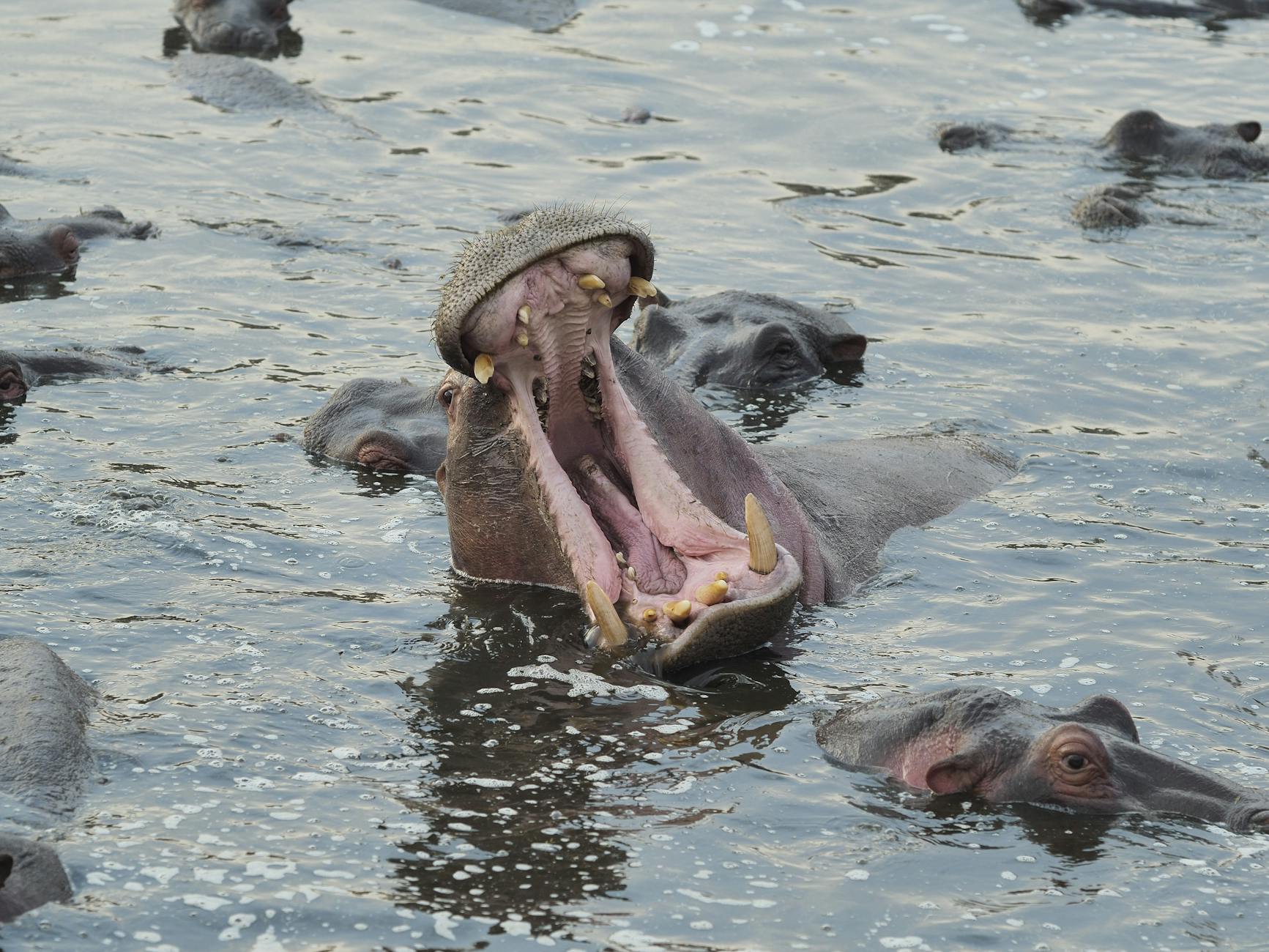
The Colombian government has authorized the euthanasia of 80 hippopotamuses to curb the spread of an invasive population in the Magdalena River basin, according to reports from CNN en Español and Reddit.
Environment Minister Irene Vélez announced the decision during a Monday press conference, stating that the measure is necessary to protect native species like manatees and river turtles.
“Without that action is impossible to control the population, and, as we already saw, in the' estimates it would imply that by 2030 we would have at least 500 hippos affecting our ecosystems and our native species, such as the manatee and the river turtle. It is with responsibility to our ecosystem that we have to take these actions,” Vélez said.
The hippos are descendants of four animals—one male and three females—illegally imported to Colombia in 1981 by drug lord Pablo Escobar. The animals were part of a private zoo at Hacienda Nápoles, located near Puerto Triunfo in the Antioquia department.
Ecological impact and failed relocation
Following Escobar's death in 1993, the animals were left in the estate's lakes. Authorities initially believed the population would remain controlled or perish, but the species has since spread to the departments of Santander and Bolívar.
There are currently approximately 160 hippos in the region. The Ministry of Environment noted that no other country has agreed to take in the invasive species.
“The administrative silence tells us there is no interest in receiving them,” Vélez acknowledged.
Large hippos, which can weigh up to three tons and consume 70 kilograms of food daily, significantly alter their environment. Their waste produces bacteria that release carbon dioxide into rivers and ponds, while their movement displaces soil, minerals, and small organisms.
While scientific groups have debated alternatives like surgical sterilization and confinement, these methods are often deemed too costly or unfeasible for a population of this size. Projections suggest the population could reach 1,000 animals by 2035 if no action is taken.