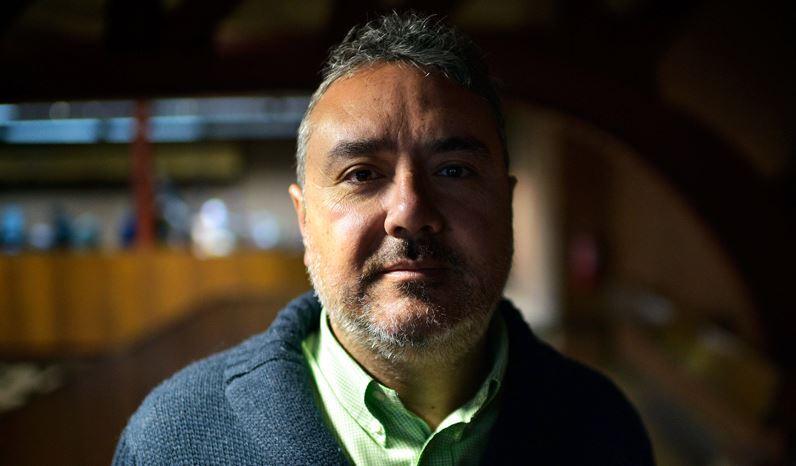
Antofagasta author Rodrigo Ramos Bañados has released 'La biblioteca hundida,' a novel that explores the complex ties between narcotics trafficking and cultural development in the Chilean desert.
The narrative centers on El Esfuerzo, a settlement in Alto Hospicio near Iquique, where a community library emerges from the shadows of the local drug trade.
In the book, a character known as 'Culebra'—a figure managing both a construction company and drug trafficking interests—seeks to establish a cultural space to fund his philanthropic ambitions.
A library built on contraband
The resulting institution, dubbed the 'Biblioteca Chicha,' sits on unstable ground prone to sinkholes, mirroring the precarious nature of the neighborhood itself.
'The library at one point was going to sink, like hundreds of houses in the neighborhood,' the text notes, referencing the saline soil of the region.
The name 'Chicha' refers to the vibrant, fluorescent aesthetics of Peruvian cumbia posters, a visual style the author links to the architecture of El Alto, Bolivia.
As the library takes root, a black market for literature develops in the periphery. The novel depicts a community where books are traded for drugs, and dealers diversify into the literary market.
Beyond the crime narrative, the book examines how reading acts as a tool for survival and perspective in a landscape dominated by functional survival and violence.
Bañados connects the Chilean borderlands to the historical legacies of dictators Augusto Pinochet and Hugo Banzer Suárez, linking their regimes to the institutional origins of regional drug trafficking.
The novel uses the border between Chile and Bolivia to examine shared identities and the often-ignored realities of the continent's most marginalized populations.