Tech outlet The Verge, in collaboration with industrial scanning firm Lumafield, recently conducted an in-depth review of various USB-C rechargeable AA lithium batteries currently on the market. The results indicate that the Zepath 3600 is the only product that excels in both structural safety and battery longevity.
While many batteries on the market feature built-in USB-C charging ports, testing revealed that this design often comes with fatal flaws. Lumafield engineer Alex Hao used X-ray scanning to discover that, in order to accommodate the charging port, most batteries are forced to shrink the size of their internal cells. This often leads to safety hazards such as misaligned electrodes or insufficient anode overhang (AOH). For instance, the internal electrodes of the well-known brand Paleblue were found to be bent, posing a risk of short-circuiting, while brands like Nitecore exhibited loose assembly and inconsistent quality control.
Structural Safety Over Port Convenience
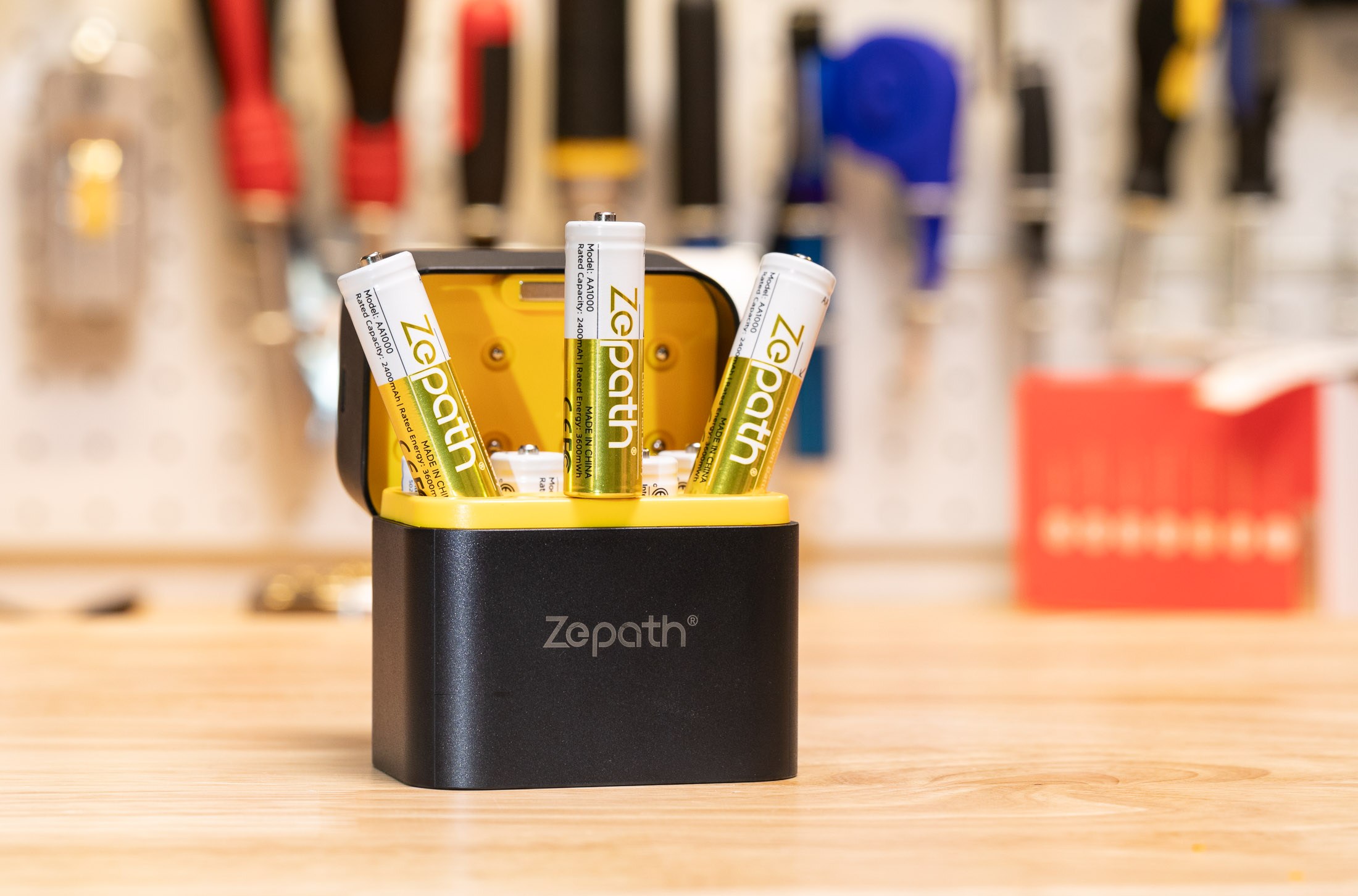
The Zepath 3600 utilizes an external charging case. While users cannot plug a cable directly into the battery itself, this design avoids the need to sacrifice battery capacity. The review noted that the Zepath 3600 significantly outperformed competitors with integrated ports during testing in devices like the Game Boy Advance and high-intensity flashlights. Furthermore, the product's charging case features intelligent detection, automatically rejecting alkaline or NiMH batteries and providing clear status updates via LED indicators.
From a cost perspective, the Zepath 3600 is highly competitive. An eight-pack retails for approximately $20, averaging just $2.50 per battery—cheaper than mainstream NiMH options like the Panasonic Eneloop. Lumafield’s scan report praised the battery for its high electrode alignment and excellent space utilization, calling it the most solidly constructed option in its category.
Reviewers emphasized that consumers should avoid low-quality, budget products. Certain batteries tested, such as Spyong and CZVV, have already been pulled from platforms like Amazon due to severe internal deformation or electrode alignment issues. While lithium batteries inherently carry a risk of flammability, the Zepath 3600 offers a relatively reliable daily power solution through more rigorous structural engineering.