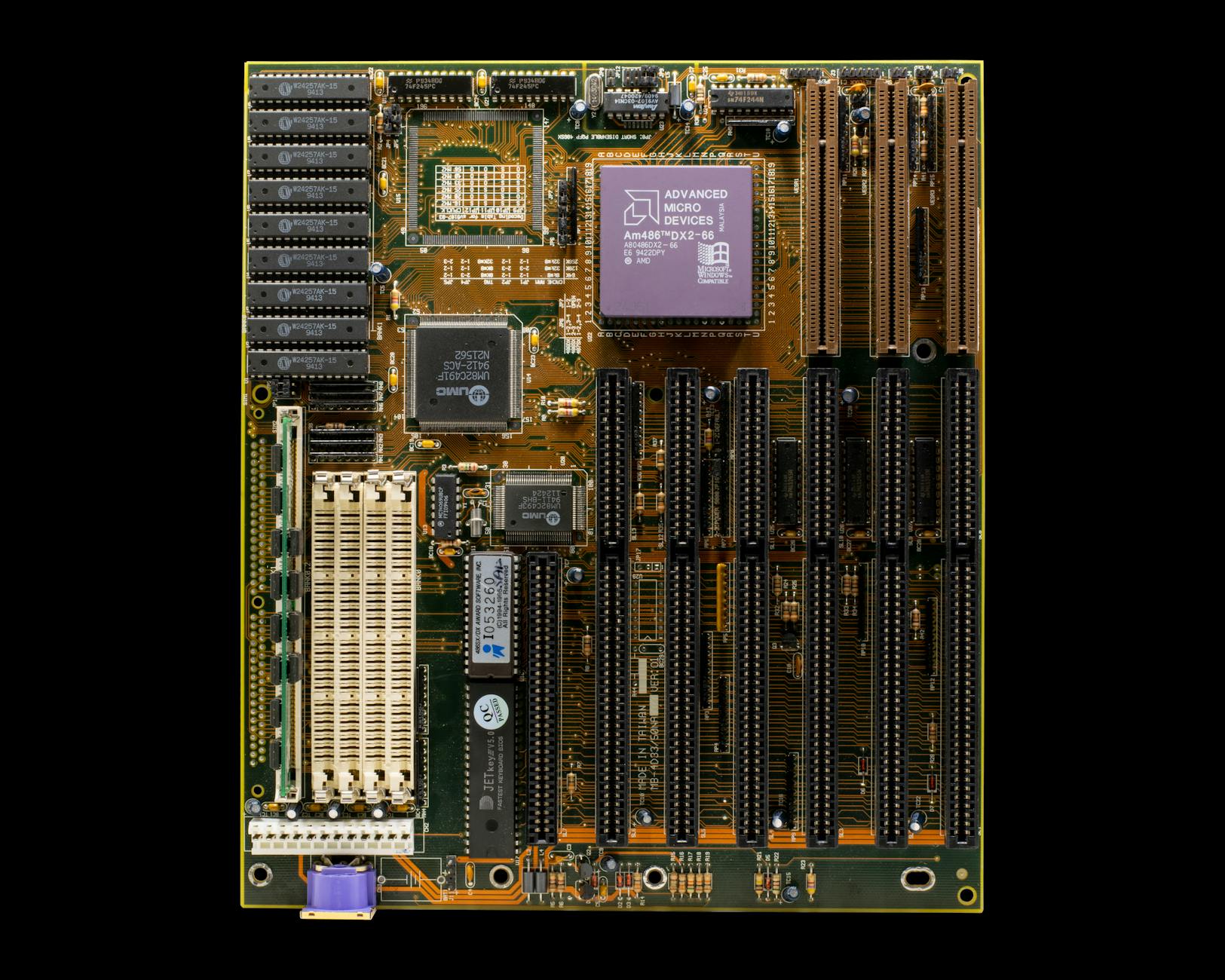
The Linux kernel development team is preparing to end support for the i486 processor architecture. A patch submitted by veteran kernel contributor Ingo Molnar has entered the merge queue and is expected to be officially implemented in Linux 7.1, slated for release later this year.
The patch aims to remove the M486, M486SX, and MELAN options from the Kconfig configuration. Once merged, the upstream Linux kernel will no longer support compilation for 486-level systems. This marks the first major reduction in legacy architecture support since the removal of 80386 processor support in 2012.
Developers no longer willing to pay for "museum-grade" hardware
Linux creator Linus Torvalds voiced his opinion on 486 hardware back in 2022. He stated bluntly that i486-level hardware is meaningless in modern development, noting, "If someone is using it as a museum piece, then they should also be running a museum-grade kernel."
Ingo Molnar pointed out that maintaining these ancient 32-bit CPU architectures not only drains developer resources but also necessitates complex emulation facilities. In his patch notes, he stated: "This compatibility code sometimes even introduces new issues, when developers should be spending their time on more valuable work."
After refining his proposal several times over the past year, Molnar decided to end this chapter by removing the configuration options entirely. He emphasized that no mainstream kernel packages currently support 486 chips, meaning this change will not impact actual users. "Users of legacy systems can continue to use older kernel versions," he added.
With Linux 7.0 expected to arrive in the coming months, version 7.1 is anticipated for release mid-year. If the patch is successfully merged, it will officially mark the end of the 486 architecture's place in the Linux kernel's mainstream development cycle.