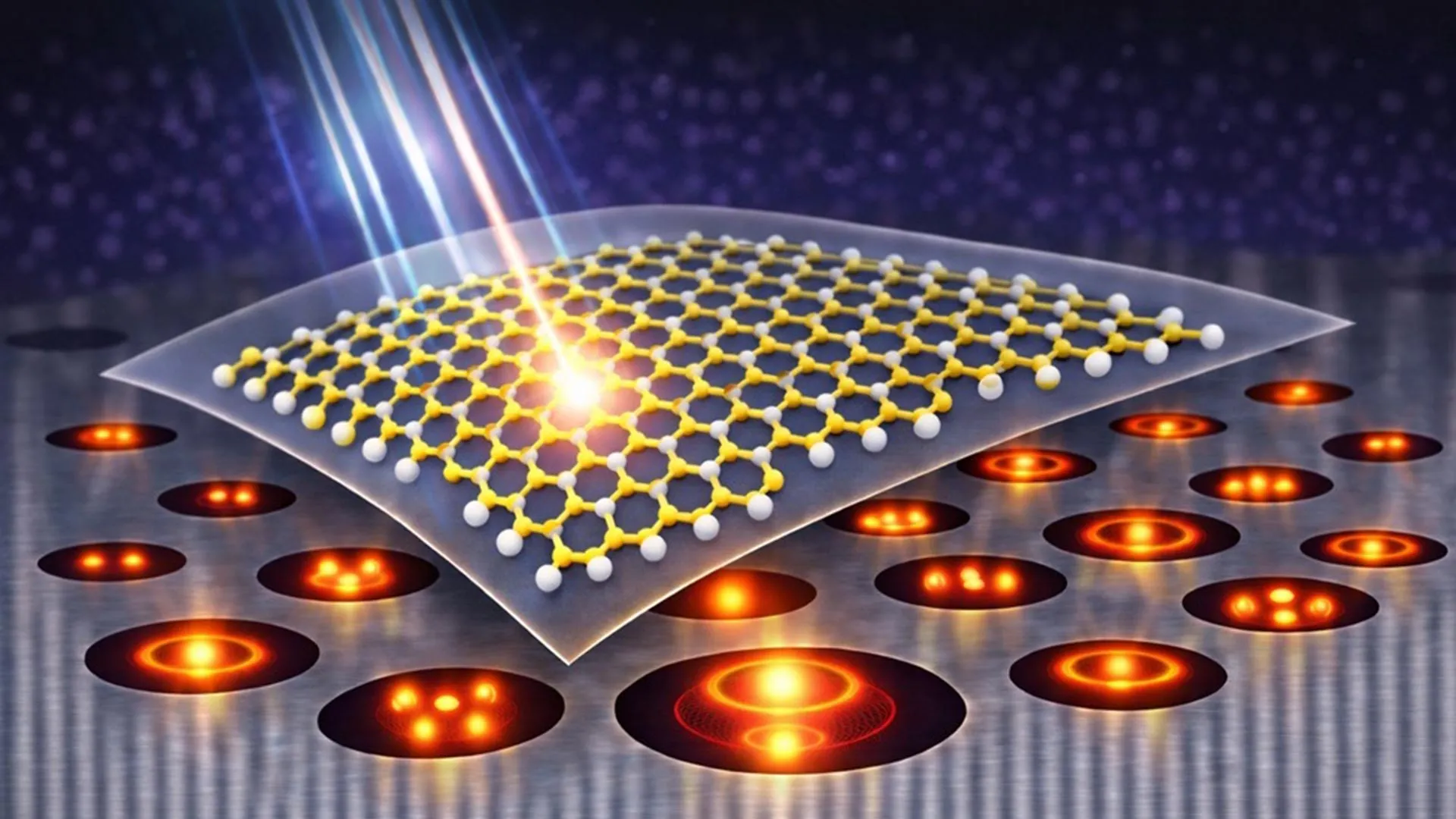
Researchers from the University of Padua and Politecnico di Milano have developed a novel quantum security device using borosilicate glass. Published in Advanced Photonics, the study details a high-performance quantum coherent receiver embedded directly into the material. This innovation aims to secure data against the growing power of quantum computers.
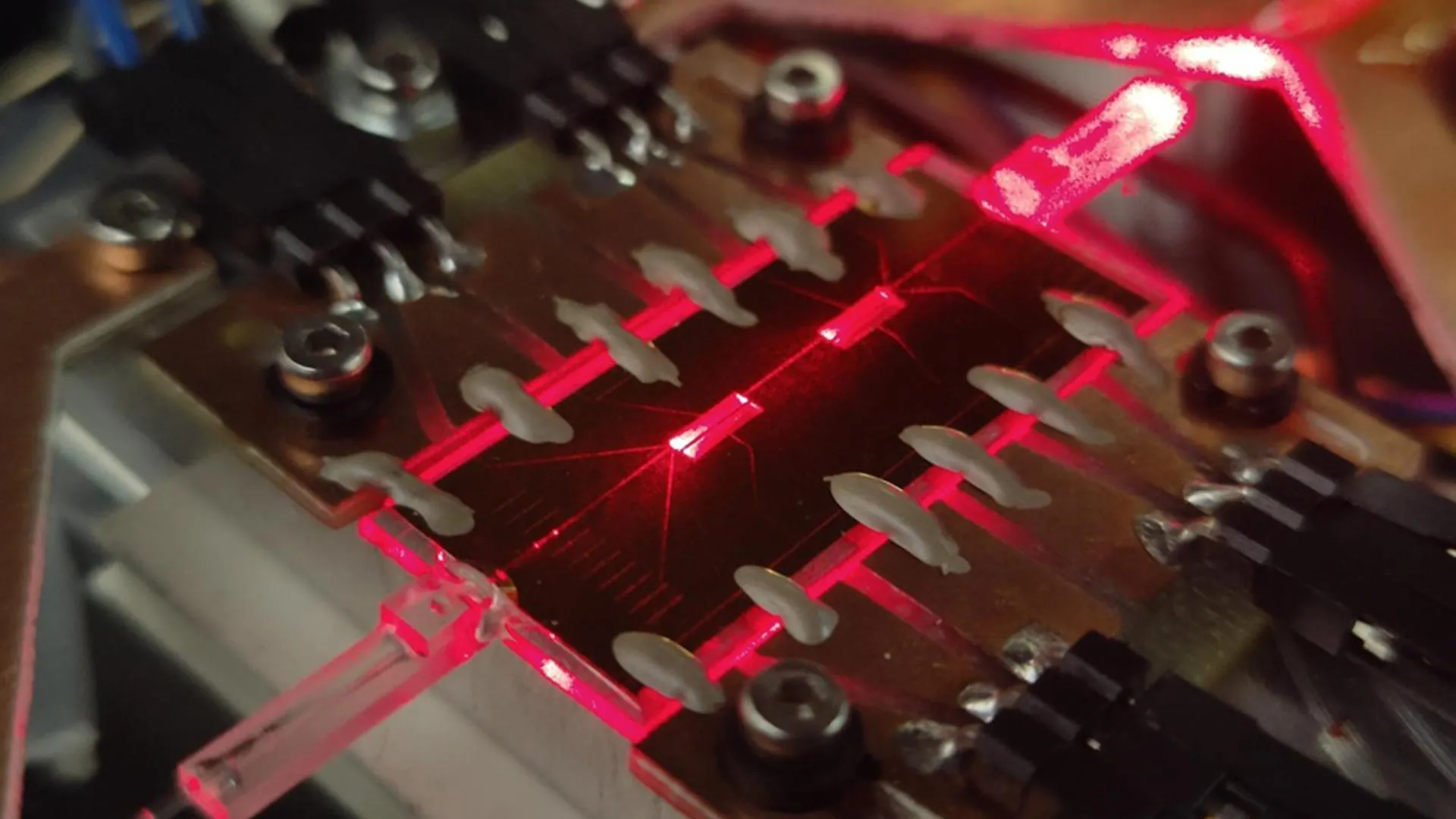
The team utilized femtosecond laser writing to construct light-guiding paths within the glass. This technique creates compact photonic circuits without the complexity of standard semiconductor manufacturing. The resulting device delivers low optical loss and stable performance compatible with existing fiber-optic systems.
Current integrated receivers frequently rely on silicon technology which presents significant limitations. Silicon components are sensitive to polarization and tend to exhibit higher optical losses that restrict reliability. Glass offers natural insensitivity to polarization and allows for three-dimensional waveguide structures with minimal signal degradation.
The researchers created a fully tunable heterodyne receiver capable of handling multiple quantum communication tasks. When tested as a source-device-independent quantum random number generator, the chip achieved a secure generation rate of 42.7 Gbit/s. This figure sets a new record for this specific type of secure system.
The same hardware supported a quadrature phase-shift keying quantum key distribution protocol during testing. In a simulated fiber link spanning 9.3 kilometers, the system reached a secret key rate of 3.2 Mbit/s. These results demonstrate that glass-based photonic front ends can support advanced quantum key distribution effectively.
Quantum cryptography relies on the laws of physics rather than mathematical complexity to maintain data security. Many current encryption methods could become vulnerable as quantum computing technology continues to advance rapidly. Practical deployment requires small, dependable devices that can accurately read delicate quantum signals carried by light.
Glass photonics could help bridge the gap between experimental laboratory setups and practical quantum networks. The material is resistant to harsh environments and supports long-term reliability for real-world deployment. Potential applications include space-based quantum communication systems where durability is essential.
This work marks an important step toward transitioning quantum communication from controlled environments to real-world infrastructure. The findings suggest glass-based integrated photonics is a durable and versatile platform for future technologies. Global quantum networks may become more scalable using these cost-effective and stable components.