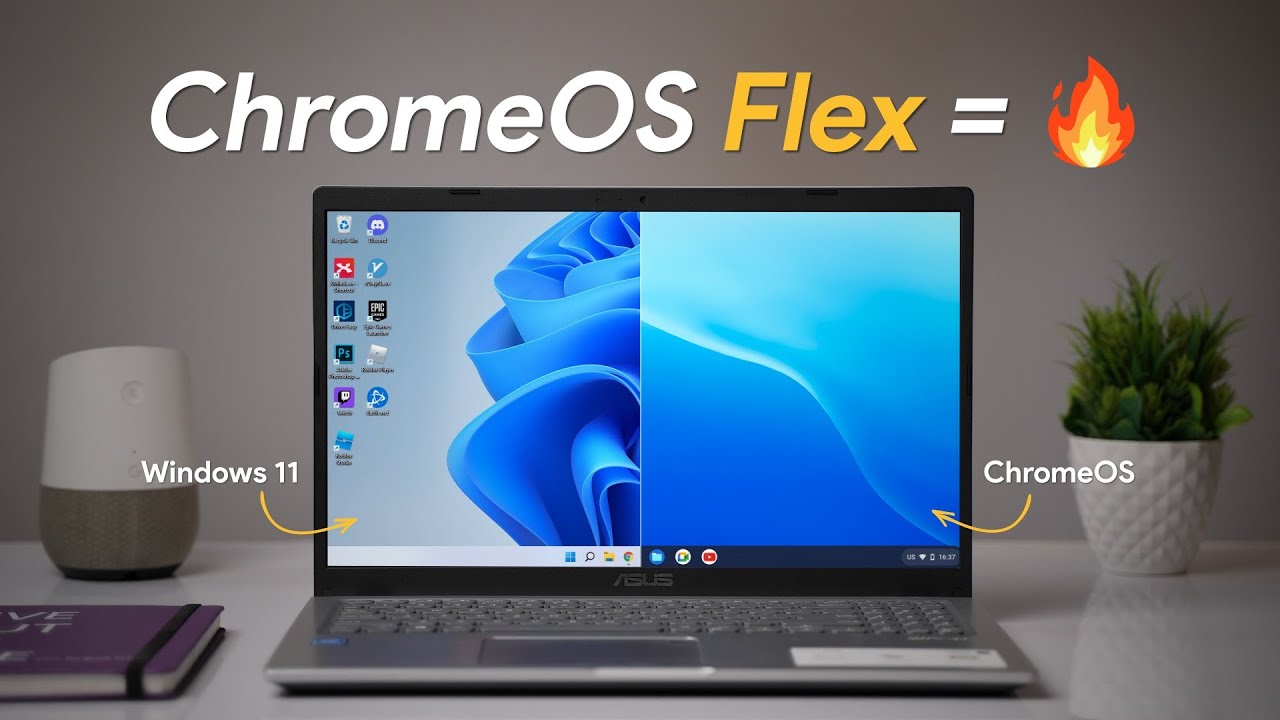
Google is betting that the future of computing lies in breathing new life into old hardware. The company announced a $3 "rescue kit" this week, designed to transform obsolete laptops into functional machines for students and remote workers.
The solution relies on a specialized, ultra-lightweight version of ChromeOS Flex. Instead of installing a traditional operating system on a slow, aging hard drive, the kit creates a bootable environment that runs entirely from the system's RAM. This removes the performance bottlenecks common in mechanical drives found in machines over a decade old.
According to technical specifications released by the company, the kit supports any 64-bit processor with at least 2GB of RAM. The software includes an AI-driven optimization guide that automatically detects and installs specific drivers for hardware dating back to 2012.
A low-cost bridge to the digital future
Beyond basic performance, the kit integrates a "Micro-Kernel" that disables unnecessary BIOS processes to prioritize cloud-based applications. It also features Google’s sandboxing technology to ensure that even older hardware receives modern malware protection.
Users gain access to a "Gemini Lite" integration, which provides basic AI assistance for drafting emails and managing calendars. Because the system utilizes Google Drive for storage, the local health of the user's hard drive becomes irrelevant to the machine's overall performance.
This move represents a shift in Google’s strategy, moving away from the industry standard of planned obsolescence. By pricing the kit at $3, the company aims to make modern digital tools accessible to users who cannot afford high-end, $1,000 workstations.
The setup process is designed for simplicity. Users create a plug-and-play USB drive that boots the system in under 10 minutes. The kit prioritizes Wi-Fi and Ethernet connectivity to ensure streaming and cloud-based tasks remain stable, even on legacy network cards.
For many in Latin America and other regions where hardware costs are prohibitive, this software solution offers a path to stay connected. Google claims this is more than a commercial product; it is a push toward technological sustainability that challenges the "use-and-discard" culture currently dominating the personal computer market.