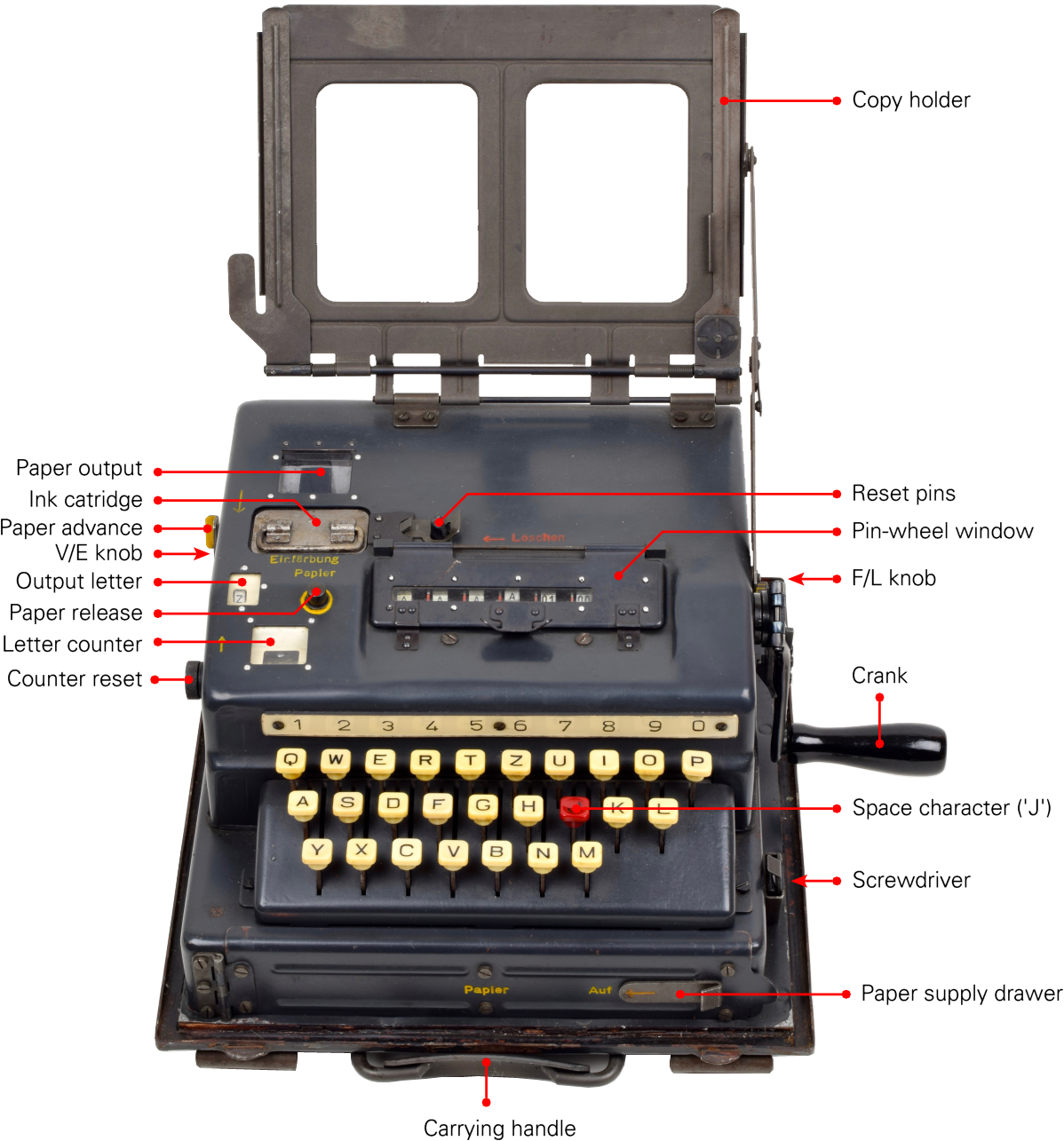
Independent developer Martin Gillow has unveiled a digital archaeology project that brings the WWII-era Nazi SG-41 (Schlüsselgerät 41) cipher machine to the web browser. Through this interactive 3D model, users can observe the intricate operation of the machine’s gears, levers, and stepping logic in detail.
The SG-41 was once considered the successor to the famous Enigma machine. Because of the hand crank on its side, the device earned the nickname "Hitler's Coffee Grinder" at the time. Its primary function was to print both plaintext and ciphertext onto two separate paper tapes.
Gillow describes the project as a blend of digital preservation and engineering archaeology, aimed at revealing the mechanics behind these precision devices. His inspiration came from visits to Bletchley Park and the National Museum of Computing in the UK.
From CT Scans to Digital Replica
To ensure the model's accuracy, Gillow utilized CT scan data of an SG-41 obtained from a German museum as a reference. He also cross-referenced technical specifications provided by the Crypto Museum to verify that the encryption logic in his digital model matched the physical output of the real machine.
"I’m not sure if anyone has ever delved as deeply into the operational details of this machine as I have, to the point of being able to replicate it in such detail," Gillow said in an interview.
In 2025, Gillow was invited to examine an actual SG-41 held in the collection of the UK’s Government Communications Headquarters (GCHQ). This opportunity allowed him to resolve several key structural challenges he had encountered during the modeling process and confirmed that his simulation was highly accurate to the original hardware.
Although the web project is visually authentic, Gillow clarifies that it is not a physics-based simulation. "The gears aren't truly driving one another, and the levers don't strictly follow the laws of physical contact," Gillow explained. Nevertheless, by calculating gear tooth counts and cam mappings, he ensured that the movement trajectory of every component in the simulated environment perfectly mirrors the real machine's operation.
This project continues Gillow’s previous work in digital recreation. He previously developed the "Virtual Colossus" in 2016 and completed a digital reconstruction of the "Virtual Lorenz" cipher machine in 2017. With the launch of the SG-41 project, the public now has a window through their browsers to examine this complex history of wartime cryptography up close.