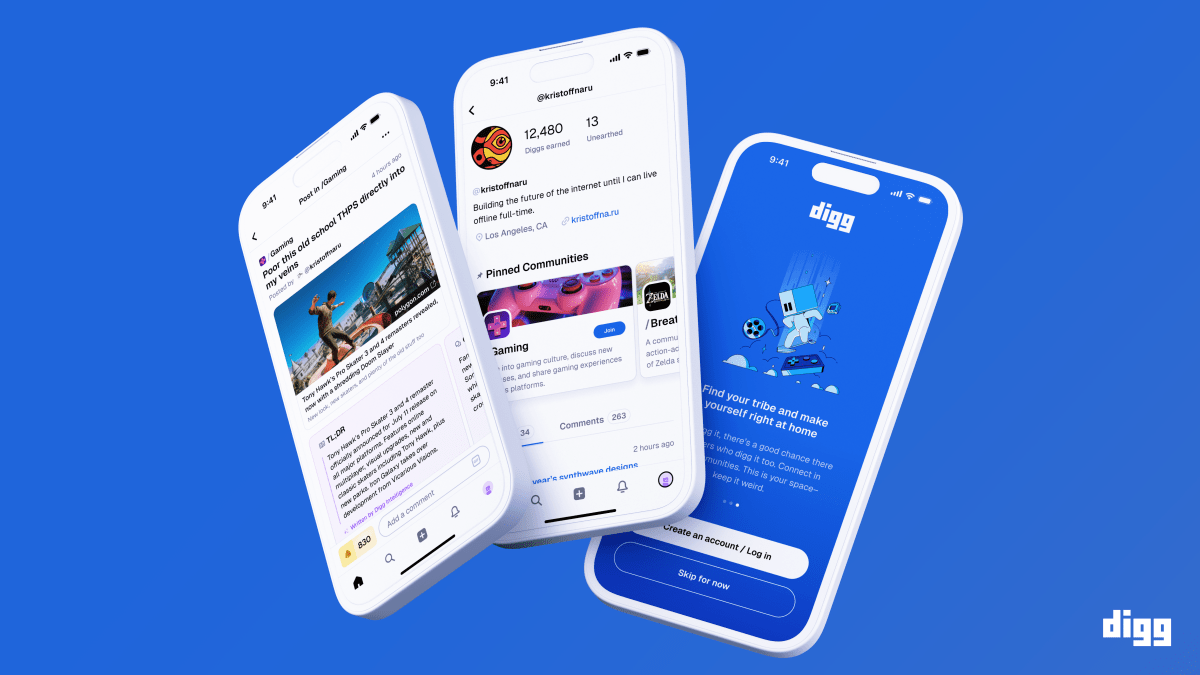
Digg announced a major restructuring on Friday that includes significant staff reductions and the immediate removal of its mobile application from app stores. The startup confirmed it is not closing operations entirely but is entering a new phase to redefine its platform strategy for the digital future. Founder Kevin Rose will return to work on the project full-time under the continued guidance of current CEO Justin Mezzell.
Mezzell stated in a detailed blog post that the company aims to find its footing after struggling with persistent content moderation issues. Although Rose retains his advisory role at True Ventures, his primary focus will shift back to the daily operations of the platform. This move signals a significant pivot for the rebooted version of the link-sharing site that launched earlier this year.
The original acquisition involved Kevin Rose and Reddit co-founder Alexis Ohanian purchasing the remaining assets from the previous owners. They intended to build a community forum where users possessed more control over moderation and digital ownership rights. A leveraged buyout funded by True Ventures, Seven Seven Six, and venture firm S32 facilitated the complex deal.
Despite having clever ideas for moderation, the company admitted it was overwhelmed by automated accounts from the very start. Mezzell referenced the dead internet theory to explain the overwhelming prevalence of sophisticated AI agents online. Bots immediately targeted the beta launch to exploit existing link authority for external search engine optimization.
According to the official announcement, the team banned more than 10,000 accounts during the initial rollout period of the service. The team deployed internal tooling and external vendors to combat the spam, but these efforts proved insufficient against the volume. The scale and speed at which automated systems found the platform caught the development team completely off guard.
For a site relying on user votes to rank content, uncontrollable bot activity meant votes could not be trusted by the community. Mezzell noted that this issue extends beyond Digg and represents a broader problem for the entire internet ecosystem. The inability to verify user identity undermined the core functionality of the social ranking system significantly.
Taking on established rivals like Reddit proved too difficult for the small team to manage effectively within the market. Mezzell described the competition not merely as a moat but as an actual wall that the team could not scale without massive resources. This context explains why the company decided to pull the app from the store to reassess its position.
The Diggnation podcast hosted by Rose will continue despite the changes to the main website and mobile applications. Currently, the layoff post remains the only content on the Digg domain for visitors to read. A small team will persist to rebuild the service as something genuinely different from previous iterations in the industry.
Public sources did not disclose funding details, though the deal included significant personal investments from Rose and Ohanian. The company did not specify how many employees the recent workforce reductions affected. Digg did not make itself immediately available for further comment regarding the specific workforce numbers or retention plans.
This restructuring highlights the ongoing challenges facing new social platforms in an automated digital environment today. Future developments will depend on whether the new team can successfully mitigate bot activity without alienating human users. Users will watch closely to see if the rebooted site can offer a viable alternative to existing networks soon.