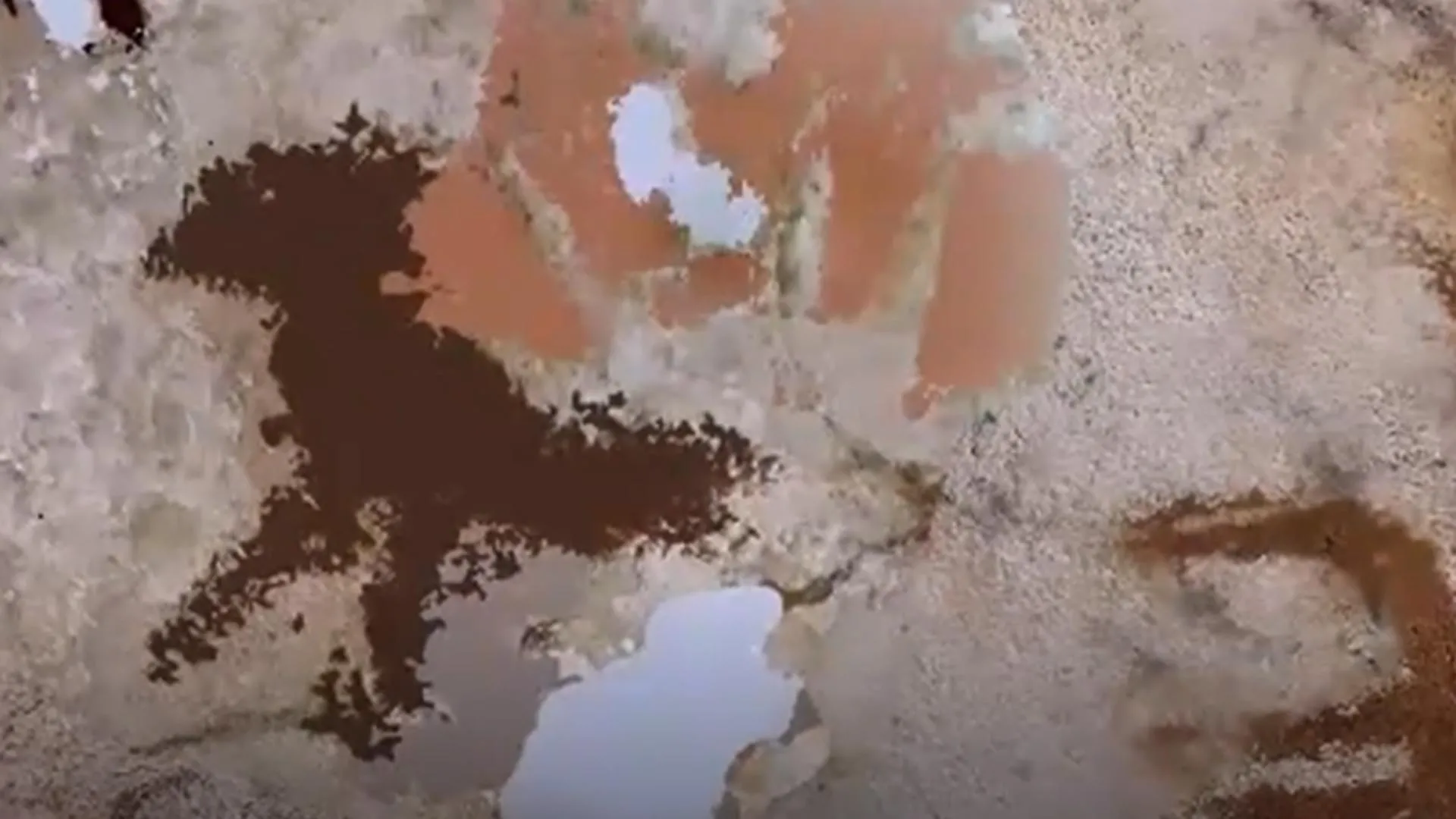
Astronomers led by the Carnegie Institution for Science have identified definitive proof of an atmosphere surrounding an ancient super Earth. Using NASA's James Webb Space Telescope, the team observed gas enveloping the planet TOI-561 b despite conditions that should have stripped it away completely. Published in The Astrophysical Journal Letters, the findings challenge established models of planetary evolution and thermal dynamics significantly. This discovery marks a pivotal moment in the search for habitable conditions on rocky worlds.
This rocky world possesses roughly twice the mass of Earth yet orbits its star at a distance only one fortieth that of Mercury. The proximity results in a year lasting merely 10.56 hours and locks one side in permanent daylight against its host star. The tidal locking ensures no night cycle occurs for the surface to cool significantly. Scientists previously assumed such heat would prevent any gas envelope from persisting over billions of years of existence.
Nicole Wallack, a postdoctoral fellow at Carnegie Science, noted that observations suggest a relatively thick blanket of gas exists where conventional wisdom predicted none. The discovery upends assumptions regarding ultra-short-period planets and their ability to retain volatiles under extreme radiation. Previous studies indicated small, intensely heated planets lose their original gas envelopes early in their history.
Lower than expected density hints at an unusual composition distinct from Earth-like structures or standard rocky models. The planet orbits an iron-poor star twice as old as our Sun within the thick disk of the Milky Way galaxy. Johanna Teske, the study's lead author, stated this chemical environment differs significantly from the systems forming within our Solar System.
JWST measurements revealed the dayside temperature reaches about 3,200 degrees Fahrenheit instead of the predicted 4,900 degrees based on models. This difference strongly suggests heat redistributes across the planet rather than concentrating solely on the sunlit side. Anjali Piette from the University of Birmingham explained that strong winds would cool the dayside by transporting heat to the nightside. The Near-Infrared Spectrograph instrument provided the critical thermal data for this analysis.
Researchers propose a molten interior feeds the atmosphere continuously while simultaneously drawing gases back into the magma ocean. Tim Lichtenberg from the University of Groningen described the planet as a wet lava ball with a recycling volatile system maintaining equilibrium. This balance allows the atmosphere to persist despite the harsh orbital conditions and stellar radiation.
Standard models for planetary formation often struggle to explain how such worlds maintain gaseous layers near their stars without evaporating. The research supports the hypothesis that ancient planetary systems differ fundamentally from modern analogues. Data from the General Observers Program 3860 monitored the system for more than 37 hours during four orbits.
Carnegie researchers have led numerous teams studying exoplanets since the telescope began scientific operations in orbit. Michael Walter, director of the Earth and Planets Laboratory, highlighted that these breakthroughs tap into long-standing strengths in understanding planetary dynamics. This work continues the legacy of the institute's involvement in the telescope's early development. A new wave of Carnegie-led science is anticipated in the coming year to expand on these initial results.
The team continues analyzing the full dataset to map temperature patterns and refine atmospheric composition models for future study. Analysis of the spectral data will reveal specific molecules present in the atmosphere. Further observations will determine if similar ancient systems exist elsewhere in the galaxy beyond our own.