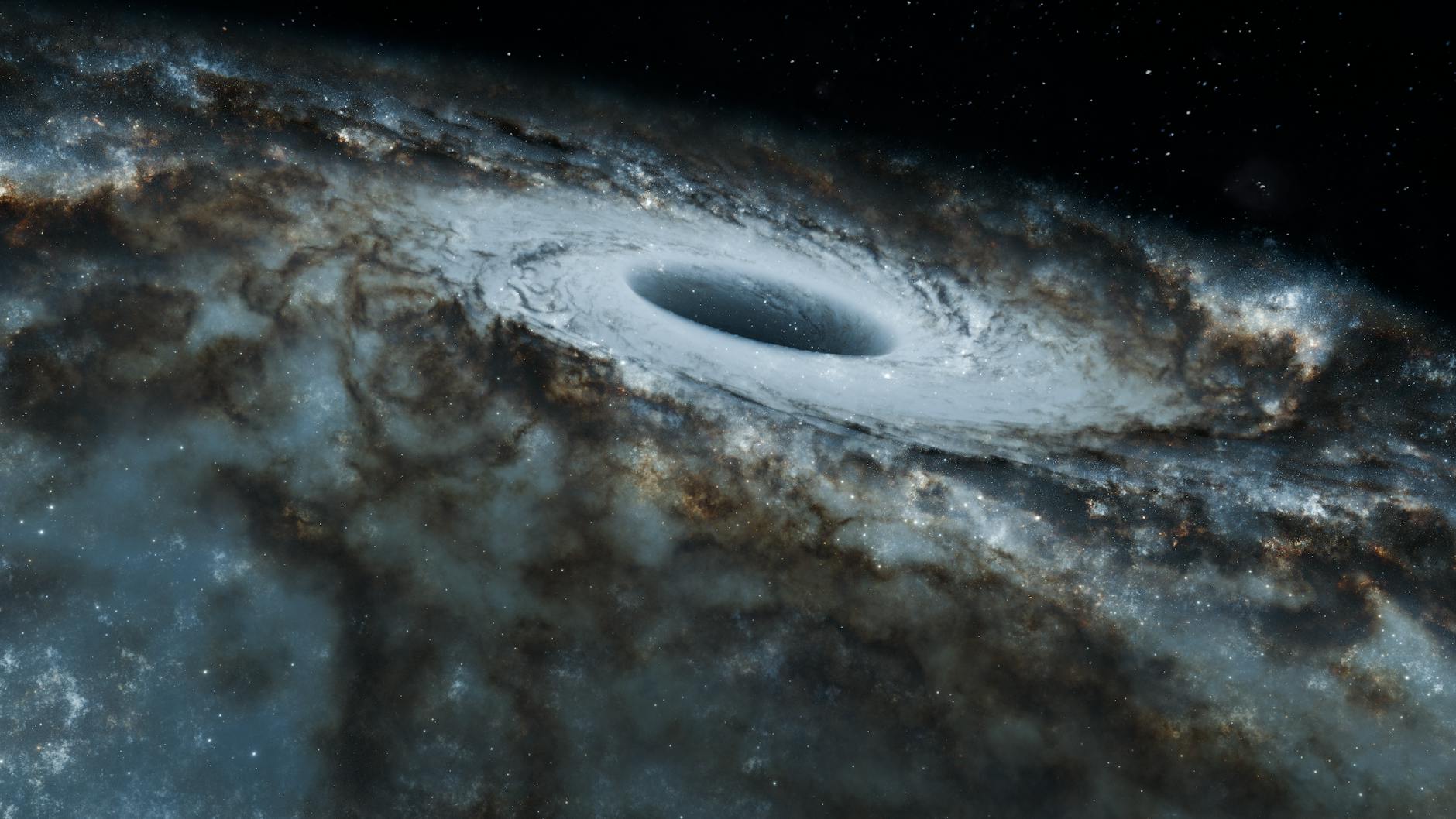
A supermassive black hole located in galaxy J1007+3540 has roared back to life, triggering a massive eruption that astronomers describe as a cosmic volcano. The event, which spans nearly a million light-years, marks the end of a 100-million-year period of dormancy for the galaxy's central engine.
The findings, published in the Monthly Notices of the Royal Astronomical Society, detail how the black hole is once again blasting jets of plasma into space. These fresh jets are currently colliding with the high-pressure environment of the surrounding galaxy cluster, causing the structure to warp and compress.
A cycle of cosmic activity
Researchers utilized data from the Low Frequency Array (LOFAR) in the Netherlands and India’s upgraded Giant Metrewave Radio Telescope (uGMRT) to capture the outburst. The images show a clear distinction between the bright, compact inner jets of the current eruption and the older, fading plasma lobes left behind by previous cycles.
"It's like watching a cosmic volcano erupt again after ages of calm," said lead researcher Shobha Kumari of Midnapore City College. "This dramatic layering of young jets inside older, exhausted lobes is the signature of an episodic AGN—a galaxy whose central engine keeps turning on and off over cosmic timescales."
J1007+3540 is embedded in a cluster filled with extremely hot gas, creating an environment of intense external pressure. This pressure acts as a physical barrier, forcing the newly ejected jets to bend and twist as they expand outward. Data from LOFAR shows the northern lobe of the galaxy is particularly distorted, with plasma flows appearing to be pushed sideways by the dense gas.
Dr. Sabyasachi Pal, a co-author of the study, noted the rarity of the observation. "J1007+3540 is one of the clearest and most spectacular examples of episodic AGN with jet-cluster interaction, where the surrounding hot gas bends, compresses, and distorts the jets," Pal said.
The research team, which also includes scientists from the Manipal Centre for Natural Sciences and Jagiellonian University, suggests the galaxy is undergoing a complex evolution. A faint tail of emission stretching toward the southwest indicates that magnetized plasma is being dragged through the cluster, leaving a trail that has persisted for millions of years.
By analyzing these cycles, astronomers aim to better understand how black holes transition between active and quiet states. The interaction between these powerful outbursts and the surrounding cosmic environment provides a window into the long-term growth and structural development of galaxies.