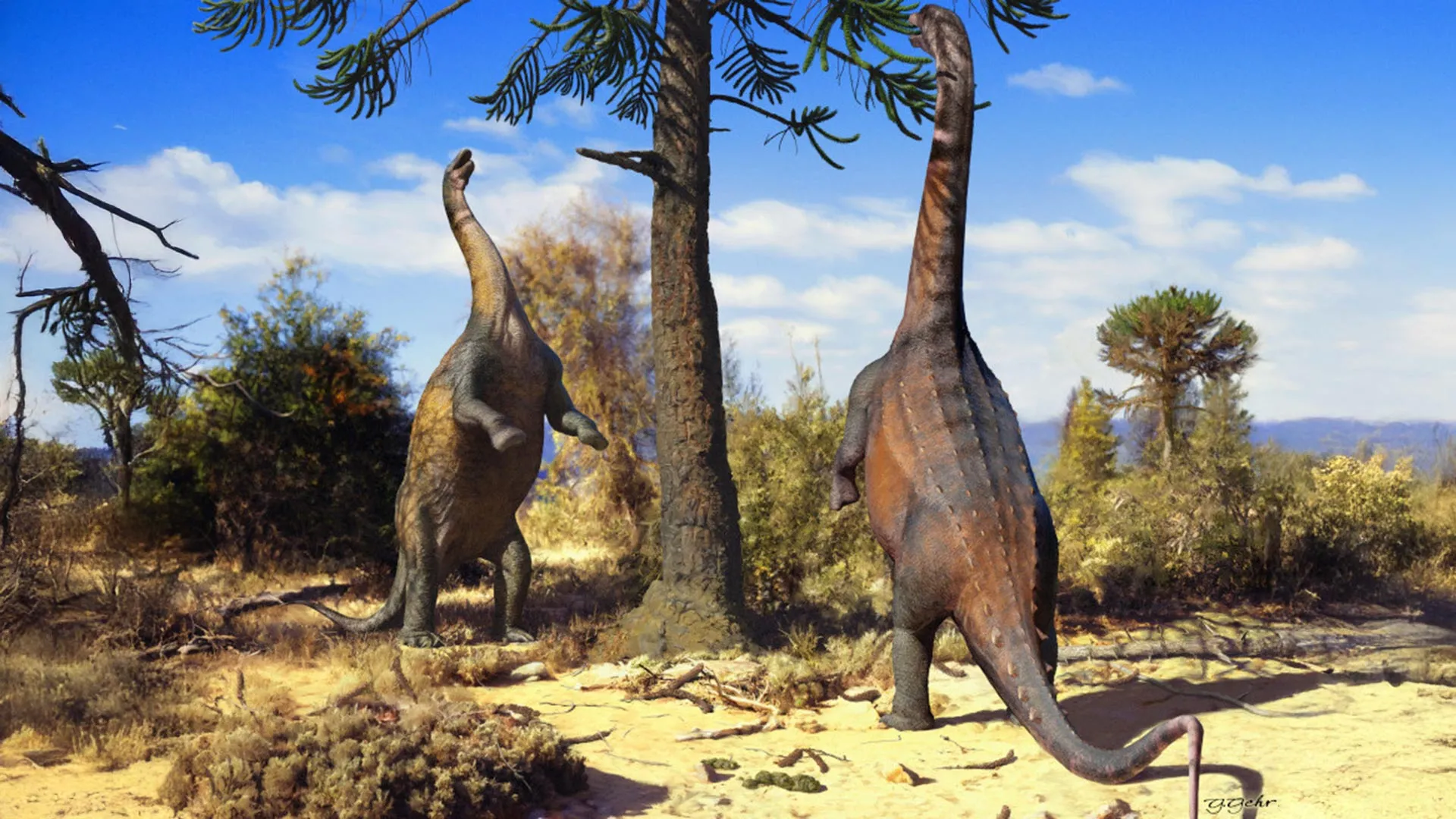
A groundbreaking study published this week reveals that specific sauropod dinosaurs could stand upright on their hind legs during their youth, but lost this ability as they matured. Researchers from Brazil, Germany, and Argentina utilized computational engineering methods to analyze bone stress in fossilized femurs from the Late Cretaceous period. The findings, supported by the São Paulo Research Foundation, challenge previous assumptions regarding the mobility of giant herbivores like Uberabatitan and Neuquensaurus. This research provides new insight into how massive creatures managed their physical limitations millions of years ago.
Computational Analysis of Bone Stress
The team employed finite element analysis, a technique standard in civil engineering for bridge design, to simulate gravitational forces on dinosaur skeletons. Digital reconstructions of femurs from seven different sauropod species were created using specimens housed in museum collections globally. By modeling both extrinsic gravity forces and intrinsic muscle exertion, the scientists estimated the total stress each animal experienced while standing bipedally. This rigorous methodology allowed for a precise comparison of skeletal robustness across different evolutionary lineages and body sizes.
Size Limitations and Behavior
Julian Silva Júnior, the first author and a postdoctoral researcher at São Paulo State University, noted that smaller sauropods possessed bone structures capable of supporting upright postures more easily. He explained that larger individuals likely faced significant discomfort and stress on their femurs, limiting the duration they could remain standing. Smaller sauropods like these had a bone and muscle structure that allowed them to stand more easily and for longer on their two hind legs. Larger ones were probably also able to stand, but for a shorter time and with less comfort, since the position caused a lot of stress on the femur, The study indicates that adult Uberabatitan individuals, unlike the younger specimen analyzed, likely faced the same challenges as other large sauropods when attempting to rise.
The two South American species, Uberabatitan ribeiroi and Neuquensaurus australis, demonstrated the lowest stress levels in their femurs during the simulations. Both lived approximately 66 million years ago during the Late Cretaceous period, a time of significant evolutionary diversification for giant reptiles. Their robust femurs allowed them to dissipate stress better than their larger contemporaries, suggesting a specific adaptation for bipedal behavior. This capability likely offered advantages such as reaching higher vegetation or deterring predators through visual intimidation.
Despite the robust findings, the researchers acknowledged limitations in their models regarding soft tissue and tail support. The simulations did not include cartilage, which may have helped absorb stress in the joints, nor did they factor in the tail's role in a tripod-like stance. Because cartilage was not directly studied in any of the specimens, the team assumed it functioned similarly across all of them for the sake of comparison. The tool we use is very efficient for comparisons, even if the answer isn't exact for each one. By comparing representatives from different lineages, we can get a fairly accurate picture of how these animals behaved millions of ago, The lead researcher emphasized the value of the comparative tool despite these biological variables.
Standing on two legs likely offered several advantages for these plant-eaters beyond just feeding on high vegetation. This posture may have played a crucial role in mating rituals, helping males mount females or perform visual displays to attract partners. Additionally, rising up could have made them appear significantly larger, potentially deterring predators that targeted the herd. These behavioral insights help reconstruct the daily lives of creatures that dominated the prehistoric landscape.
The study was conducted during an internship at the University of Tübingen in Germany with a scholarship from FAPESP. Silva Júnior is the first author of the study, which was published in the journal Palaeontology. The international collaboration highlights the growing importance of South American paleontological research in the global scientific community. Materials were provided by the Fundação de Amparo à Pesquisa do Estado de São Paulo for this publication.
These findings contribute to a broader understanding of sauropod biomechanics and the physical constraints of gigantism in terrestrial animals. Future research may focus on incorporating soft tissue data to refine the stress models and better understand joint mechanics. Understanding these limitations helps scientists reconstruct the ecological niches these animals occupied before their extinction. The study remains a significant contribution to the field of paleobiology and evolutionary mechanics.
As technology advances, computational models will likely become even more precise in simulating ancient biological behaviors. This approach demonstrates how modern engineering tools can solve ancient mysteries without direct observation. The collaboration between Brazilian, German, and Argentine institutions sets a precedent for future international scientific projects. Continued funding and support will be essential for expanding this line of inquiry into other prehistoric species.
The implications extend beyond paleontology, offering lessons on the physical limits of biological design in large organisms. Engineers and biologists alike can learn from how nature solved the problem of supporting massive weight. This research underscores the value of interdisciplinary approaches combining biology with computational physics. The study stands as a testament to the enduring curiosity about the natural history of our planet.