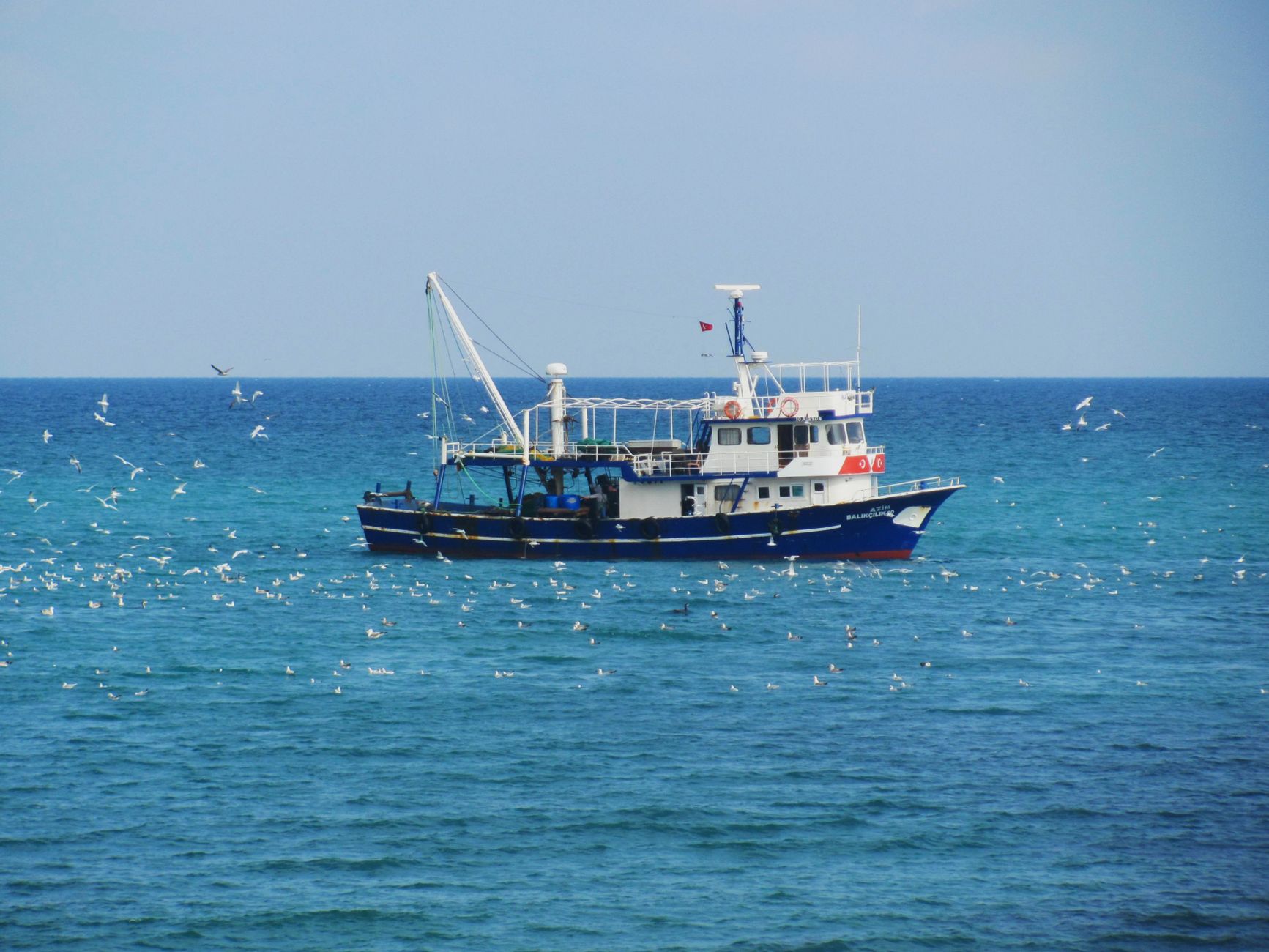
Scientists using seabirds as mobile audio recorders have discovered a significant number of "unseen" fishing vessels operating across the world's oceans, according to a study published Wednesday in Science Advances.
By attaching microphones to northern gannets, Balearic shearwaters, and Westland petrels, researchers identified ships that were not broadcasting their locations via the Automatic Identification System (AIS). This tracking system is standard for most commercial vessels but can be turned off for reasons ranging from piracy evasion to concealing illegal fishing.
The study, led by Jonathan Rutter, a postdoctoral research fellow at the University of Oxford, found that birds frequently visit vessels that do not appear on digital maritime maps. According to 404 Media, the data showed that approximately 32 percent of the audio captured by seven gannets in the North Atlantic came from ships with their trackers disabled.
In the Mediterranean Sea, 12 percent of the audio captured by four shearwaters involved unseen vessels. While Rutter noted that smaller Mediterranean boats are often not legally required to use AIS, the gannets in the North Atlantic were encountering larger commercial vessels that are obligated to remain visible.
"The fact that we found at least one third, and probably more than one half, of the audio detections being unseen was pretty surprising," Rutter told 404 Media. "This is not the same thing as saying that half of vessels are unseen; it's half of the time that gannets go to vessels, those vessels are unseen."
Monitoring biodiversity and maritime activity
The researchers emphasized that the study was not designed for law enforcement or surveillance. Instead, the goal was to improve risk assessment for seabirds, which often die after becoming tangled in fishing gear or caught on hooks when scavenging near vessels.
Unseen vessel activity is a critical factor in understanding the "bycatch" risks facing marine life. Rutter stated that the discovery is important regardless of whether the lack of tracking is due to illegal activity or technical issues like poor satellite reception.
"There are multiple reasons this could be," Rutter said. "It could be illegal disabling, but at the same time, it could be poor satellite reception. There are lots of reasons that AIS can be off, and we want to emphasize that illegal fishing is a possibility, but that is not actually what we're showing. It's showing that there's a lot we're not seeing."
The audio recordings also provided rare insights into seabird behavior. For example, recordings from a Westland petrel in the South Pacific captured landing and takeoff sequences similar to those seen in albatrosses.
The research highlights how human industry has fundamentally altered marine food webs. Rutter noted that the birds visit boats multiple times a day, a behavior that demonstrates how human activity is changing their feeding ecology.
While the technology could theoretically enable real-time vessel detection, the research team urged caution. The study noted that using animals as surveillance tools could lead fishers to mistrust both scientists and the marine animals themselves.