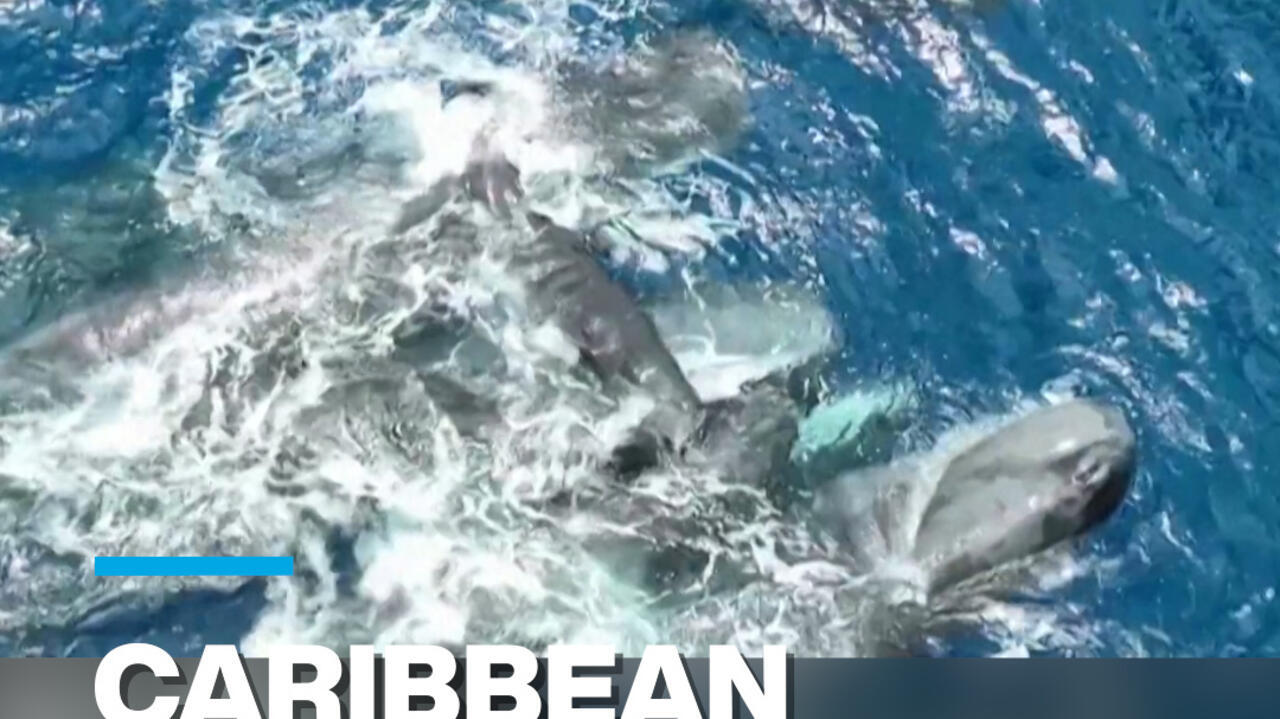
Scientists released rare footage of a sperm whale birth off Dominica, marking a milestone in marine biology. This event challenges previous assumptions regarding social support mechanisms across different species. The video was filmed during expeditions conducted in 2023 and is now being made public.
Until recently, evidence of birth assistance had primarily been observed among primates rather than cetaceans. Researchers documented the phenomenon occurring in deep waters where such interactions are typically difficult to observe. The footage provides visual confirmation of cooperative behavior that was previously thought unique to mammals.
Sperm whales are known for their complex communication networks and strong familial bonds within pods across vast ranges. This discovery suggests that altruistic behaviors may be more widespread in the animal kingdom than understood by experts. Understanding these dynamics helps scientists better model evolutionary paths regarding social cooperation among large marine mammals.
Observing a sperm whale calving event is exceptionally difficult due to their deep diving habits and elusive nature. The footage captured in 2023 required significant technological resources and patience from the research team involved. Such data points are crucial for long-term studies on population health and reproductive rates in threatened species.
Conservationists emphasize that protecting breeding grounds like those near Dominica is essential for maintaining biodiversity within fragile ecosystems. As ocean environments face increasing threats from climate change, knowledge of social structures aids in policy making regarding protected areas. Protecting these specific habitats ensures future generations can continue to study these rare biological events without interference.
The research team noted that acoustic monitoring played a vital role alongside the visual recording during the observation period. These sound recordings allow experts to analyze vocalizations associated with the birthing process and maternal interactions within the pod group. Analyzing this data provides context that cannot be gleaned from video alone regarding the health of the mother.
Future research will likely focus on tracking the calf and its pod members over subsequent years to ensure survival rates remain stable. Continued observation is necessary to understand how this new member integrates into the existing social hierarchy within the pod. The scientific community awaits further analysis of the acoustic recordings accompanying the visual data for deeper insights.
Broader implications suggest that conservation strategies must evolve to accommodate these findings regarding social complexity in marine life management plans. Funding for deep-sea monitoring equipment will need to increase to capture similar events as older researchers retire from active duty roles. The release of this footage serves as a reminder that nature often holds surprises beyond current scientific classifications and expectations.