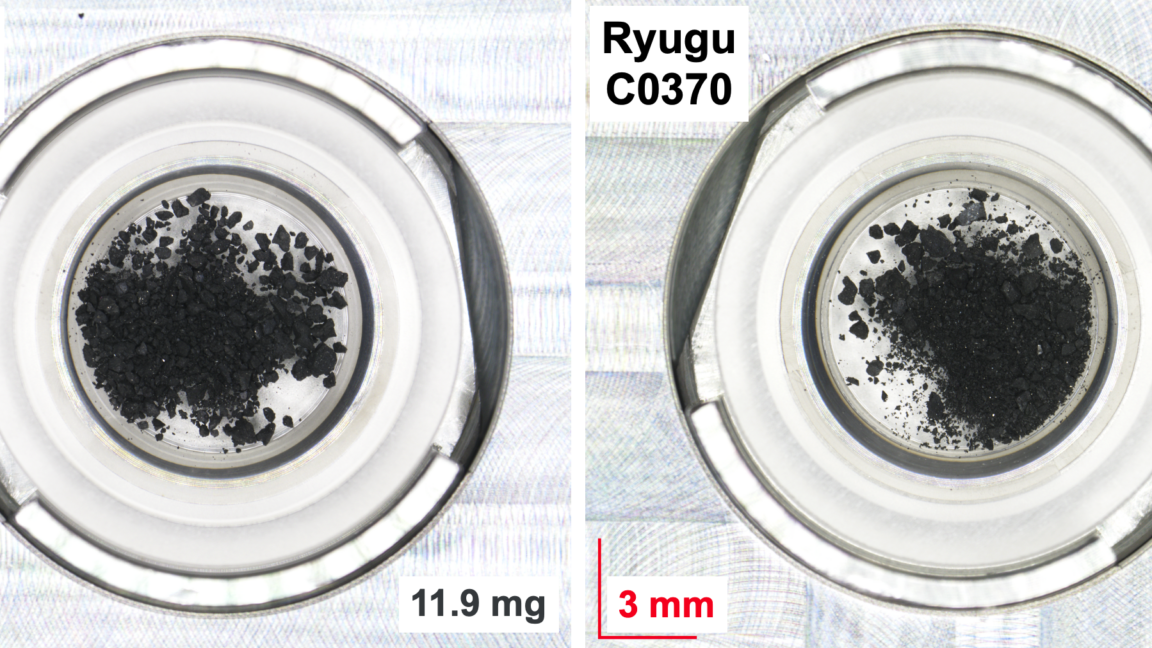
A scientific paper released Monday reported the detection of all four DNA bases within samples collected from the asteroid Ryugu. This finding advances understanding regarding the delivery of organic materials to the early Earth during the formation of the solar system. Researchers utilized advanced spectroscopy to identify the specific molecular structures during detailed sample analysis. The results provide a clearer picture of chemical evolution in space environments.
While previous investigations identified these compounds in space dust, this study offers a critical distinction regarding sample handling protocols. The new work addresses why earlier missions failed to detect the bases despite their confirmed presence in other extraterrestrial samples. Scientists attribute the discrepancy to contamination levels and extraction methodologies used in prior years. Careful review of the lab conditions confirmed the integrity of the data collection process.
The four bases, known as adenine, thymine, cytosine, and guanine, form the fundamental alphabet of genetic information storage. They attach to a sugar-phosphate backbone that provides structural stability for the complex biological molecule. Without these specific components, the replication mechanisms required for life as we know it cannot function effectively. The structural integrity of these chains determines the genetic code carried by every living organism.
Understanding the origin of these molecules helps clarify how life emerged on our planet billions of years ago. If asteroids delivered the necessary building blocks, then life might be more common throughout the cosmos than previously assumed. This hypothesis supports the theory of panspermia, which suggests life seeds spread across stellar systems over time. The implications for future search efforts are significant for the entire scientific community.
The study cites similar results dating back to 2011, indicating a consistent pattern in extraterrestrial organic chemistry across decades. However, the 2026 paper provides more rigorous data to confirm the authenticity of the findings regarding molecular integrity. Experts noted that the new methodology significantly reduced the risk of false positives from terrestrial contamination sources. This validation is essential for establishing trust in space sample return programs.
According to Ars Technica, the research team successfully distinguished the asteroid-derived bases from earthly contaminants using new filters. This distinction is crucial for validating the chemical signatures found in returned samples from space missions. The confirmation strengthens the case for robotic missions to other planetary bodies in the near future. Independent verification by other groups will likely follow the initial publication.
Space agencies worldwide invest billions annually into planetary defense and sample return missions to enhance our capabilities. Japan’s space agency JAXA led the Hayabusa2 mission that brought the Ryugu rocks to Earth for processing. Such international cooperation highlights the geopolitical importance of shared scientific resources in space exploration efforts. Collaboration ensures that data is accessible to researchers across multiple nations.
The economic implications extend beyond pure science into potential future industries involving space mining and resource utilization. If organic materials are abundant on asteroids, they could become valuable targets for commercial ventures in the coming decades. However, current regulations regarding the ownership of extraterrestrial resources remain largely undefined by international law. Legal frameworks must evolve to support these emerging markets safely.
Future missions will likely prioritize analyzing the chemical complexity of returned samples rather than simple detection of elements. Scientists plan to sequence the organic chains to determine if they show signs of biological processing or natural synthesis. This work lays the groundwork for the next generation of astrobiology research programs globally. New technologies will enable deeper analysis of organic compounds.
As the scientific community processes these results, expectations for future space exploration technologies rise significantly. The findings suggest that the building blocks for life are not unique to Earth, but rather widespread in the universe. Continued observation of minor planets will remain a priority for global research institutions seeking answers. Public interest in these discoveries continues to grow with each new report.