Physicists at the University of Massachusetts Amherst have proposed a new explanation for a 2023 cosmic event that defied standard physics: the detection of a neutrino carrying energy 100,000 times greater than anything produced by Earth’s most powerful particle accelerators. The team suggests the surge originated from the final, explosive moments of a primordial black hole.
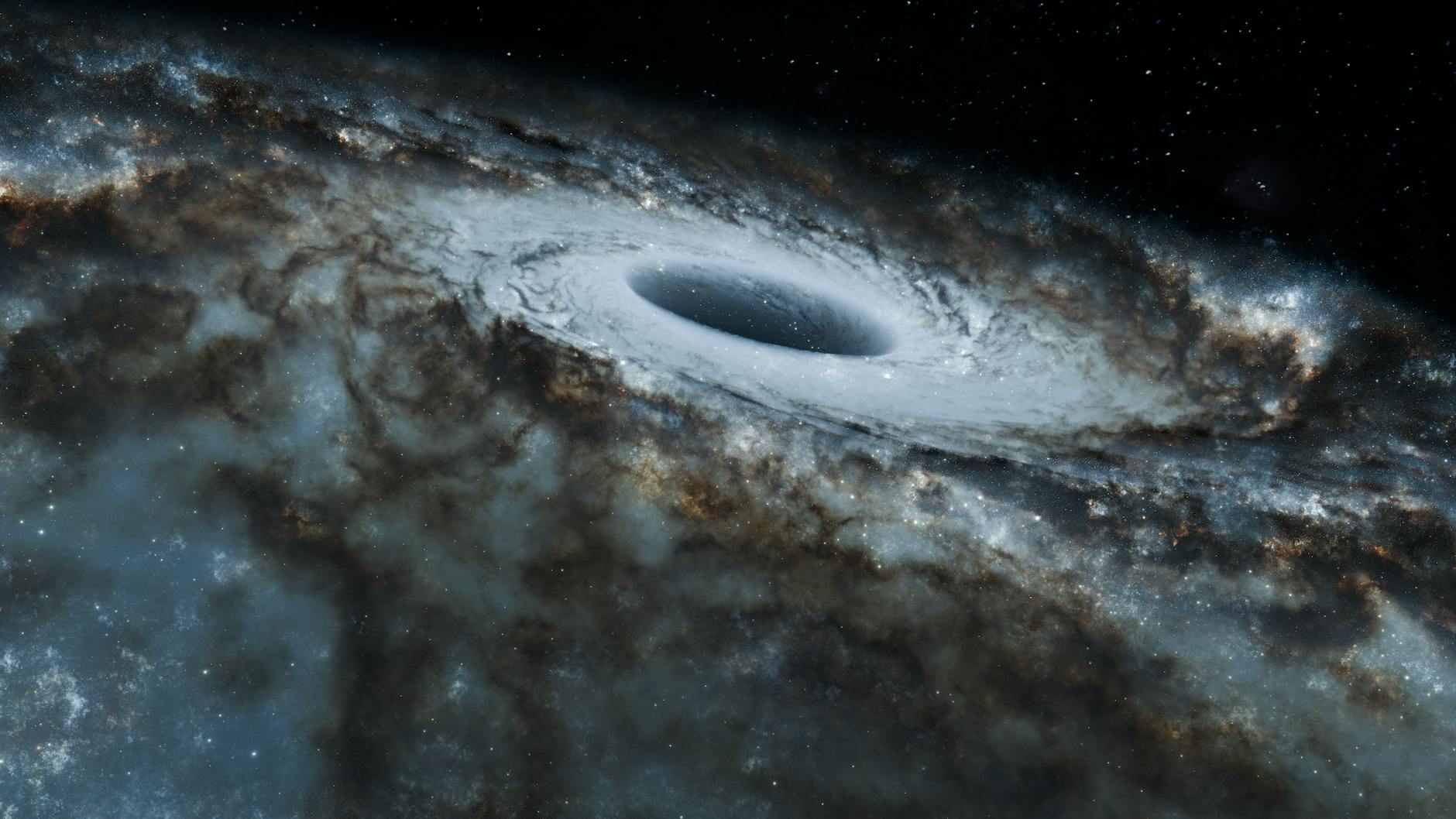
Primordial black holes are theoretical objects that scientists believe formed shortly after the Big Bang. Unlike the massive black holes created by collapsing stars, these primordial relics are smaller and, according to theories first proposed by Stephen Hawking, emit radiation as they evaporate.
"The lighter a black hole is, the hotter it should be and the more particles it will emit," said Andrea Thamm, an assistant professor of physics at UMass Amherst and co-author of the study published inPhysical Review Letters. "As these black holes evaporate, they become ever lighter, and so hotter, emitting more radiation in a runaway process until explosion."
Solving the mystery of the missing signal
The detection of the high-energy particle by the KM3NeT Collaboration created a scientific puzzle. While the data suggested a massive event, the IceCube Observatory—another major neutrino detector—reported no corresponding signal. This discrepancy led the UMass team to develop a model involving "quasi-extremal" black holes.
Researchers propose that these black holes carry a "dark charge," which includes a heavy particle akin to an electron, known as a "dark electron." This unique composition would cause the black holes to behave differently than standard models predict, potentially explaining why only one detector captured the event.
"Our dark-charge model is more complex, which means it may provide a more accurate model of reality," said Michael Baker, an assistant professor and co-author of the research. "What is so cool is to see that our model can explain this otherwise unexplainable phenomenon."
If these black holes are indeed exploding as frequently as every decade, they could serve as natural laboratories for fundamental physics. Observing these events may allow researchers to identify new particles, including those that constitute dark matter, and provide a window into the earliest moments of the universe.