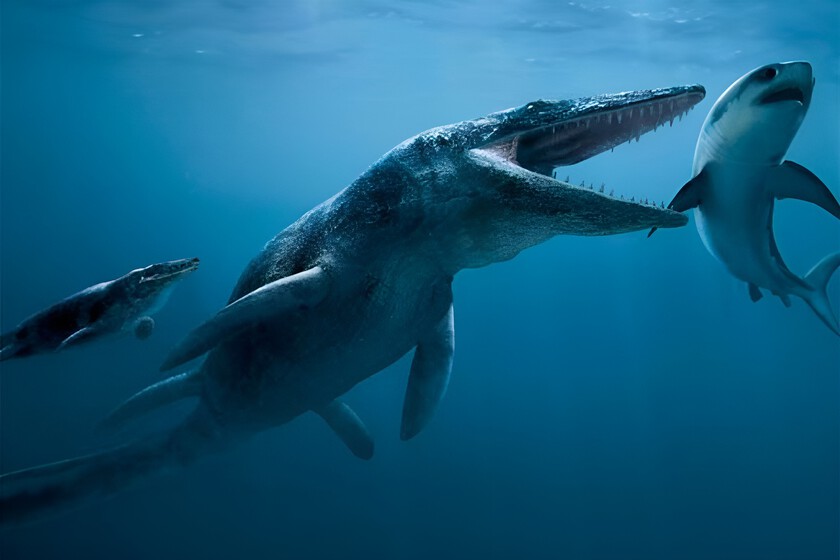
Researchers from Mexico and the United Kingdom have officially confirmed the identification of a new marine reptile species after more than two decades of intensive study. The fossilized remains were originally discovered in 2001 within the geological context of the Méndez Formation near Linares, Nuevo León. Scientists now classify the specimen as Progmathodon cipactli, a mosasaur distinct from previously known groups due to its unique hunting adaptations.
The study details within the journal Neues Jahrbuch für Geologie und Paläontologie and describes an animal measuring between five and six meters in total length. Unlike typical mosasaurs with slender teeth designed for small prey, this specimen possessed robust dentition and a powerful skull structure. These physical traits indicate a capacity to crush hard shells and tackle substantial aquatic vertebrates during the Late Cretaceous period.
This dietary specialization marks a significant divergence from the ecological niche occupied by most contemporaneous marine reptiles in the region. While many species focused on ammonites or fish, Progmathodon cipactli appears to have targeted sea turtles and other large reptiles. This shift suggests a predator that evolved specific tools to dominate the food chain much earlier than previous evolutionary models predicted.
Héctor Rivera Silva, head of the paleontology laboratory at the Museo del Desierto in Saltillo, Coahuila, provided key insights into the findings during the presentation. He stated that adaptations for capturing large prey evolved first, followed by increases in overall body size in other lineages later in history. This finding challenges previous assumptions regarding the evolutionary timeline and hierarchy of apex marine predators in ancient oceans.
The research process faced significant technical hurdles due to the extreme hardness of the rock matrix surrounding the fragile fossil bone. Investigators could not fully analyze the specimen until advanced phylogenetic analysis techniques became widely available over the last twenty years. These modern computational methods allowed the team to reconstruct the evolutionary relationships with greater precision than previously possible.
Geological history places this discovery within the Late Cretaceous period, approximately 70 million years ago when the earth looked significantly different. During that era, the Western Interior Seaway covered much of northeastern Mexico, dividing North America into distinct northern and southern landmasses. Mosasaurs served as the dominant predators within this vast inland ocean environment that existed before continental drift separated the regions into the modern continents we know today.
The team selected the species name to honor Cipactli, a sea monster from Nahuatl cosmogony described as part fish and part crocodile in ancient texts. Rivera Silva noted that illustrations in ancient codices depict a creature with toothed jaws and fins similar to the fossilized remains found in the field. This cultural connection integrates indigenous history with modern scientific classification in a respectful manner.
The discovery confirms that northeastern Mexico functioned as a critical transit zone for marine reptiles migrating along prevailing ocean currents. It establishes the region as a key area for understanding the dispersal patterns of these ancient creatures across the continent during the Mesozoic Era. Such data helps reconstruct the paleogeography of the Western Interior Seaway and its connection to global ocean currents.
Scientific understanding of mosasaur diversity relies on continuous fossil analysis and improved dating techniques across Latin America for future research. This study adds a crucial data point to the global database regarding predator evolution in the ancient marine ecosystems of the world. Mexican institutions continue to lead efforts in documenting prehistoric life within their borders through international collaboration and funding.
Future excavations may reveal additional specimens that clarify how this species interacted with other marine life in the region over time. Researchers will likely continue to examine the specimen to determine specific bite force capabilities and feeding mechanics for the species. The work underscores the importance of long-term scientific collaboration between Mexican and international partners for discovery.