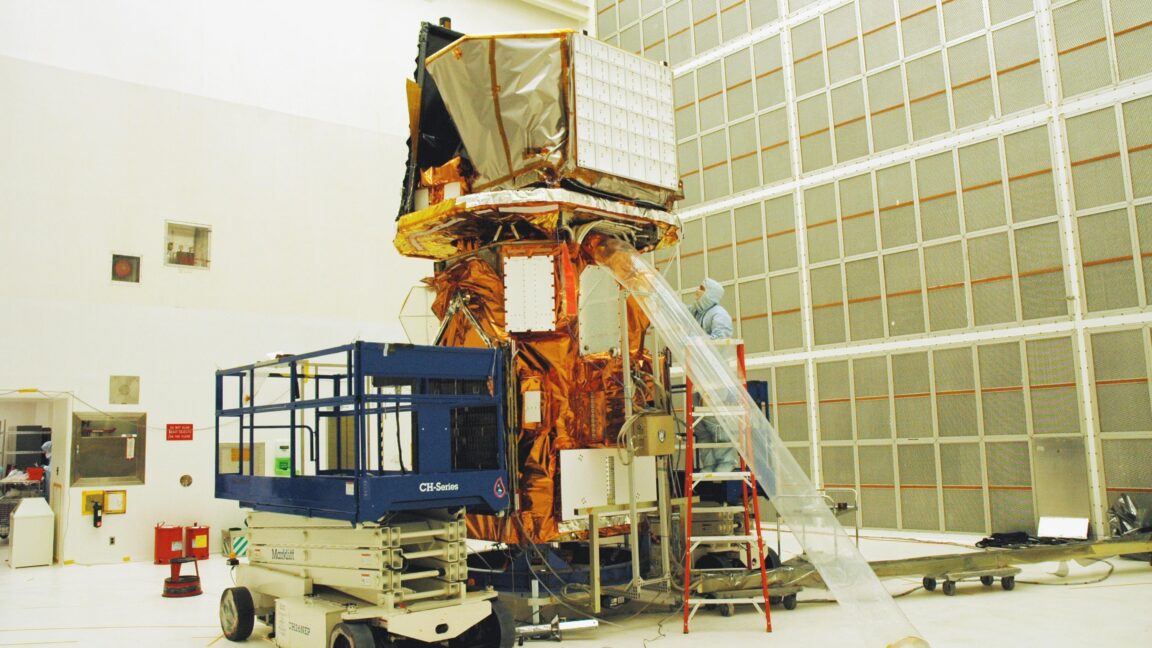
BROOMFIELD, Colorado—NASA is attempting a unique rescue mission to save its aging Swift Observatory satellite before it burns up in Earth's atmosphere.
Mission Criticality
The spacecraft launched in November 2004 on a mission to detect gamma-ray bursts. Despite its age, astrophysicists still rely on Swift's multi-wavelength instruments to identify and locate these events for follow-up observations by other observatories. Scientists need satellites like Swift to find and study them because they happen without warning.
Gamma-ray bursts happen without warning, when massive stars die and form black holes or during mergers of neutron stars and black holes. Their afterglow can last from a few seconds to up to a few hours.
Commercial Rescue Strategy
Last September, NASA awarded a company named Katalyst Space Technologies a $30 million contract to rapidly build and launch a commercial satellite to stabilize Swift's orbit. The spacecraft will surely crash back to Earth without a reboost if the mission fails. This arrangement differs significantly from traditional government programs that prioritize perfection over speed.
Katalyst's robotic servicing spacecraft, named Link, will attempt to rendezvous and dock with the Swift satellite, then raise its altitude. This is not a flagship astronomy mission like Hubble or Webb, so there's no talk of sending astronauts.
"We realized that you can't get 100 percent guaranteed success on this," Ghonhee Lee said during a visit to Katalyst in late February.
Tech and Timeline
There are a few things you should know about this venture. Swift was never designed to be captured or reboosted in orbit, creating significant engineering hurdles for the team.
Launch is scheduled for June 1, and there's little margin for error. By late summer or early fall, Swift will slip below 200 miles, too low for Katalyst to have confidence in controlling its spacecraft due to atmospheric drag.
Industry Shift
Katalyst is one of a growing roster of US companies interested in rendezvous and proximity operations. In many cases, these companies have outrun the government in RPO expertise because they must fly to survive commercially.
NASA spent nearly 10 years developing a government-owned servicing demo mission before its cancellation in 2024. This commercial contract represents a pivot toward faster, risk-tolerant approaches for space exploration and satellite maintenance. The company beat out competing proposals from Starfish Space and a team consisting of Cambrian Works and Astroscale to win the contract.