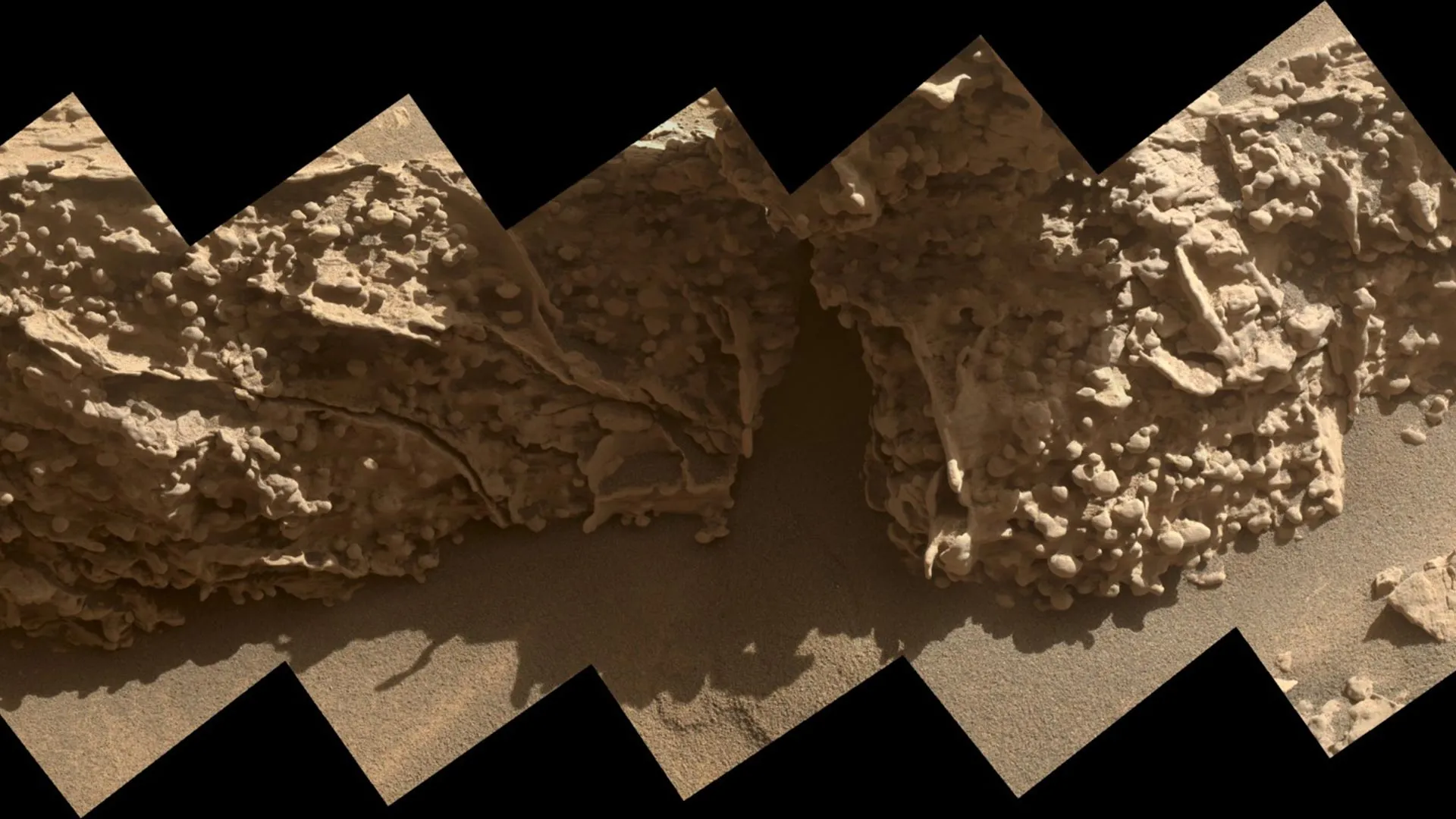
NASA’s Curiosity rover has identified geological formations on Mars that suggest groundwater persisted longer than previously believed. The rover examined spiderweb-like ridges on Mount Sharp during a six-month investigation concluding in March 2026. These findings challenge earlier models regarding the duration of habitable conditions on the Red Planet.
The structures, known as boxwork, appear as narrow ridges standing one to two meters tall separated by sandy depressions. Orbiting satellites first revealed the crisscrossing patterns, but ground-level analysis provided critical structural data. Engineers guided the SUV-size rover along ridge tops that were sometimes only slightly wider than the vehicle itself. Navigating the terrain required careful planning to prevent the rover from getting stuck.
Researchers believe these formations formed when groundwater moved through fractures in the bedrock. Minerals deposited along the cracks hardened the zones into ridges while surrounding rock eroded away over time. This process created the web-like network visible across the landscape today.
Similar boxwork formations exist on Earth but are usually only a few centimeters tall. The Martian versions are significantly larger and located within the sulfate-rich layers of Mount Sharp. Scientists used this size difference to infer the scale of ancient water activity.
Ashley Stroupe, an operations systems engineer at NASA’s Jet Propulsion Laboratory, described the navigation challenges. She stated that driving on the ridges felt like a highway but required caution in the sandy hollows. Stroupe noted that finding solutions involved trying different paths to avoid wheel slippage. The team managed to keep the mission on schedule despite the difficult conditions.
Tina Seeger of Rice University led the scientific investigation into the boxwork structures. She explained that seeing these formations high on the mountain suggested a high groundwater table. This implies water needed for sustaining life could have lasted much longer than orbit data indicated.
Chemical analysis of drilled rock samples revealed clay minerals within the ridge and carbonate minerals in the hollow. The rover used X-ray analysis and a high-temperature oven to process the powdered rock. These discoveries provide additional hints about the processes that formed the unusual terrain. The instruments detected specific chemical signatures linked to water activity.
Scientists recently performed wet chemistry on a fourth sample to reveal organic compounds. This method involves heating powdered rock and introducing chemical reagents to detect carbon-based molecules. The results contribute to the ongoing search for signs of past biological activity.
Curiosity is expected to move from the boxwork region in March to explore sulfate-rich layers. These minerals formed as water on Mars gradually disappeared over billions of years. The rover will continue gathering clues about how the ancient climate changed. This transition marks a new phase in the long-term exploration of the mountain.
The findings reshape understanding of Mars' watery history and potential for life. Future missions may prioritize areas where groundwater activity persisted longest. Continued exploration of Mount Sharp remains a priority for the Mars Exploration Program.