Mars is far from the quiet, static desert it appears to be. New research from Washington University in St. Louis reveals that the planet is buzzing with hidden electrical activity capable of rewriting its chemical composition.
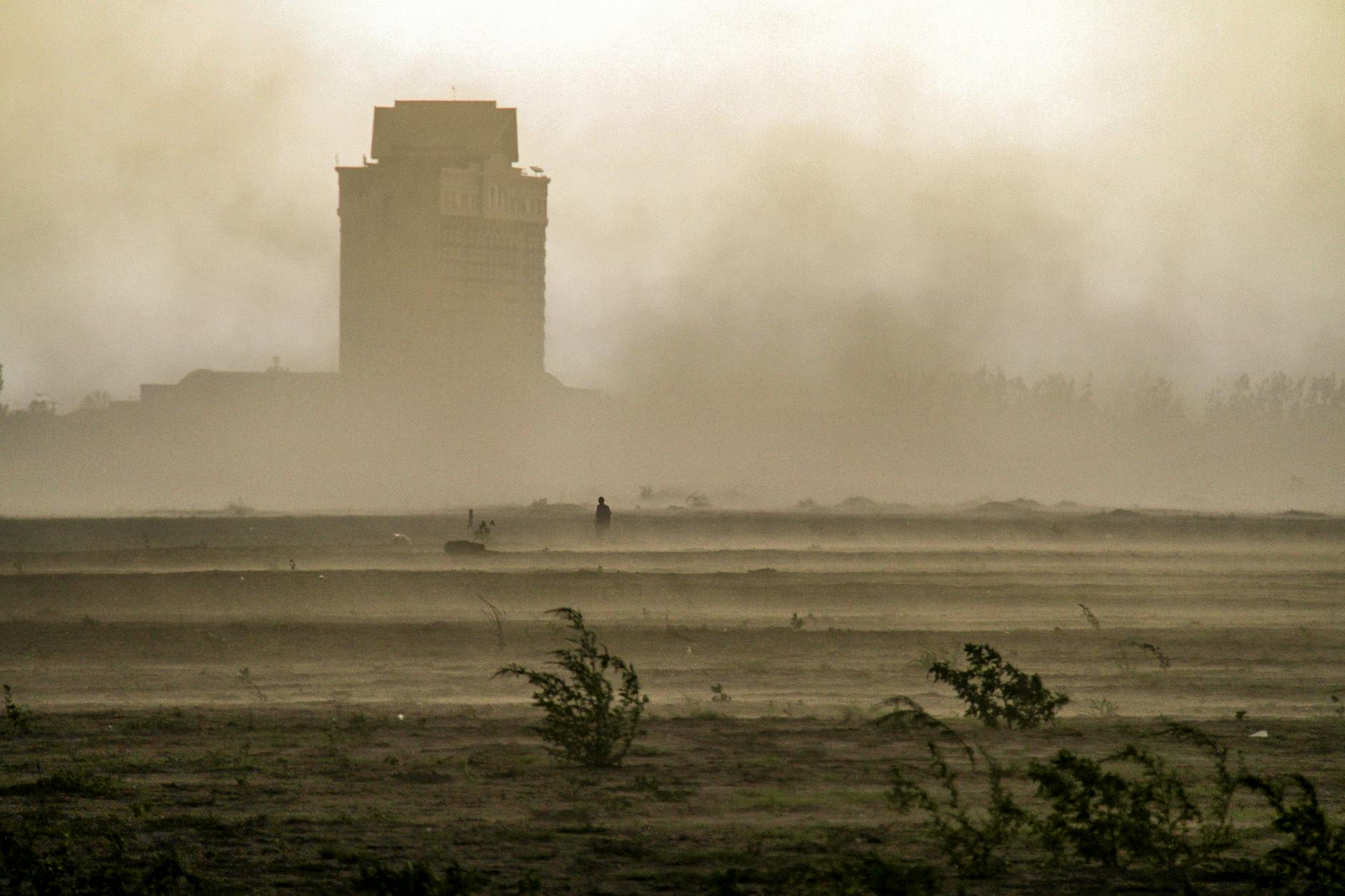
Powerful dust storms and swirling dust devils generate static electricity as particles collide and rub together. Because the Martian atmosphere has low pressure, these collisions trigger faint, lightning-like electrostatic discharges across the surface.
Lab simulations confirm chemical transformation
Planetary scientist Alian Wang and her team recreated these Martian conditions in specialized laboratory chambers to observe the resulting reactions. The experiments, published in Earth and Planetary Science Letters, confirmed that these discharges produce a variety of chemicals, including chlorine compounds, activated oxides, and airborne carbonates.
These findings provide a missing piece of the puzzle regarding Mars’ modern chemical environment. By simulating the hot, dry Amazonian period on Mars, the researchers demonstrated that dust activity matches the chemical signatures detected by spacecraft.
To confirm these findings, the team analyzed the isotopic makeup of chlorine, oxygen, and carbon. They discovered a consistent depletion of heavier isotopes, a result they describe as a "smoking-gun" for the power of dust-induced electrochemistry.
"Because isotopes are minor constituents in materials, the isotopic ratios can only be affected by the major process in a system," said Wang, a research professor and fellow of the McDonnell Center for the Space Sciences. "Therefore, the substantial heavy isotope depletion of three mobile elements is a smoking-gun that nails down the importance of dust-induced electrochemistry in shaping the contemporary Mars surface-atmosphere system."
This process explains the unusually low levels of 37Cl measured by NASA’s Curiosity rover. The team’s new model outlines how these electrically driven reactions release chemicals into the atmosphere, which are then redeposited as new minerals on the surface.
Kun Wang, an associate professor of Earth, environmental, and planetary sciences, emphasized the precision of this discovery. "Isotopic signatures are like fingerprints, and they can be used to trace the processes that have influenced the chlorine cycle on Mars," he said.
The study, supported by NASA's Solar System Working Program, involved researchers from six universities across the United States, China, and the United Kingdom. It marks the first time scientists have experimentally linked electrostatic discharges to specific isotopic shifts on the Red Planet.