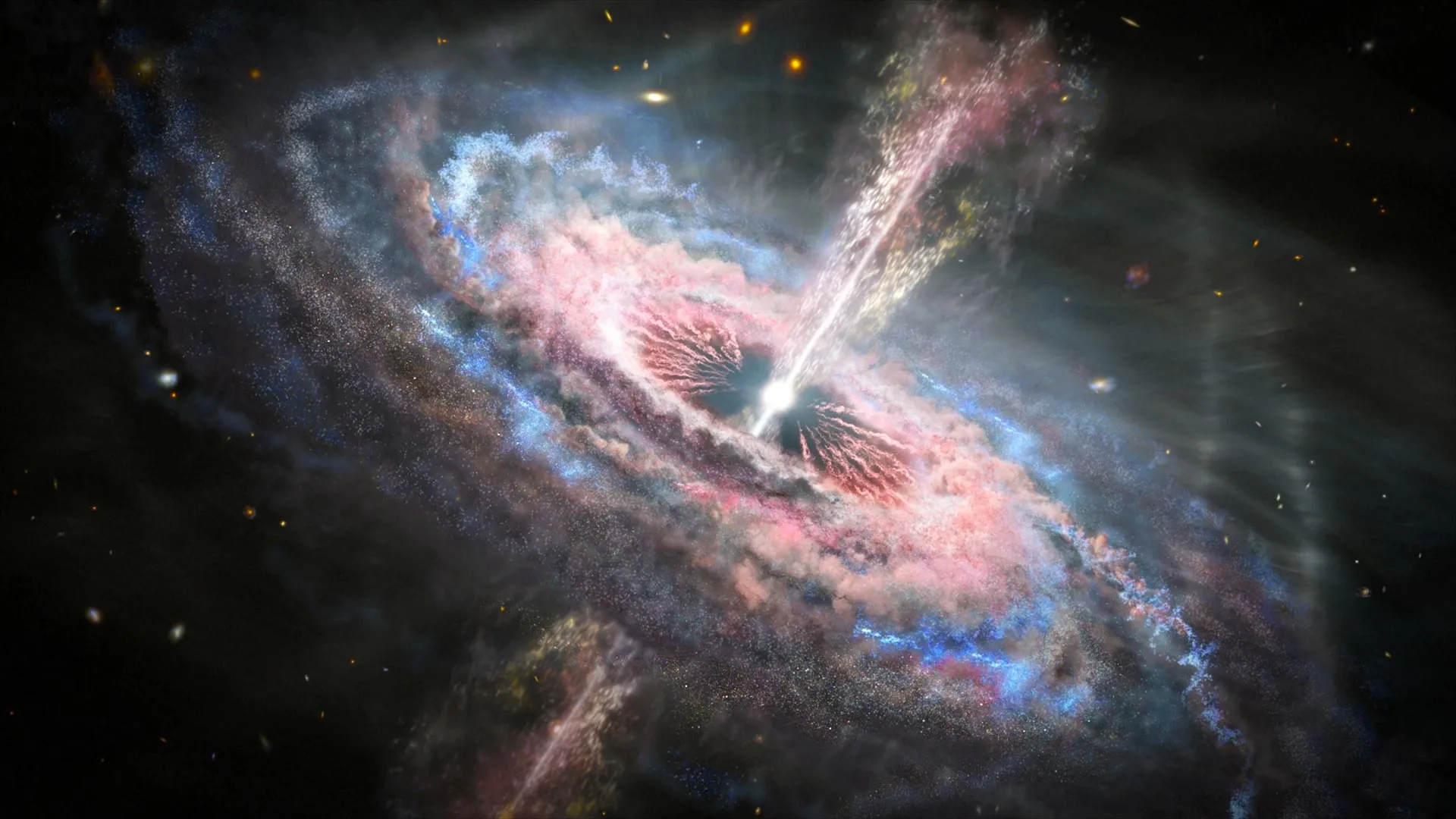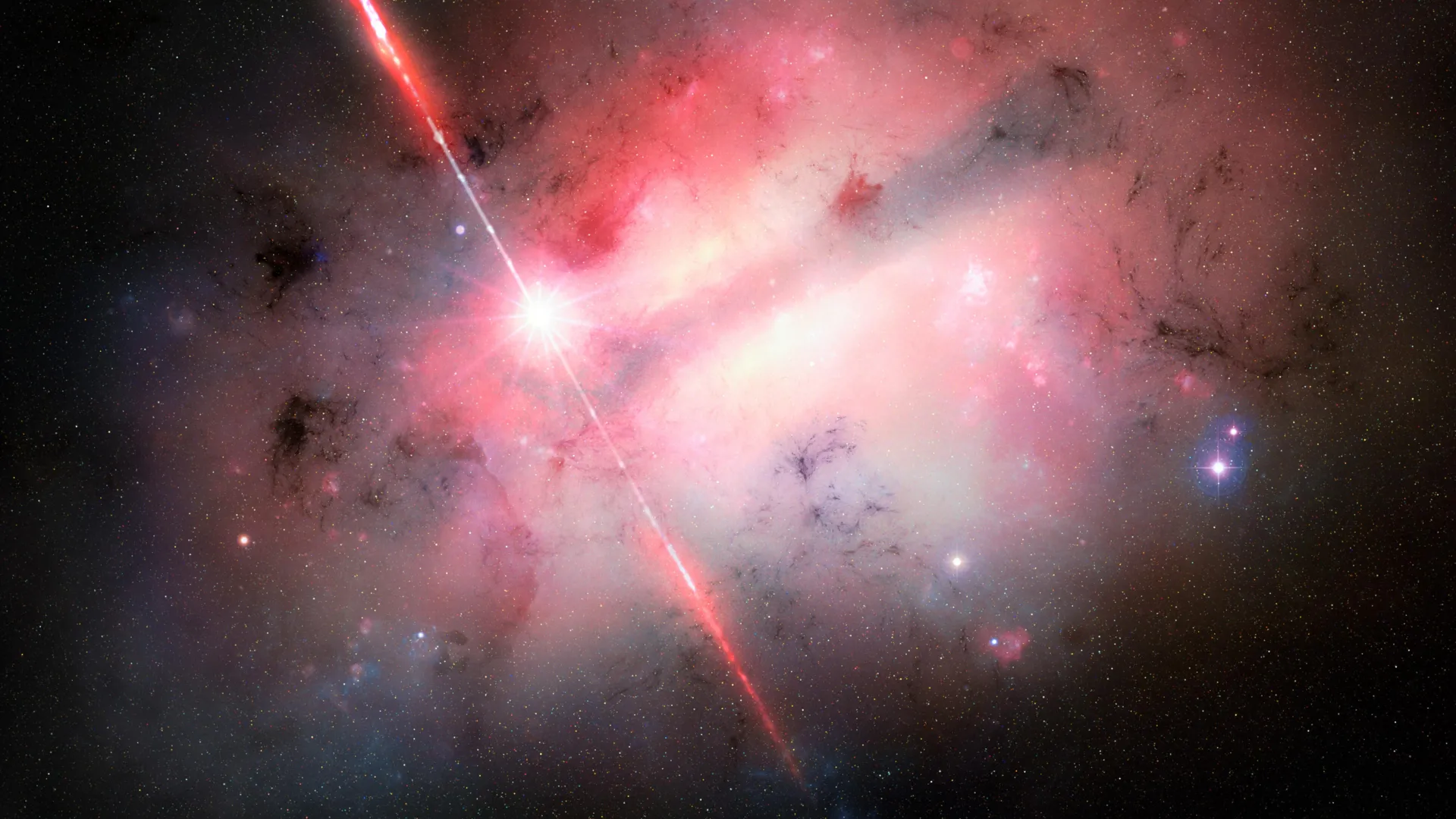
NASA announced that researchers using the James Webb Space Telescope examined a cosmic event that defies current physical models. The burst, designated GRB 250702B, occurred eight billion light-years away and lasted for hours instead of minutes. This discovery challenges decades of established astrophysical theory regarding high-energy transients.
Unprecedented Duration
Gamma-ray bursts typically occur when a massive star collapses into a black hole, producing a brief and intense flash of high-energy radiation. This event behaved very differently, emitting gamma rays for at least seven hours. That duration nearly doubled the previous record holder in the history of such observations. The activity persisted long enough to allow for detailed spectral analysis by multiple instruments. Such prolonged emission suggests a complex mechanism driving the jet of energy.
Eliza Neights, an astronomer at NASA's Goddard Space Flight Center in Maryland, stated that this is certainly an outburst unlike any other they have seen in the past 50 years. The anomaly appeared to show signs of X-ray activity a day prior to the main gamma-ray release. This timeline contradicts standard models of stellar collapse. The event required rapid coordination among global partners to capture the full scope.
Global Collaboration
Observatories around the world are analyzing data from the event to piece together the full timeline. This includes teams working with China's Einstein Probe and the National Science Foundation's Very Large Array. Only through the combined power of instruments on multiple spacecraft could scientists understand this event. The data collected spans gamma rays, X-rays, infrared light, and radio signals. This cooperation underscores the strategic importance of shared space infrastructure.
"This object shows extreme properties that are difficult to explain," said Huei Sears, a postdoctoral researcher in the Department of Physics and Astronomy at the Rutgers School of Arts and Sciences who is studying the explosion. "Usually, these bursts are over in less than a minute, but GRB 250702B lasted for hours and even showed signs of X-ray activity a day prior." This collaboration highlights the growing reliance on international infrastructure for deep space exploration.
Images from the Hubble Space Telescope revealed an unusual galaxy at the location of the burst. Initially, it appeared as though two galaxies might be merging, or that a single galaxy was split by a dark band of dust. Later, Webb observations showed the galaxy lies about 8 billion light-years away. The Webb telescope also is supported by the European Space Agency, and the Canadian Space Agency. These partnerships ensure continuous monitoring capabilities.
Scientists are considering several explanations for the anomaly. One possibility is that this was an unusually extreme gamma-ray burst. Another is that it was a tidal disruption event, in which a black hole thousands of times more massive than the Sun tears apart a star. This scenario requires specific conditions regarding the proximity of the stellar bodies.
A more unusual idea suggests a smaller black hole merged with a stripped helium star and consumed it from within. Regardless of the exact cause, the black hole unleashed powerful jets of energy. Eric Burns, an astrophysicist at Louisiana State University, noted that no single telescope could capture the full picture. The explosion was not visible in ordinary light.
Whatever the final explanation, scientists agree the event is both rare and significant. This gives researchers a unique chance to study the extremes of how stars and black holes evolve. Future studies will determine if this phenomenon challenges the fundamental laws of astrophysics. The findings may redefine how models predict stellar collapse in the distant universe. Continued funding for such missions will be critical for similar discoveries.