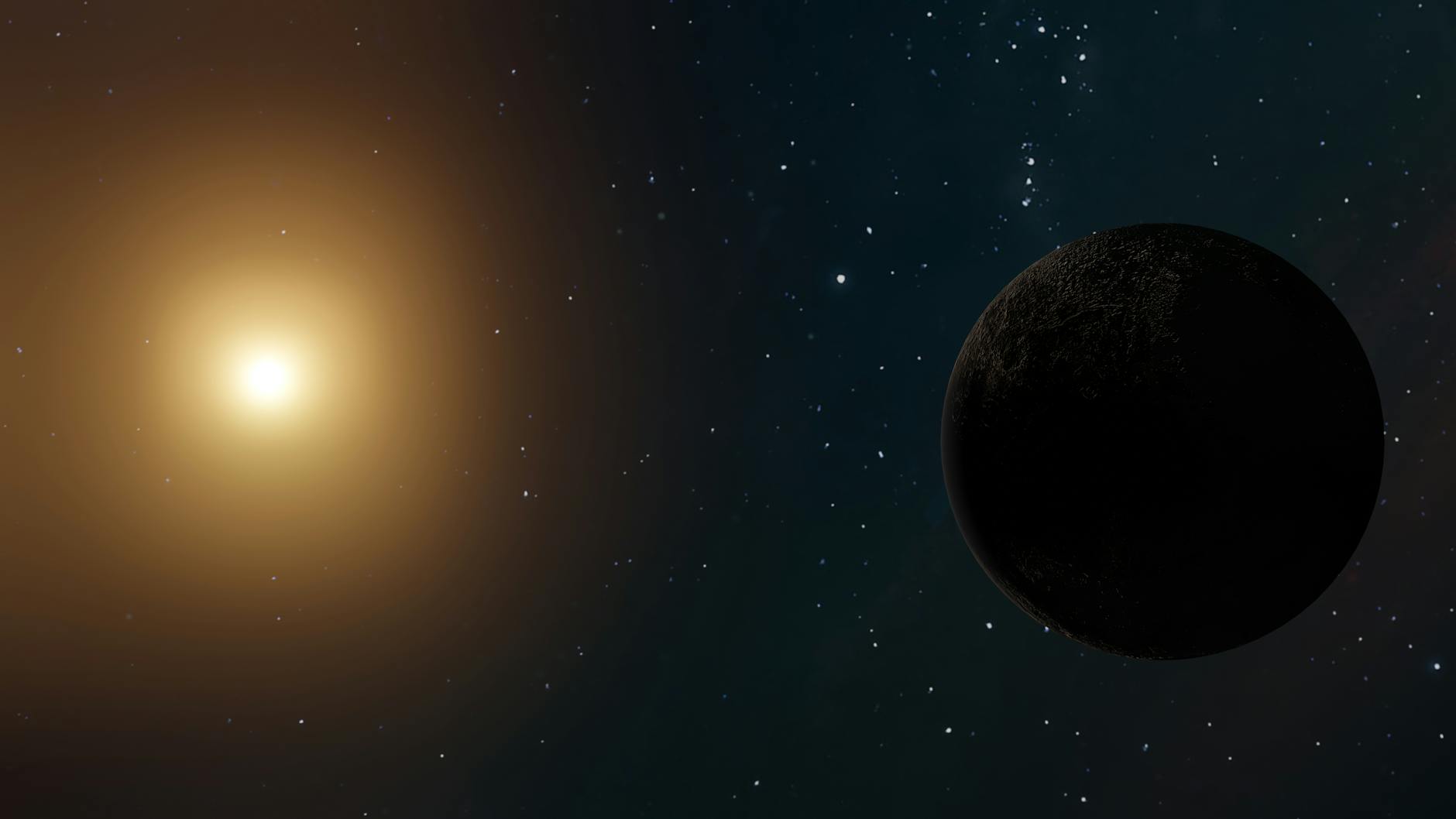
A new study published in the Monthly Notices of the Royal Astronomical Society confirms that dying stars are actively destroying nearby giant planets. Research teams from UCL and the University of Warwick found that as stars exhaust their hydrogen fuel and expand into red giants, they pull orbiting planets inward until the worlds are consumed.
Astronomers analyzed data from nearly half a million stars captured by NASA’s Transiting Exoplanet Survey Satellite (TESS). By focusing on stars in the "post-main sequence" phase, the researchers identified 130 planets and planetary candidates. The data revealed a stark decline in the number of close-in giant planets as stars progressed further into their red giant phase.
The mechanics of stellar destruction
Researchers attribute the phenomenon to tidal interaction, a gravitational tug-of-war between the star and its companion planets. As the star expands, the force of this interaction increases, slowing the planet’s orbit and dragging it toward the stellar surface.
"This is strong evidence that as stars evolve off their main sequence they can quickly cause planets to spiral into them and be destroyed," said lead author Dr. Edward Bryant of the Mullard Space Science Laboratory at UCL. "We expected to see this effect but we were still surprised by just how efficient these stars seem to be at engulfing their close planets."
The study highlights a significant disparity in planetary survival rates. Younger post-main sequence stars hosted giant planets at a rate of 0.35%, while more evolved red giants showed a survival rate of only 0.11%. This suggests that the destruction occurs rapidly once a star begins its final evolutionary transition.
The findings offer a grim preview of the distant future for our own solar system. While Earth is significantly further from the Sun than the giant planets observed in the study, the research suggests that the Sun’s transition into a red giant will fundamentally alter the architecture of our local neighborhood.
"In a few billion years, our own Sun will enlarge and become a red giant," said co-author Dr. Vincent Van Eylen. "Earth is certainly safer than the giant planets in our study, which are much closer to their star. But we are finding that in some cases planets do not survive."
Despite the potential for Earth to avoid total engulfment, researchers noted that any life on the planet would likely be unable to survive the intense environmental shifts caused by the Sun's expansion. The team plans to continue analyzing stellar populations to further refine their understanding of how planetary systems perish as their host stars reach the end of their lifespans.