A new generation of semi-autonomous robots may soon accelerate the search for life and resources on Mars. Researchers recently demonstrated that legged robots can operate independently, scanning multiple rock targets without waiting for time-consuming instructions from Earth.
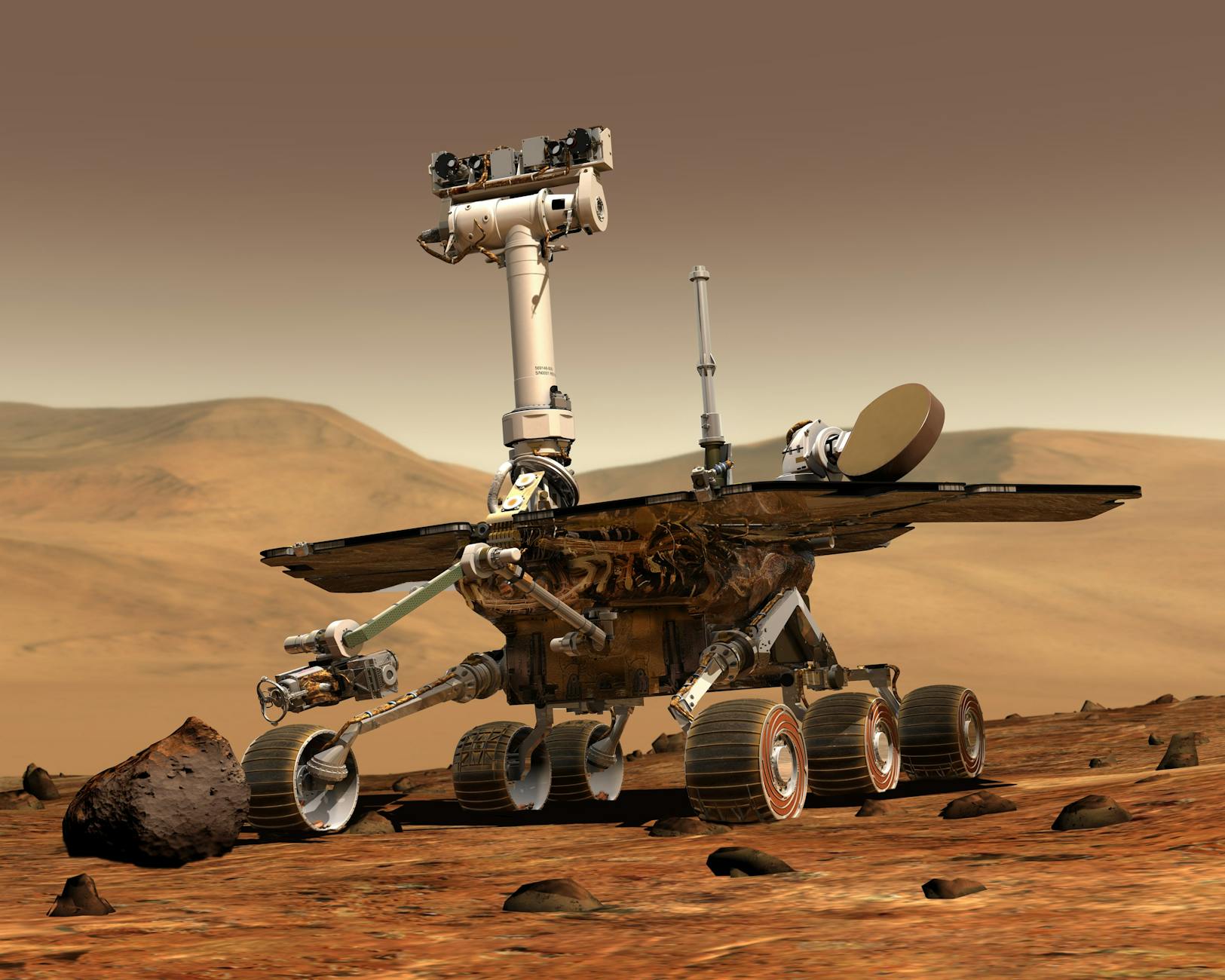
Traditional planetary exploration is hampered by significant communication delays, which can stretch up to 22 minutes. Because of these constraints, mission controllers must plan every movement of a rover with extreme caution, often limiting travel to just a few hundred meters per day.
To address this bottleneck, a collaborative team from ETH Zurich, the University of Zurich, the University of Bern, and other partners tested the four-legged 'ANYmal' robot. The robot was equipped with a microscopic imager and a Raman spectrometer to analyze geological samples in real-time.
Testing in simulated Martian conditions
Testing took place at the University of Basel’s 'Marslabor,' a facility that mimics the surface conditions of another planet using analog rocks and regolith. During the trials, the robot moved across the simulated terrain, autonomously positioning its arm to scan various materials, including gypsum, carbonates, and basalts.
The results, published by Frontiers, indicate a massive boost in operational efficiency. While a human-guided mission typically takes 41 minutes to analyze a target, the autonomous system completed similar tasks in as little as 12 to 23 minutes.
Beyond speed, the robot proved highly accurate. In one key trial, the system correctly identified every geological target it was assigned to investigate. Researchers noted that the robot’s ability to work without human supervision allows it to move more freely across rough terrain that would normally be off-limits to more cautious, traditional rovers.
This shift toward autonomy does not require massive, complex equipment. The study confirms that smaller, compact instruments are sufficient to meet the primary objectives of astrobiology and resource prospecting if they are paired with a mobile, intelligent platform.
As space agencies finalize plans for upcoming lunar and Martian missions, this technology offers a way to cover significantly more ground. By delegating routine analysis to robots, scientists can focus their efforts on the most promising samples identified during the high-speed survey phase.