A new interdisciplinary study published in Nature traces more than 2,000 years of population history in Argentina's Uspallata Valley. Researchers combined ancient human and pathogen DNA with isotopic data to understand how agriculture reshaped societies. The work offers insight into how people coped with long periods of hardship during this transition.
Researchers led by the Microbial Paleogenomics Unit at Institut Pasteur analyzed genome-wide ancient DNA from 46 individuals. The results show strong genetic continuity between hunter-gatherers from 2,200 years ago and later farming populations. This suggests that farming was largely adopted by local populations rather than introduced by large incoming groups.
Pierre Luisi, a researcher in CONICET, Argentina, explained that the findings fill an important gap in South American human genetic diversity. He noted that the persistence of this ancestral genetic component argues against narratives claiming the extinction of indigenous descendants. This documentation proves a very deep divergence and current persistence in the region.
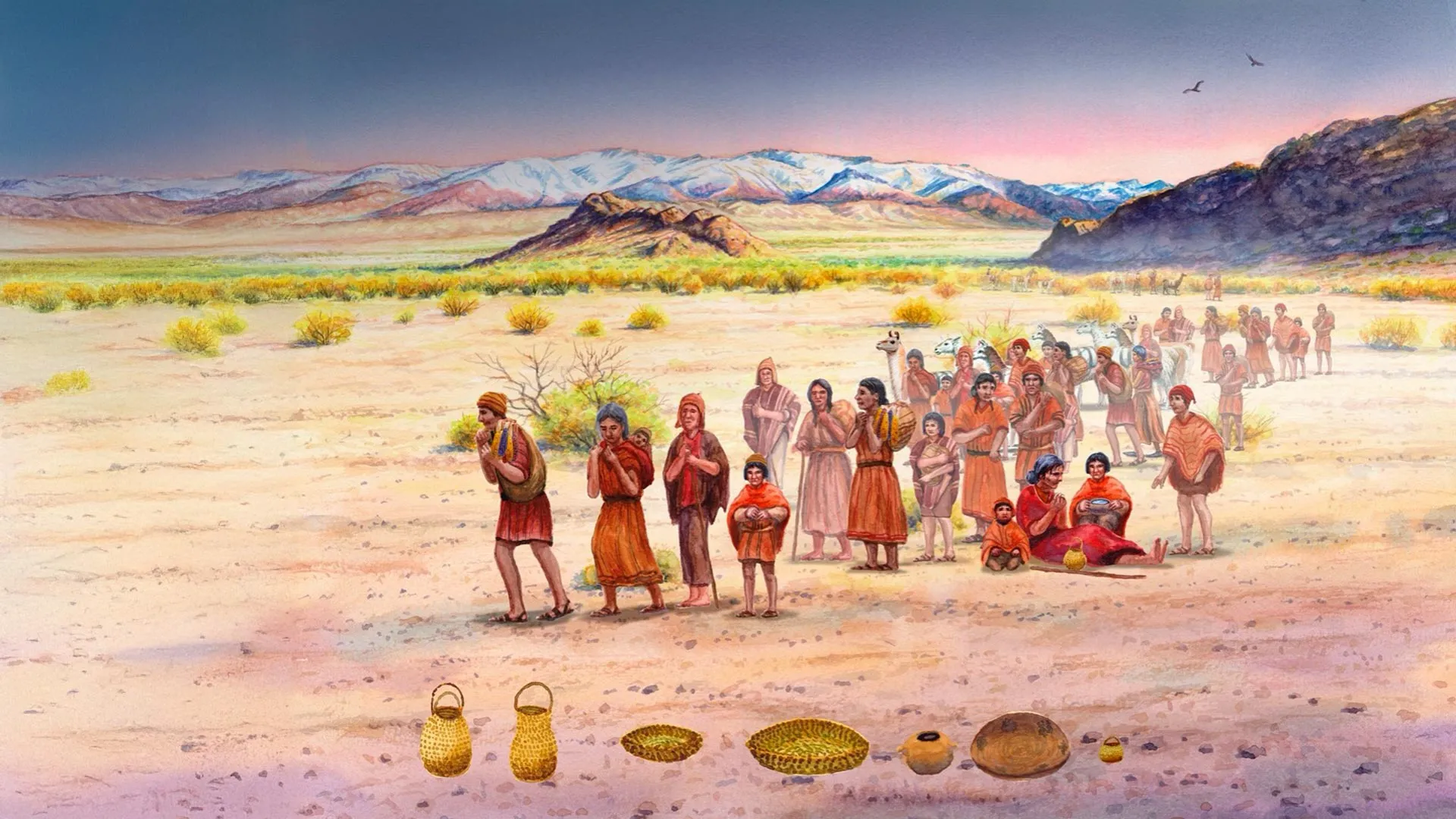
Stable isotopes preserved in bones and teeth revealed that maize consumption changed over time. However, between 800 and 600 years ago, a different pattern emerged at a major burial site called Potrero Las Colonias. Many individuals there relied heavily on maize and showed non-local strontium signatures indicating they had moved into the area.
Genomic data reveal that this group experienced a sharp and long-term population decline, indicating ongoing stress across generations. Paleoclimate records show extended periods of environmental instability that coincide with the population decline. At the individual level, skeletal remains show signs of childhood malnutrition and disease.
Ancient DNA also revealed tuberculosis at the site, belonging to a lineage known from pre-contact South America. Its presence this far south raises new questions about how the disease spread and persisted. Nicolás Rascovan, head of the Microbial Paleogenomics Unit, stated that detecting tuberculosis this far south is striking.
Genetic analysis of family relationships adds another important layer to the historical reconstruction. Many of the migrants were closely related but were buried at different times, suggesting ongoing, multi-generational movement into the valley. These kinship networks were largely organized through maternal lines.
There is no evidence of violent conflict, and locals and newcomers were sometimes buried together, suggesting peaceful coexistence. Together, the findings indicate that migration based on family ties served as a survival strategy during overlapping pressures. Ramiro Barberena, an archaeologist and co-first author, noted that no farming community abandons fields lightly.
The study emphasizes the importance of collaboration with Indigenous communities throughout the research process. Three community members from the Huarpe community co-authored the study and contributed to interpretation. Ongoing discussions helped address permissions and how findings would be shared.
More broadly, the research shows that the transition to agriculture did not follow a single path across human history. By combining genetic, archaeological, environmental, and pathogen data, the study reveals how ancient communities dealt with overlapping challenges. These long-term insights offer valuable perspective for understanding resilience in the face of modern climate and health challenges.