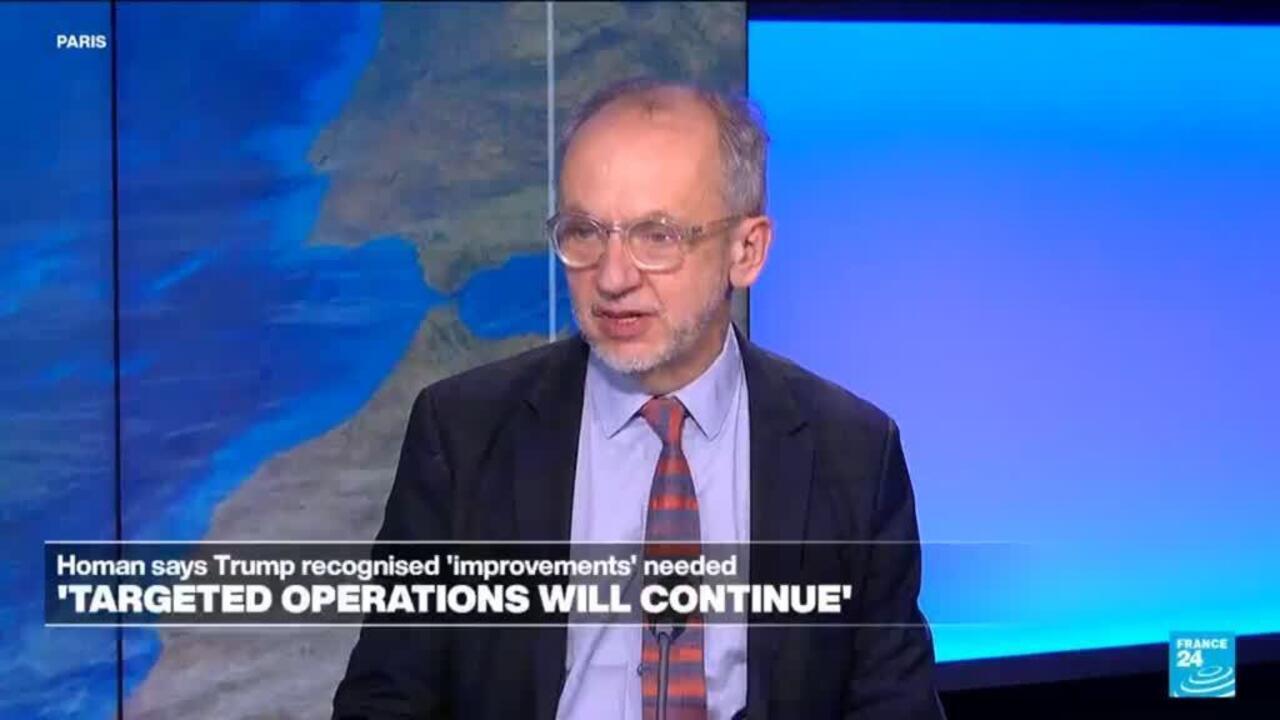
Tom Homan, serving as the administration’s high-profile liaison for immigration enforcement matters, held a press conference in Minneapolis, marking one of his initial public appearances since assuming oversight of specific ICE operations in the region.
While Homan suggested that the visible footprint of federal enforcement officers in Minnesota might decrease, this potential reduction appears contingent upon securing increased 'cooperation' from state and local authorities. This suggests a strategic pivot toward leveraging local infrastructure rather than solely deploying federal assets for removal operations.
The central pillar of Homan's message reiterated the administration’s firm stance on mandates for local correctional facilities. He strongly emphasized the necessity for local jails to adhere to requests—known as detainers—to hold individuals in custody who are flagged for subsequent deportation proceedings by federal immigration authorities.
This focus on mandated cooperation highlights a continuing federal effort to deputize local resources in the enforcement apparatus, a policy area that has frequently generated friction between federal agencies and state governments across the US.
Analysts note that while the language employed might represent a subtle 'change of tone' aimed at de-escalating local political tensions, the underlying strategic objective—expedited removal through enhanced information sharing and custody retention—appears entirely consistent with the administration's broader immigration agenda.
For international observers, these localized enforcement dynamics offer a microcosm of the broader tension between federal mandates and state sovereignty within the US political structure, particularly concerning executive branch authority in immigration policy.
Philip Turle of FRANCE 24 provided detailed context on the implications of Homan’s statements for the region, focusing on the interplay between federal directives and Minnesota’s existing political landscape. (Source: FRANCE 24)