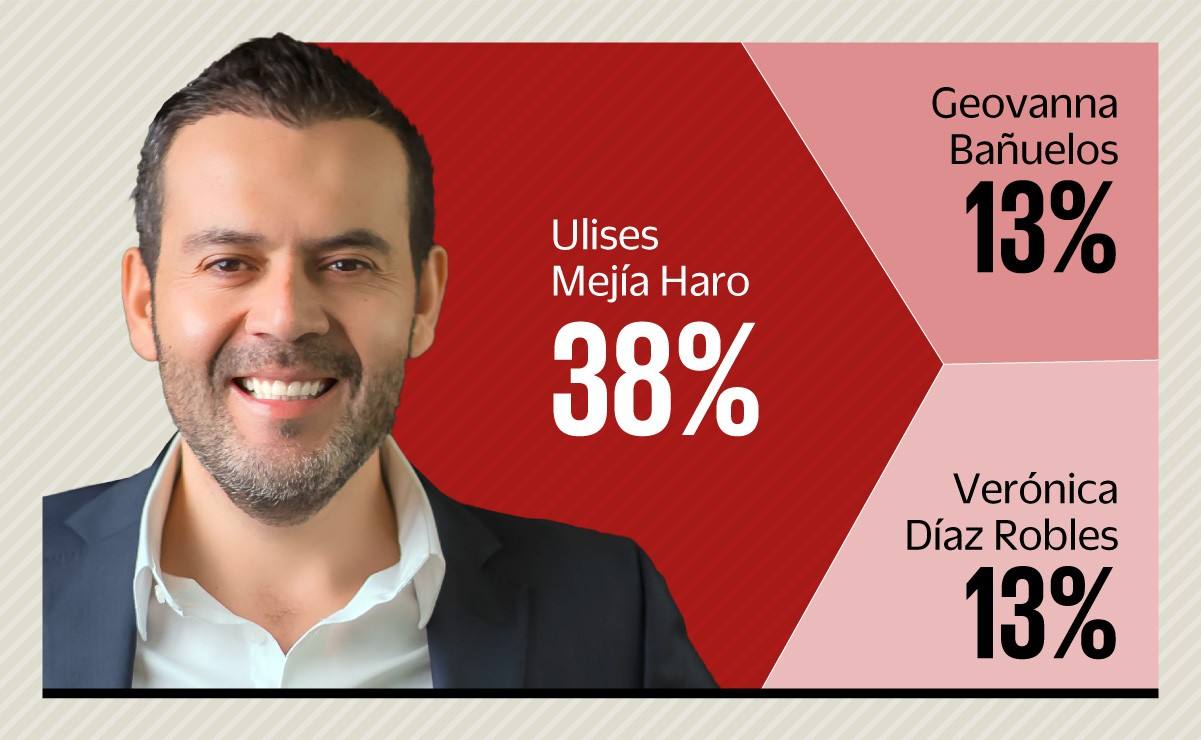
A comprehensive survey conducted by Enkoll for EL UNIVERSAL indicates that Ulises Mejía Haro has significantly solidified his position as the frontrunner for the Morena gubernatorial candidacy in Zacatecas. The politician currently holds the maximum possible score within the party methodology, maintaining the same 10-point rating he achieved during the previous December measurement cycle officially released. This consolidation of political support comes as the state faces significant challenges regarding public safety and economic stability ahead of the upcoming electoral cycle.
Mejía Haro distinguishes himself through improved ratings in key attributes such as honesty, positive public opinion, and perceived closeness to the local electorate. While he maintains a commanding lead, the data reveals that voter preferences remain divided regarding the ideal candidate profile based on gender demographics across the region. The poll suggests that his current momentum does not automatically guarantee a general election victory against established opposition parties in the state.
Geovanna Bañuelos of the Partido del Trabajo occupies a distant second place among the contenders for the official nomination within the coalition. She is notably positioned as the most competitive female profile available to the coalition at this critical stage of the internal primary process. Verónica Díaz follows with 13 percent of the preference score, while José Narro and Bennelly Hernández trail with 10 and 8 percent respectively.
Public security concerns dominate the political arena for Zacatecan voters, with 65% citing insecurity as their primary issue during the interview process. This figure significantly outpaces economic worries which registered only 10% among the total sample of respondents surveyed in the state recently. When specifically asked to identify the type of threat, respondents primarily identified organized crime as the root cause of the instability they experience daily.
Organized crime was mentioned by 27% of the participants, followed by street robberies and theft at 21% of the total responses. The high priority placed on safety issues underscores the complex environment in which any future governor must operate effectively within the state boundaries. These statistics reflect a broader national trend where citizen security often dictates electoral outcomes in Mexican states with high violence rates and weak institutions.
If a general election were held today, Morena would secure 38% of the effective preference for the governorship according to the new data. The Institutional Revolutionary Party would capture 18%, while Movimiento Ciudadano would obtain 15% of the total vote share in this scenario. The remaining parties fall below the 2-digit threshold, suggesting a competitive but consolidated two-party dynamic in the immediate political term.
Voter sentiment regarding gender preference shows a slight majority favoring a male candidate at 37% compared to 34% for a female option. However, a substantial 27% of the population indicated indifference regarding the gender of the prospective governor for the state. This demographic split may influence internal party negotiations as Morena finalizes its official nomination for the state leadership position.
The results highlight the strategic importance Zacatecas holds for the national governing coalition as they prepare for the 2027 general election cycle. Maintaining control over this state requires addressing the security narrative while managing the internal dynamics of the Morena party structure effectively. Observers will watch closely to see if Mejía Haro can translate his internal standing into a broader victory against the PRI and MC alliances in the coming years.
The survey methodology utilizes a 10-point scale to measure political viability, ensuring that the results provide a granular view of candidate performance for analysts. This approach allows party leaders to adjust their communication strategies based on specific weaknesses identified in the polling data before the official announcement occurs. Future analysis will track how these internal numbers convert into actual ballot performance during the 2027 general election cycle.
The data also suggests that voter satisfaction with the current administration will be a critical factor in determining the final margin of victory. As the campaign season approaches, candidates will need to present concrete plans to mitigate the security risks that currently define the political conversation. The outcome of this internal selection process will set the tone for the broader political environment in the region.