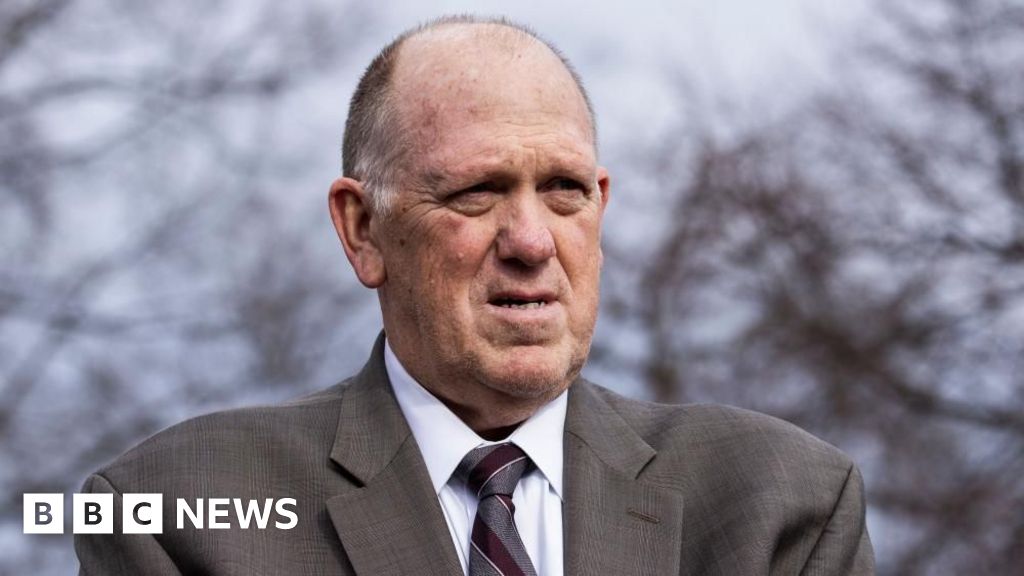
Trump Deploys Border Czar Homan to Minneapolis After Enforcement Setbacks
The Trump administration has deployed immigration enforcement veteran Tom Homan to Minneapolis, replacing Border Patrol chief Gregory Bovino as the on-ground commander of federal immigration operations in the city following mounting public criticism and two fatal shootings involving federal agents.The White House announced Tuesday that Homan, 64, would serve as the "main point of contact on the ground" and conduct meetings with city officials, marking a significant shift in the administration's approach to urban immigration enforcement operations.The personnel change comes as the administration faces intensified scrutiny over its mass deportation campaign, particularly after two U.S. citizens were killed by federal agents in Minneapolis within a month. The incidents have sparked broader questions about the tactics employed in Trump's signature immigration enforcement drive.Homan brings four decades of immigration enforcement experience spanning both Republican and Democratic administrations. Beginning as a police officer in upstate New York, he joined Border Patrol in 1984 and later ascended through the ranks of the Immigration and Naturalization Service. Under the Obama administration, he led the Enforcement and Removal Operations division of Immigration and Customs Enforcement (ICE)."We're not going to instruct ICE not to arrest [someone] unless there's a serious crime," Homan told reporters at the White House in July. "What message does that send the whole world? Go ahead and enter the country."The appointment represents a strategic recalibration for the administration, which has prioritized aggressive immigration enforcement as a cornerstone policy. Unlike Homan's extensive urban enforcement background, Bovino built his career primarily in border cities and gained prominence through his "turn and burn" methodology of rapid arrests designed to outpace protest responses.Bovino's confrontational approach, including public disputes with lawmakers from both parties, had drawn criticism from political observers who viewed his tactics as unnecessarily provocative. His replacement signals potential White House recognition that a more seasoned diplomatic approach may be necessary for operations in major metropolitan areas.However, immigration advocacy groups express skepticism that the personnel change will alter enforcement outcomes. Michael Lukens, executive director of the Amica Center, characterized Homan as "a career deportation advocate" and noted his role in developing family separation policies during Trump's first term."I think the difference is that he is more polished than Bovino. He is better at speaking to the press, and stakeholders," Lukens said. "But there is no world in which Homan is a moderate."The transition occurs as the administration continues to defend its broad deportation objectives while acknowledging that enforcement operations have affected undocumented migrants without criminal backgrounds—a consequence Homan attributes to non-cooperative "sanctuary cities."Former DHS immigration official Lora Ries, now with the Heritage Foundation, suggested the change reflects Homan's superior experience with interior enforcement operations in major cities, though she emphasized that all deportable undocumented migrants remain "on the table" for enforcement action.The Minneapolis deployment represents a critical test case for the administration's ability to balance aggressive enforcement goals with growing political and public relations challenges in urban environments where federal immigration operations face significant local resistance.Source: BBC News