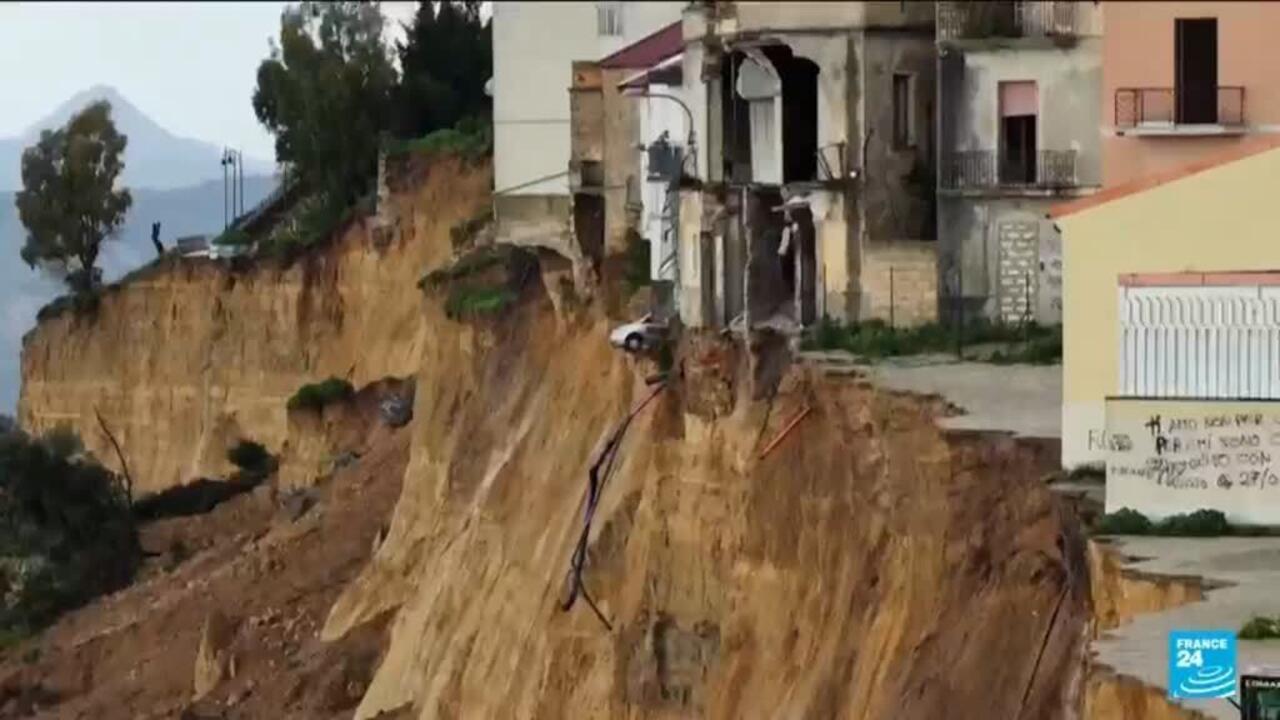
A massive, four-kilometer landslide near Niscemi, Sicily, has forced the displacement of 1,500 residents, highlighting vulnerabilities in Southern European infrastructure against escalating geo-environmental risks. Experts warn that continued rainfall could trigger further ground failure, prompting a high-level visit from Prime Minister Giorgia Meloni.
ROME – A significant geological event in southern Sicily has prompted a large-scale evacuation and drawn the attention of the Italian government, underscoring the growing economic and social costs associated with climate-induced instability across the Mediterranean basin. A vast section of hillside near the town of Niscemi collapsed over the weekend, creating a chasm nearly four kilometers in length.The immediate crisis involved the forced relocation of approximately 1,500 residents as a precautionary measure. While initial reports confirm no fatalities or injuries, the structural integrity of the surrounding area remains precarious. Geotechnical assessments indicate that the fissure continues to widen, with the primary concern being the impact of future precipitation events, which could accelerate the collapse and endanger more properties.The incident has escalated to a matter of national concern. Italian Prime Minister Giorgia Meloni visited the affected zone on Wednesday, conducting an aerial survey via helicopter to assess the scale of the damage. The visual impact of the deep fissures cutting across agricultural land serves as a stark reminder of the geological pressures intensifying in regions prone to seismic activity and heavy, localized rainfall.From an economic perspective, such events place immediate strain on municipal and national disaster relief budgets, while long-term implications involve the potential devaluation of regional assets and necessary, costly reinforcement of critical infrastructure. For Sicily, an island economy heavily reliant on agriculture and tourism, sustained instability poses a tangible threat to regional GDP projections.This incident follows a pattern observed across Southern Europe, where decades of underinvestment in preventative infrastructure maintenance, coupled with the increasing frequency of extreme weather events driven by climate change, are creating a new landscape of hazard zones. The response in Niscemi will likely serve as a crucial test case for Italy’s preparedness protocols concerning large-scale, slow-moving environmental disasters.The immediate priority remains stabilizing the area and ensuring the safety of the evacuated population. However, the longer-term challenge for Rome will be developing comprehensive, resilient land-use planning policies capable of mitigating risks that are becoming structurally embedded in the regional environment. (Source: Adapted from initial reports by France 24 and local Italian authorities.)