A Challenge to Established History
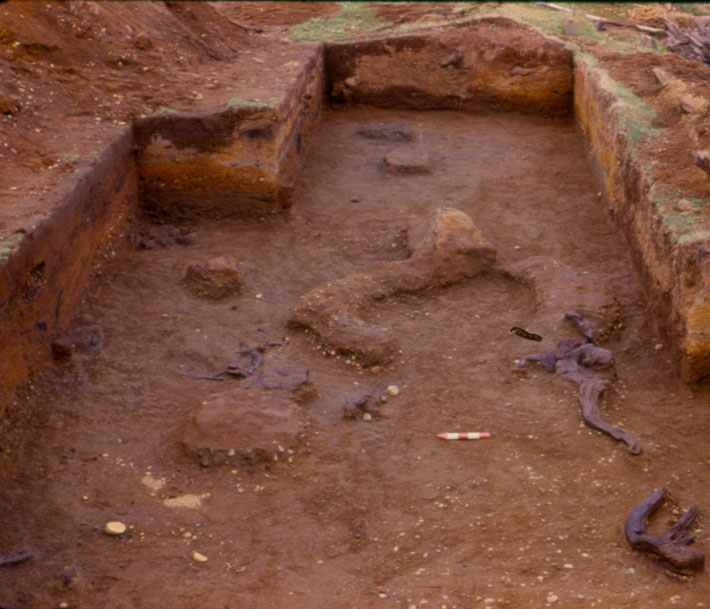
For decades, the Monte Verde archaeological site in Puerto Montt, Chile, has stood as a cornerstone in our understanding of human migration. Widely considered one of the most significant sites regarding the early settlement of the Americas, it has long been accepted that humans inhabited these forested, volcanic landscapes during the transition between the Pleistocene and Holocene epochs, roughly 15,000 years ago.
However, a recent publication in the journalSciencehas ignited a fierce academic controversy. Researchers, led by Todd Surovell of the University of Wyoming alongside Chilean investigators César Méndez, Juan Luis García, and Claudio Latorre, suggest that the site may be significantly younger than previously thought, estimating its occupation occurred between 6,000 and 8,000 years ago.
The Foundation’s Rebuttal
The Monte Verde Foundation, which has overseen the site’s preservation and research for over 50 years, has responded with strong disapproval. Led by primary excavators Tom D. Dillehay and Mario Pino, the Foundation argues that the new study is riddled with both methodological and empirical errors.
According to the Foundation, the researchers behind the new study based their conclusions on the extrapolation of dating from non-archaeological stratigraphic deposits. They claim these samples were misinterpreted and do not correspond to the well-documented, excavated layers that have been the subject of intensive study for half a century. The Foundation maintains that the new team projected findings from unrelated contexts onto the site, leading to skewed interpretations of its chronology.
Differing Scientific Perspectives
César Méndez, a co-author of theSciencearticle, defends the team's findings by pointing to the geological history of the area. He explains that their research identified higher terraces formed at least 11,000 years ago, marked by a distinct layer of volcanic ash from the Lepué eruption. According to Méndez, subsequent erosive processes created the lower terraces where the Monteverde II site is located, which would logically place the human activity in a much more recent timeframe.
Addressing the tension, Méndez acknowledged the professional friction, stating, “It is understandable that there is a certain degree of frustration at a personal level when a theory or idea held for a long time is refuted by arguments that offer a more consistent and completely different explanation.”
A Lack of Collaboration
The dispute highlights a growing rift in the archaeological community. Méndez noted that while the primary author, Todd Surovell, reached out to Tom Dillehay at the project's inception to propose a collaborative effort, the partnership failed to materialize. As the academic community awaits further peer review and potential counter-studies, the debate over Monte Verde serves as a stark reminder of how evolving geological and analytical techniques continue to reshape our understanding of the distant past.