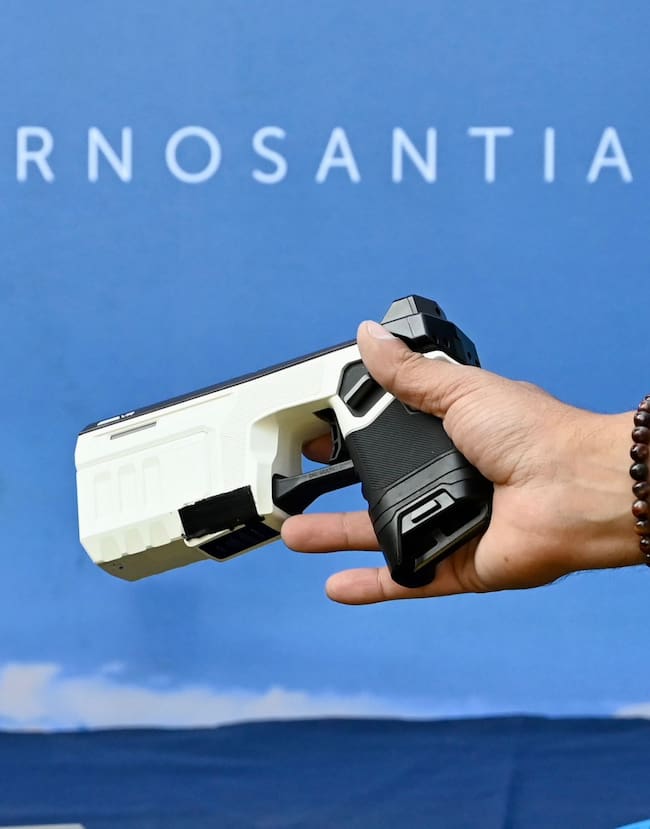
The Metropolitan Regional Government has announced a 250,000,000 peso investment to purchase Electronic Temporary Immobilization Devices (DEIT), commonly known as Tasers, for the Chilean National Police (Carabineros).
Governor Claudio Orrego confirmed that the initiative aims to bolster the force's control tools, particularly during operations targeting illegal street vending in districts such as Estación Central.
Following a bidding process, the budget is expected to cover the purchase of at least 60 devices. A 10-month pilot program will be implemented to evaluate their effectiveness and guide future investments.
Orrego noted that the need for these tools follows years of requests for alternatives to firearms. "We have seen many cases in Santiago and throughout Chile involving, first, absolutely avoidable attacks on Carabineros, and second, instances where people have ended up dead because there was no deterrent alternative to a firearm," he stated.
Use of force and protocol
The use of DEITs will be subject to strict protocols. According to institutional regulations, the devices will be deployed at the "Active Aggression" level, which occurs when an individual attempts to attack an officer to resist or evade control.
The governor emphasized that the highest rates of violence occur during crackdowns on illegal street commerce. "The most significant instances of attacks on Carabineros recently have occurred precisely during operations to clear street vendors," he specified.
The protocol prohibits aiming at vital areas such as the eyes or genitals, as well as delivering more than one discharge to the same individual. These devices emit high-voltage electric pulses lasting approximately five seconds.
Orrego highlighted that international experience shows these tools can reduce physical assaults by 40% to 50%. Furthermore, he asserted that the implementation of Tasers reduces complaints regarding excessive use of police force by nearly 70%.