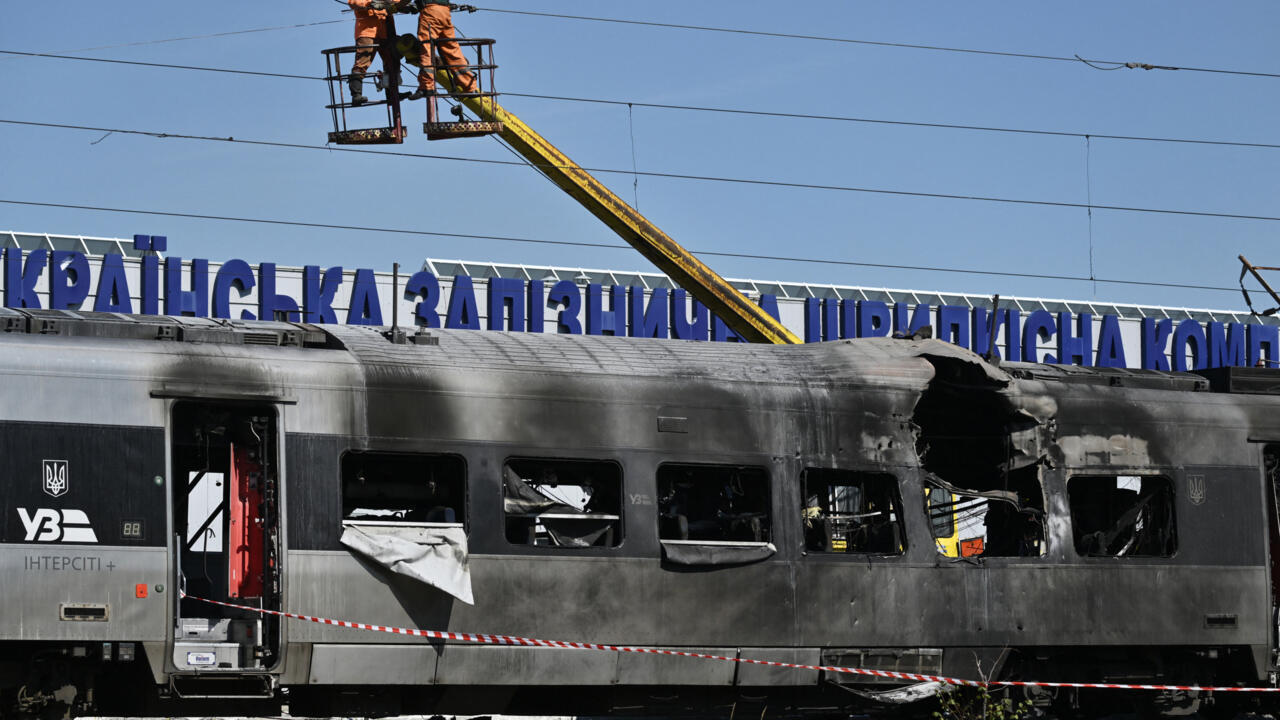
Russian forces have significantly increased strikes aimed at Ukraine's railway and transportation networks, President Volodymyr Zelensky confirmed on Monday. The acceleration of these attacks signals a renewed focus by Moscow on disrupting Kyiv's critical supply lines and internal movement capabilities. Zelensky stated that Ukrainian military leadership received orders to counter this growing threat to logistics routes.
This tactical shift comes despite a notable, albeit temporary, cessation of direct Russian missile and drone strikes on major energy infrastructure over the preceding twenty-four hours. According to the Ukrainian president, Russia is adhering to a short-term energy truce brokered last week at the request of US President Donald Trump. However, energy facilities near frontline areas continue to sustain damage from shelling.
Specific attacks were reported in the Dnipro and Zaporizhzhia regions, concentrating on railway facilities, Zelensky noted in a social media post. This targeting follows a deadly incident last week where a strike on a train car in the eastern Kharkiv region resulted in five fatalities. The state railway operator, Ukrzaliznytsia, warned passengers regarding the increased danger on eastern routes, advising alternative bus travel.
Despite nearly four years of conflict, Ukraine’s extensive rail network has largely remained operational, a crucial factor in its defense and internal economy. Russian forces have previously prioritized capturing key rail hubs, such as Kupiansk and Pokrovsk, underscoring the strategic importance of this infrastructure. The current campaign appears designed to degrade the network's resilience rather than achieving immediate territorial gains through transportation seizure.
Analysis of data from Kyiv's air force, published Monday, indicated that Russia deployed fewer long-range drones and missiles in January compared to December. Despite this reduction—a 13% decrease in drones and a 23% decrease in missiles—January saw some of the most severe electricity and heating outages of the war. This suggests a persistent capacity to inflict widespread systemic damage, even with reduced overall volume.
Zelensky acknowledged that while the national energy system remains stable, the combination of extreme cold weather and ongoing strikes maintains serious operational challenges. Repair crews have managed to restore power lines damaged over the weekend, compounding the effort required to counteract regular Russian bombardment.
The redirection of Russian military efforts toward logistical choke points suggests an attempt to impose greater economic strain on Kyiv as winter progresses. Moscow appears to be testing the durability of Ukraine's non-energy critical systems while potentially conserving high-precision missile stocks for future high-value energy targets.
The coming weeks will reveal whether this focus on rail disruption is a sustained strategic pivot or a temporary measure while the contested energy truce holds. Kyiv's success in rapidly implementing alternative transport solutions will be central to mitigating the economic fallout of these intensified railway attacks.