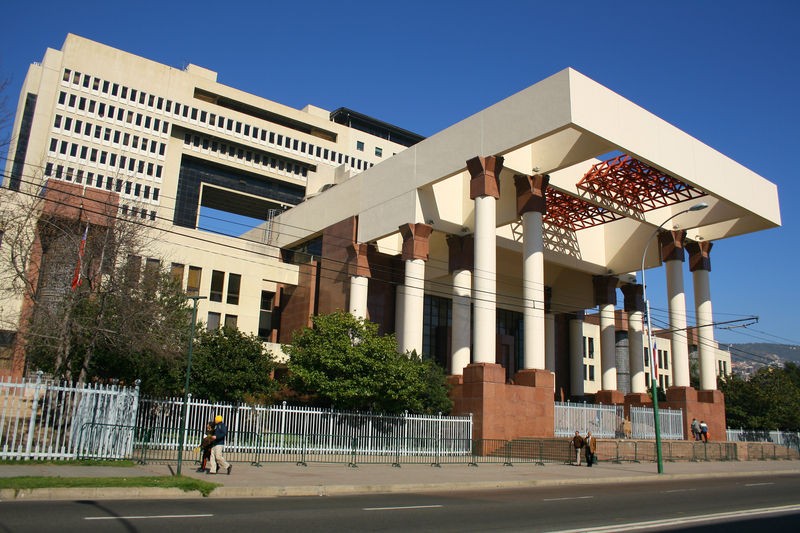
Balloon Latam and Corporación 3xi presented findings from the 2026 National Social Linkage Meeting (ENVIS) to the Chilean Congress on Wednesday, highlighting a deep fracture in the national discourse on progress. The report, based on dialogues with over 1,500 participants in Antofagasta, concludes that institutional promises of development frequently fail to align with the lived reality of the population.
The document describes a country operating in two distinct timeframes. One is a "distant development" perceived as a frustrating and hopeless future, while the other is a "nearby development" where citizens see tangible results at the local level. This marks the first time in its seven-year history that ENVIS has brought its findings directly to the legislature to influence public policy.
Senate President Paulina Núñez emphasized the importance of grounding policy in local experience. "Development is not understood only on paper or in a boardroom behind closed doors, but from daily life," she stated during the presentation at the Congress.
Challenging the centralist model
The report explicitly challenges the traditional reliance on macroeconomic indicators and centralized decision-making. Participants argue for a more inclusive definition of progress that incorporates education, security, community, and territory. Sebastián Salinas, executive director of Balloon Latam, noted that development in Chile is not a closed concept but a construction shaped by territorial gaps.
Another significant barrier identified by the study is a growing intergenerational divide. The report warns that the erosion of traditional spaces for transmitting values—exacerbated by digital disruption—has led to widespread confusion and frustration. Adults often view younger generations as individualistic, while the youth feel disconnected from traditional authority.
Camilo Herrera, executive director of Corporación 3xi, highlighted the potential of a mobilized society. "The possibilities for development expand when there is an articulated civil society," Herrera said, noting that local actors increasingly view themselves as agents of change rather than passive spectators.
The ENVIS 2026 report urges the government to bridge the gap between territorial development and national planning. Recommendations include integrating historically excluded groups into decision-making and creating regional working groups to address local tensions. The next ENVIS meeting is scheduled for the Biobío region in 2027.