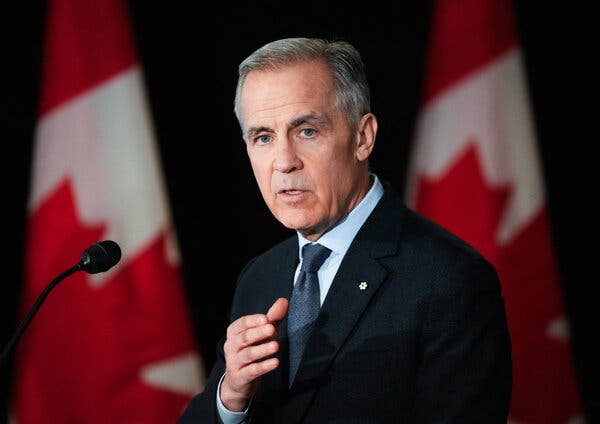
Prime Minister Mark Carney is poised to secure a slim majority in the House of Commons, a shift that would grant his Liberal government the power to pass legislation without relying on opposition support. The outcome hinges on three by-elections scheduled for Monday, with two seats in the Toronto area and one near Montreal up for grabs.
The Liberals currently hold 171 of the 343 seats in Parliament, just one shy of the threshold for a majority. Securing these seats would effectively solidify Carney’s hold on power, potentially delaying the next federal election until 2029.
Political analysts view the Toronto-area races in Scarborough Southwest and University-Rosedale as likely Liberal wins. The Terrebonne race near Montreal remains a toss-up between the Liberals and the Bloc Québécois, following a court-ordered rerun of the previous contest due to a clerical error.
A big tent or a fractured caucus?
Carney’s path to a majority has been bolstered by a series of floor-crossings from opposition parties. Since taking office a year ago, five MPs—four Conservatives and one New Democrat—have defected to the Liberal benches.
Semra Sevi, a political science professor at the University of Toronto, describes the rate of switching as "extraordinary." While the strategy has allowed Carney to consolidate power, Sevi warns of potential instability.
"Carney has built a big tent, attracting members of parliament who would not normally be associated with the Liberal party," Sevi told the BBC. "The complication, however, is that the tent may now be so big that there isn't a lot of ideological coherence in it."
The inclusion of former Conservatives, such as Marilyn Gladu, has drawn scrutiny. While Gladu has pledged to align with party policy, her history as a socially conservative MP has forced Carney to defend the party’s values to his base.
The influx of defectors has infuriated the Conservative opposition. Party leader Pierre Poilievre has publicly labeled the floor-crossings "undemocratic," arguing that poaching members undermines the will of the voters who did not elect them to serve in a Liberal administration.
Despite the hostility, reports suggest the Liberals continue to court additional members for further defections. Carney addressed the need for unity during a party convention in Montreal on Saturday.
"Canada's founding insight is that unity does not require uniformity," Carney said in his closing remarks.
Polls currently place the Liberals 10 to 15 points ahead of the Conservatives. Observers suggest the gap reflects broader dissatisfaction within the Conservative caucus regarding Poilievre’s leadership and his party’s long-term electoral viability.