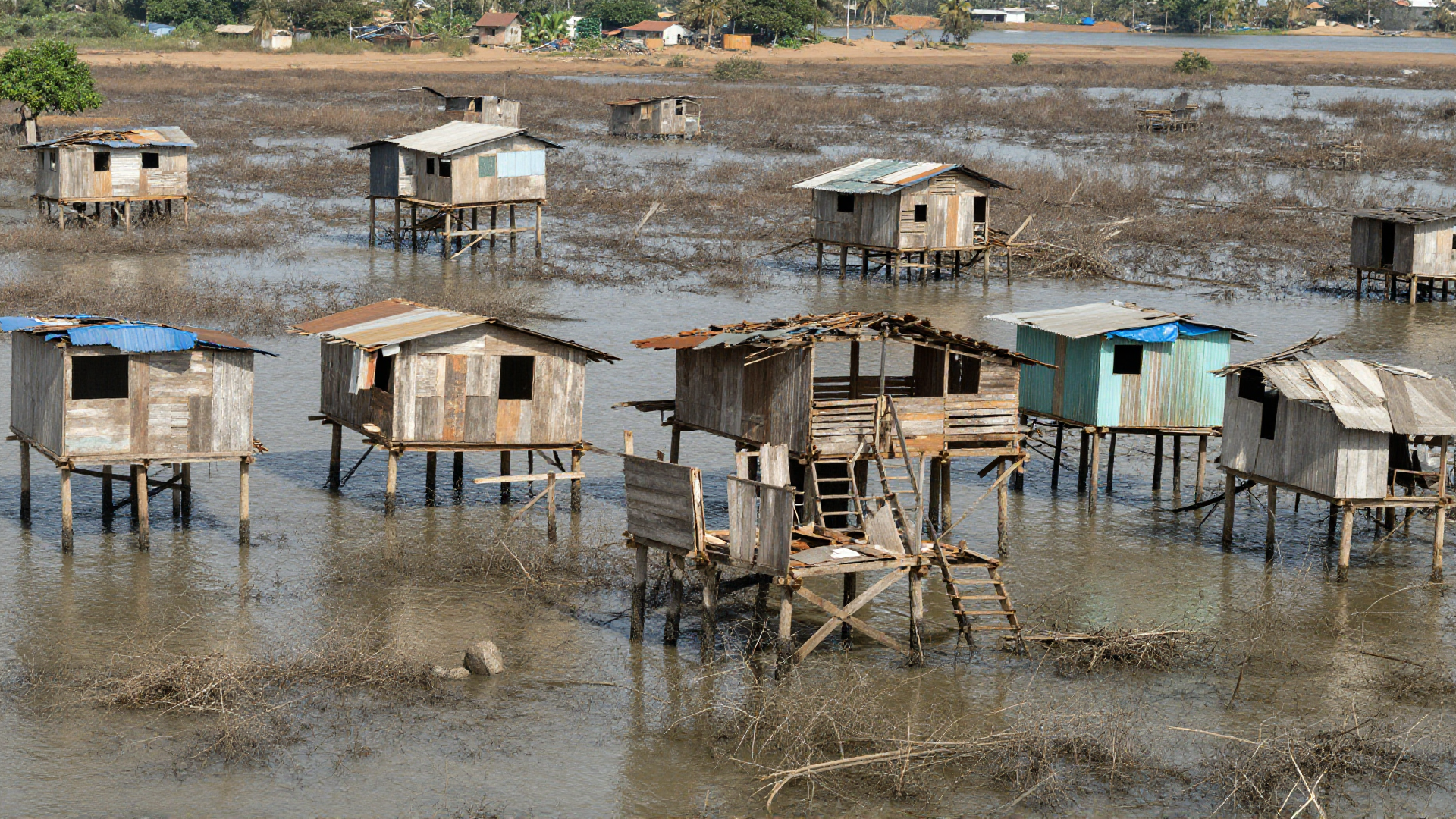
Lagos State government officials initiated demolitions in Makoko, the nation's largest informal waterfront settlement, citing immediate health and safety risks associated with structures expanding near high-voltage power lines. Reports from non-governmental organizations, however, suggest the operation, which began just before Christmas, involved armed police and bulldozers tearing down over 3,000 homes and burning the rubble. Residents, including displaced families like Anna Sobie's, contend the action is an effort to clear valuable lagoon frontage for potential high-end commercial or residential projects.
The state government defends its actions, asserting that allowing habitation directly beneath high-tension cables poses an unacceptable fatality risk to hundreds of people, according to Governor Babajide Sanwo-Olu. The government claims ownership over the lagoon area, stating the settlement lacked formal planning permission or occupancy rights. This narrative is contested by older residents who maintain customary rights to the land, which predates the modern structure of Lagos.
NGOs, in a joint statement, characterized the evictions as part of a "sinister agenda to grab land," pointing to a pattern of state-enabled violence against the urban poor to facilitate elite interests. The destruction has severely impacted community infrastructure, including schools and clinics, forcing children out of education and disrupting the livelihoods of thousands dependent on lagoon-based commerce. Estimates suggest more than 10,000 people have been made homeless by the extensive clearing operations.
Protests against the state's actions have met with resistance; an attempt by residents to petition the House of Assembly resulted in police firing tear gas, according to community leaders. While the Lagos State government has expressed ignorance regarding the alleged use of tear gas resulting in deaths, they confirmed an investigation into such claims would proceed. The government has promised financial grants and assistance to affected families.
Economic realities underscore the conflict, as Lagos faces an acute housing deficit that forces low-income populations toward informal settlements along waterways. Real estate experts confirm that all land in Lagos is considered prime, especially waterfront locations, fueling suspicion that the evictions are economically motivated rather than purely safety-driven. This tension highlights the growing incompatibility between rapid urban expansion and the housing needs of the working class.
Journalist Emmanuel Abara Benson described the Makoko situation as a representation of Lagos's rapid, often violent, reshaping toward global appeal, which risks rendering the city unliveable for many existing inhabitants. This process contrasts sharply with the slower gentrification observed in many Western cities, presenting a unique challenge for Nigeria's economic center.
Lawmakers have invited community leaders for discussions scheduled for Tuesday to address the ongoing crisis. The immediate future for the displaced population remains precarious, with many seeking temporary shelter amidst the debris of their former residences.