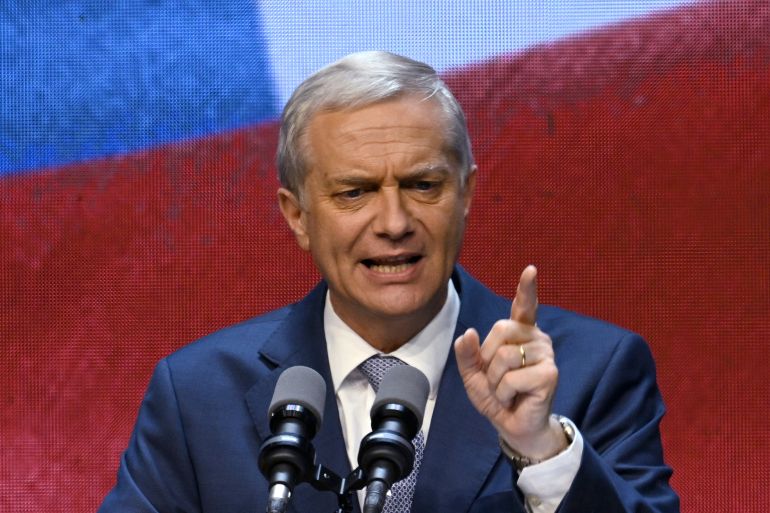
President José Antonio Kast’s administration has completed its first month in power while facing intense scrutiny over its political strategy and economic direction. Critics argue that the government is operating under a mission-driven logic rather than traditional democratic consensus, prioritizing a cultural battle and state reduction over conventional policy management.
Political analysts suggest the government views its mandate as a moral imperative rather than a platform subject to negotiation. According to El Mostrador, this approach treats state reduction not as a public policy, but as an “act of historical correction” aimed at dismantling what is perceived as state-corrupted initiative.
Security remains the most significant point of friction. During his campaign, Kast promised an emergency government, specifically targeting the departure of 380,000 irregular migrants and a swift reduction in criminal activity. One month later, data and public perception indicate that violent crime and homicides continue to dominate the national agenda, falling short of the campaign’s definitive promises.
Leadership within the Ministry of Security is under fire following the opaque departure of the PDI’s head of intelligence, Consuelo Peña. Minister Trinidad Steinert has faced criticism for demanding explanations regarding specific personnel transfers while failing to provide public clarity on these institutional shifts. The director general of the PDI stated that the transfer was an “institutional decision that [he] does not have to justify.”
This tension reached a boiling point in April 2026, when Science Minister Ximena Lincolao was physically accosted and retained by protesters at the Universidad Austral de Chile. According to CNN Chile, the minister had been attending the inauguration of the academic year to present the ministry’s strategic axes when protests began. As she attempted to leave with her security team and advisors, she was insulted, pushed, and had water thrown at her—an escalation that had been signaled by student rejection circulating on social media prior to her arrival, CNN Chile reported. The government has filed a criminal complaint for an attack against an authority, and the Fiscalía de Los Ríos has launched an investigation. Following the incident, Minister Lincolao publicly stated, “I am not afraid,” and affirmed she would continue her university visits, according to BioBioChile. The attack drew broad cross-party condemnation, with figures ranging from the PPD and Frente Amplio to former ministers like Evelyn Matthei and Marcela Cubillos denouncing the violence as antithetical to democratic debate, as reported by CNN Chile. Writing in La Tercera, analyst Verónica Poblete noted that the incident reflects a broader societal failure, arguing that the normalization of aggressive language and the dehumanization of political opponents have made the transition from verbal confrontation to physical violence increasingly inevitable.
Economic challenges and fiscal friction
The administration’s fiscal strategy has also triggered backlash, particularly regarding fuel pricing. Global oil price hikes, exacerbated by the conflict in the Middle East, led the government to pass costs directly to consumers. Economists argue that while the state faces a deteriorated fiscal position, it maintains sufficient solvency to have implemented a more gradual adjustment. By opting for a drastic transfer of costs, the government has further eroded its political capital.
Discrepancies persist regarding the state of public finances. While the government spokesperson claimed the country was in bankruptcy with only $46 million “in the till,” the Finance Minister reportedly contradicted this characterization. Critics highlight that the salaries of the President and his direct advisors saw significant increases between March 10 and March 11, fueling perceptions of inconsistency in the stated austerity measures.
Meanwhile, the education sector is grappling with the integration of migrant students and broader civil unrest. While educators call for pedagogical approaches to political disagreement, the recent attack on Minister Lincolao has highlighted a deepening divide. The Federation of Students of the Universidad Austral (FEUACh) condemned the violence while simultaneously asserting that student discontent with government policies remains legitimate, according to BioBioChile.