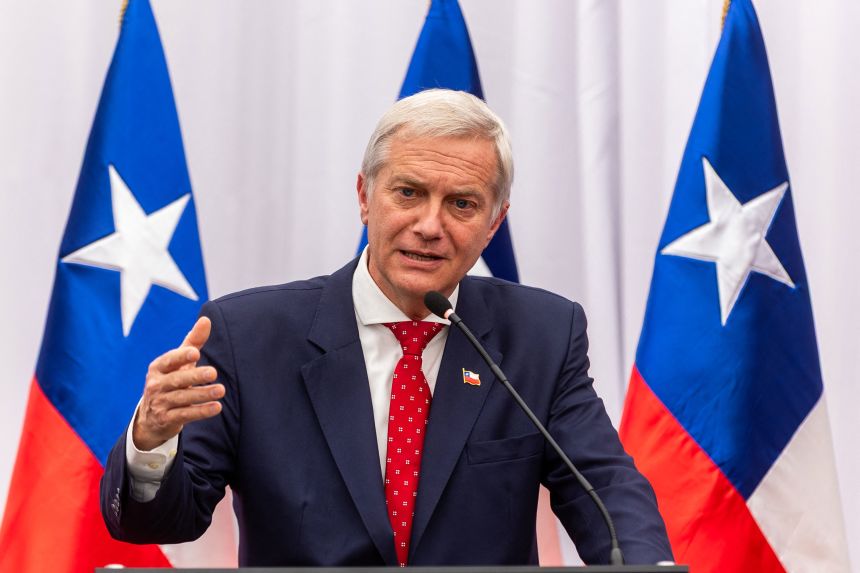
President José Antonio Kast described his first month in office as a period marked by severe instances of violence, following the murders of a police officer and a school inspector. The president called on the public to help reverse this trend.
Alongside the security crisis, the administration is preparing to introduce a key economic initiative. However, opposition groups have begun organizing a political response to what they describe as a direct hit to citizens' wallets.
Tensions Over Reconstruction Plan and Border Security
Opposition parties, including the Socialist Party (PS), the Communist Party (), and Frente Amplio (FA), met with local mayors to denounce the administration's Reconstruction Plan as a “hidden tax reform.” The criticism focuses on changes to the MEPCO mechanism, which leaders claim has shifted direct costs onto citizens.
Paulina Vodaniente, president of the PS, noted that there has been no official communication from the government to opposition lawmakers. According to the leader, news of the measures came through “press leaks… measures that directly impact municipalities and, more importantly, the people.”
Meanwhile, Lautaro Carmona, president of the PC, stated that these policies follow a pro-business logic. “This is not an a priori reaction, but rather a response to policy announcements that clearly benefit an elite—the idea that the country only grows if we protect big capital and leave labor unprotected,” Carmona maintained, adding that the cost will be shifted “onto the backs of those who have the least.”
Constanza Martínez, president of Frente Amplio, described the first month in office as “indolent and irresponsible.” These criticisms align with the stance of the Christian Democracy (DC) party, whose new president, Representative Álvaro Ortiz, clarified that his party is not part of the Kast administration.
“We do not support José Antonio Kast, but we have a duty to Chile, and that means sitting down to talk with the government, supporting good projects and initiatives that benefit the majority of Chileans. We will not support those that do not, but we will present a concrete proposal, because we cannot simply stay here lamenting and finding fault with everything,” Ortiz explained.
The representative for Biobío also expressed a willingness to engage in dialogue with other forces, such as the PC or Frente Amplio. “We are going to talk to anyone willing to talk. And when the time is right, we will see who we form electoral alliances with. These are electoral alliances, not ideological ones,” he detailed. Regarding his stance on an alliance with the PC, Ortiz concluded: “I am not a communist just because of an alliance last year that was purely electoral, nor are they now Christian Democrats. This is about building agreements.”
Regarding border security, two Bolivian citizens were arrested in Colchane, in the Tarapacá Region. According to the Iquique Carabinero OS7 unit, the individuals were accused of vehicle smuggling after stealing a backhoe.
The machinery was being used by the Armed Forces as part of the Border Shield Plan to dig trenches along the border. According to reports from the institution, the suspects used the vehicle to cover the trench and create an unauthorized crossing between Bolivia and Chile.