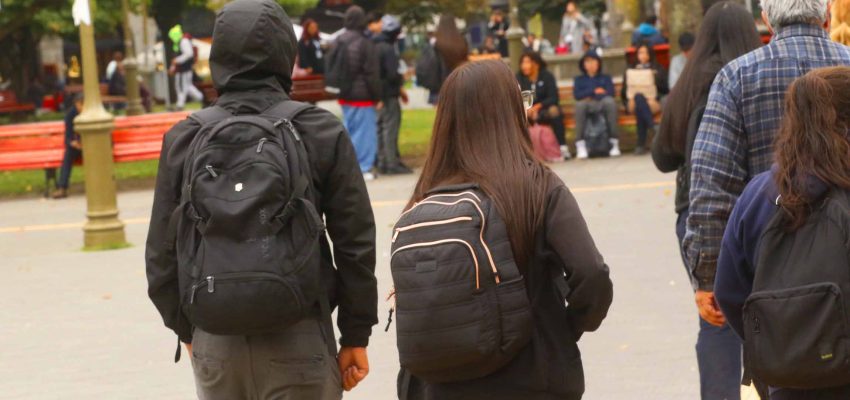
Opposition lawmakers in the Chilean Chamber of Deputies are challenging the government's decision to fast-track the 'Protected Pre-school/Protected Schools' bill for an immediate vote. The move, which seeks to expand the loss of university free tuition to students convicted of crimes, has drawn sharp criticism from members of the opposition.
The decision to move the bill to immediate discussion was announced by the Education Commission's president, Deputy Sergio Bobadilla (UDI). Bobadilla supported a proposal to extend the loss of university benefits to students who commit offenses.
'We seek to make this prohibition of delivering any benefit with fiscal resources extensive to students who are sanctioned in higher education, because the original project only considered secondary education,' Bobadilla said.
The lawmaker expects the commission to conclude its work by Tuesday afternoon. This timeline would allow for a full chamber vote on Wednesday.
Bobadilla also criticized the political alignment of the administration's allies. He stated that parties claiming to support the government should have 'both feet in La Moneda and not one in the street.'
Opposition warns of technical failures
Deputy Emilia Schneider (FA) accused the government of avoiding necessary dialogue and ignoring differing perspectives. She described the rush to vote as an attempt to move forward without proper oversight.
'What we have here is a government that does not want to dialogue, that does not want to listen to those who think differently,' Schneider said.
She characterized the legislative process as unprofessional, alleging that the administration is attempting to 'advance recklessly' without technical foundations or comparative international experience.
Deputy Juan Santana (PS) also labeled the government's approach as 'simplistic and irresponsible.' He argued that the focus on university tuition mirrors the flaws found in the previous 'Aula Segura' legislation.
'The focus of public discussion has centered exclusively on university free tuition, which is to commit the same error that was made with the Aula Segura project,' Santana said.
He noted that the current strategy involves announcing a 'high-sounding measure' that fails to actually reduce levels of school violence.
Santana proposed that the Executive branch should avoid cutting education budgets. Instead, he urged the government to focus on successful school coexistence programs, such as 'skills for life' initiatives.