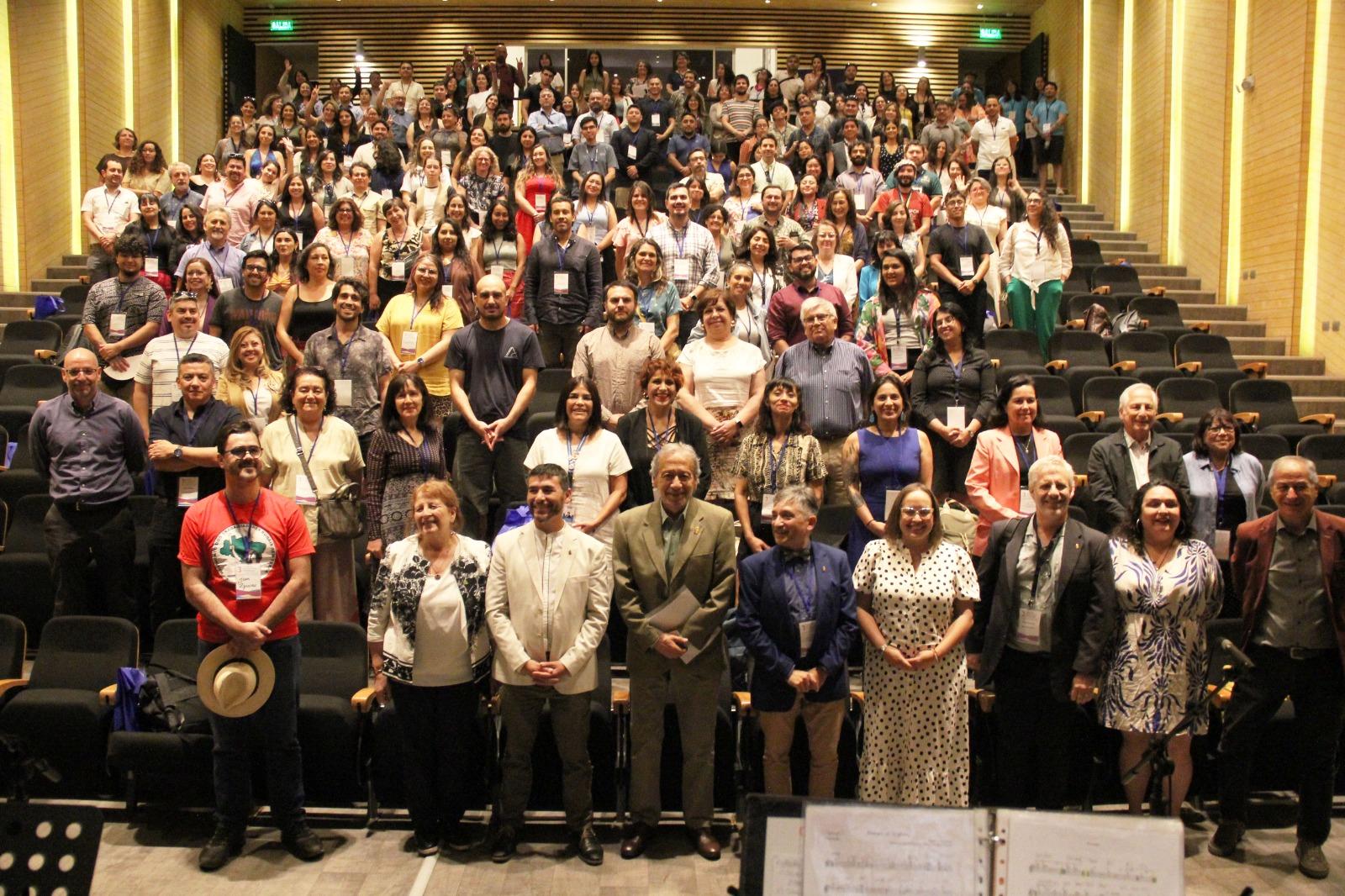
Chile will host the Fifth Latin American Congress on Interdisciplinary Higher Education and Research (IEI) in early September 2026. The event, which will be sponsored by the National Accreditation Commission (CNA), will bring together academics from across the region to discuss the integration of diverse fields of study within the university system.
The University of Chile will lead the organization, alongside the University of Tarapacá, the University of Talca, and the Consortium of Chilean State Universities (CUECh). The congress coincides with the tenth anniversary of the IEI organization.
Renato Bartet, Executive Secretary of the CNA, noted that the institution recognizes and encourages multidisciplinarity and transdisciplinarity as key drivers for generating new knowledge. Currently, the CNA monitors how universities implement these models to evaluate the consistency of their academic programs.
“This is a valuable space to reflect on and share how different institutions are incorporating interdisciplinarity into their teaching and research projects,” Bartet stated.
Challenges in Chilean Higher Education
While interdisciplinary progress is uneven across the country, several institutions are already running specific programs. The Catholic University offers "College" bachelor's programs, while Diego Portales University operates 54 interdisciplinary centers.
Additionally, the Universidad del Desarrollo features the Institute for Innovation and Interdisciplinarity (ICubo), inspired by the Stanford University model. This center integrates the faculties of Economics, Engineering, and Design to foster collaborative research.
Academic Pablo Riveros, one of the event's organizers, emphasized that hosting this congress is a strategic opportunity to understand how these approaches can transform knowledge production. The focus will be on the creation of national policies and funding mechanisms.
Matías Fleischman, Executive Director of the Center for Research in Interdisciplinarity and Transdisciplinarity (NITES), argued that this approach is vital given the rapid pace of social change. “Interdisciplinarity ambitiously condenses the very skills that the labor market is beginning to demand,” he explained.
Anahí Urquiza, Director of Innovation at the University of Chile, observed that while interdisciplinarity is already permeating universities, it currently operates more as an expansion of scope rather than a complete structural reorganization.